Can You Use Lysol on Leather? A Comprehensive Technical Analysis
The question “can you use Lysol on leather?” is one that surfaces frequently among homeowners, car enthusiasts, and professionals seeking to maintain hygiene without compromising valuable materials. The short answer is a definitive no, but the full explanation requires a nuanced understanding of leather chemistry, disinfectant formulations, and proper material care protocols. This article provides an authoritative, evidence-based examination of why Lysol and leather are incompatible, alongside safe alternatives for effective disinfection.
The Official Verdict: Manufacturer Prohibitions
The most authoritative source on this matter is the product label itself—a legally binding document under federal law. Multiple Lysol product labels explicitly list leather among materials to avoid.
Do not use on: polished wood, painted surfaces, leather, rayon fabrics, or acrylic plastics.
This prohibition appears consistently across Lysol product lines, including Crisp Linen, Citrus Meadows, Green Apple & Aloe, and Jasmine & Rain variants. The consistency of this warning across formulations indicates a fundamental chemical incompatibility rather than a product-specific issue.
Understanding the Chemistry: Why Leather and Lysol Conflict
Leather as a Biological Material
Genuine leather is a natural protein material derived from animal hides through a complex tanning process. Unlike synthetic materials, leather retains its biological origins—it is collagen-based and porous, requiring careful maintenance to preserve its structural integrity.
Lysol’s Active Ingredients and Their Effects
Lysol Disinfectant Spray contains two primary active ingredients:
| Ingredient | Concentration | Function |
|---|---|---|
| Ethanol | 58.00% | Solvent and antimicrobial agent |
| Alkyl Dimethyl Benzyl Ammonium Saccharinate | 0.10% | Quaternary ammonium compound (disinfectant) |
Ethanol at 58% concentration poses significant risks to leather:
- Degreasing action: Alcohol strips natural oils from leather, disrupting the lipid layer that maintains flexibility and moisture balance
- Collagen disruption: High-concentration alcohols can denature proteins in the leather structure
- Drying and cracking: Removal of essential oils leads to brittleness, fissures, and premature aging
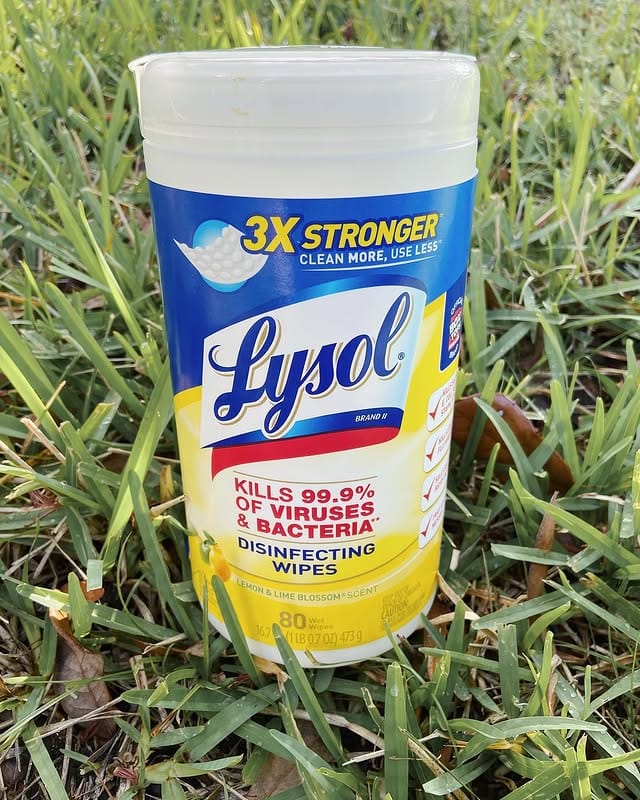
Quaternary ammonium compounds (quats) present additional concerns:
- Potential discoloration: Quats can react with leather dyes, causing staining and color shifts
- Surface residue: These compounds may leave films that alter leather’s appearance and breathability
- pH imbalance: Leather prefers slightly acidic conditions (pH 4.5-5.5); quaternary ammonium solutions typically have alkaline pH
The Drying Mechanism
The 58% ethanol content in Lysol evaporates rapidly, creating a strong drying effect. While this rapid evaporation is desirable for hard surfaces, it draws moisture from the leather matrix, accelerating the loss of lubricating fats and oils essential for suppleness. This process is irreversible and cumulative—each application compounds the damage.
Documented Damage: What Actually Happens
Discoloration and Staining
Lysol has been documented to cause discoloration, particularly on aniline and other delicate leather finishes. The chemical interaction between quaternary ammonium compounds and leather dyes can produce uneven color changes that are permanent.
Surface Degradation
The outer finish of finished leather is a protective polymer layer. Lysol’s solvent properties can attack this finish, causing:
Structural Weakening
Over time, the cumulative effect of alcohol exposure weakens leather’s collagen structure. Research has shown that even effective disinfection methods must be validated to ensure they do not damage leather surfaces. The use of inappropriate disinfectants accelerates degradation processes rather than protecting the material.
Scientific Context: The Challenge of Leather Disinfection
Leather presents unique challenges for disinfection due to its porous, organic nature. A study on historical leather artifacts at the Auschwitz-Birkenau State Museum identified several key considerations:
Why Leather Is Vulnerable
- Porosity: Leather’s porous structure traps moisture and microorganisms
- Surface roughness: Micro-fissures concentrate moisture and enable microbial colonization
- Organic composition: As a protein material, leather is susceptible to enzymatic breakdown by microorganisms
Disinfection Requirements
Effective leather disinfection must:
- Eliminate pathogenic microorganisms (bacteria, fungi, viruses)
- Not compromise the material’s structural integrity
- Avoid introducing moisture that could accelerate degradation
- Leave no harmful residues
The study found that 90% ethanol applied as a mist achieved 99.51% to 99.99% reduction in microorganisms without damaging leather structure. However, this method required:
- Optimized application parameters
- Controlled exposure time (22 hours sealed environment)
- Validation for specific leather types
This research underscores a critical point: even effective disinfectants require careful formulation and application to avoid damaging leather.
Alternative Disinfectants Safe for Leather
Given Lysol’s incompatibility with leather, several alternatives have been identified and validated.
Ethanol-Based Solutions (Controlled Application)
Research demonstrates that ethanol in mist form can be effective for leather disinfection when properly applied. However, the 58% ethanol concentration in Lysol differs from the validated protocol:
| Parameter | Validated Protocol | Lysol |
|---|---|---|
| Ethanol concentration | 90% | 58% |
| Application method | Mist (airbrush) | Aerosol spray |
| Exposure | Sealed, 22 hours | Open, 30s-10min |
| Additional ingredients | None | Quaternary ammonium compounds |
Note: This does not validate Lysol for leather use; the formulations and application methods differ significantly.
Clorox Disinfecting Mist
Clorox has developed a product specifically tested for finished leather. Key features:
- Tested and validated for finished leather surfaces
- No bleach or sodium hypochlorite
- Requires 1-minute wet contact time for sanitization
- Must be used on finished leather only (not suede, nubuck, or unfinished leather)
Specialized Leather Disinfectants
Several products are formulated specifically for leather disinfection:
EPA-Recommended Disinfectants for Leather
When choosing a disinfectant for leather, look for products that:
- Are EPA-registered
- Explicitly list leather as an approved surface
- Have low toxicity ratings (EPA Category IV)
- Contain no alcohol, bleach, or aggressive solvents
- Are safe for use on children’s toys (indicating mild formulation)
Proper Leather Disinfection Protocol
Following professional guidance, the recommended protocol for disinfecting finished leather is:
Step 1: Cleaning
Remove dust and debris with a microfiber cloth or vacuum with upholstery attachment. Wipe surfaces gently with leather-specific cleaning wipes.
Step 2: Sanitizing/Disinfecting
Using an appropriate product (e.g., Clorox Disinfecting Mist):
- Test in an inconspicuous area first
- Hold 6-8 inches from surface
- Spray lightly until surface is wet—do not saturate
- Allow surface to remain wet for the required contact time (1 minute for sanitizing, longer for disinfecting)
- Air dry completely
Step 3: Conditioning
After disinfection, apply a leather conditioner to replenish natural oils. This step is crucial following any drying treatment.
Important Precautions
- Never use chlorine bleach on leather
- Avoid products containing sodium hypochlorite
- Do not use on suede, nubuck, or unfinished leather
- Always follow manufacturer instructions
Comparative Analysis: Disinfection Methods for Leather
Conclusion: The Definitive Answer
Can you use Lysol on leather? The answer is no. This conclusion is supported by:
- Manufacturer warnings: All Lysol product labels explicitly prohibit use on leather
- Chemical incompatibility: Lysol’s 58% ethanol and quaternary ammonium compounds strip essential oils and can cause discoloration
- Documented damage: Reports of staining, drying, and finish degradation are well-established
For those seeking to maintain hygienic leather surfaces, safe alternatives exist, including Clorox Disinfecting Mist, specialized leather disinfectants, and professional-grade products that have been validated for leather use. Following proper protocols—cleaning, disinfecting with appropriate products, and conditioning—ensures both hygiene and longevity of leather items.
The principle is simple: treat leather as the valuable, natural material it is. Protect it from harsh chemicals, and it will provide years of service and beauty.