Where Should Mop Water Be Disposed in a Restaurant? A Comprehensive Compliance Guide
For restaurant owners and managers, the seemingly simple question of where to dispose of mop water has significant legal, environmental, and operational implications. Improper disposal can lead to severe fines, environmental damage, and health code violations. This guide provides a definitive answer, blending regulatory requirements with industry best practices.
The direct and only compliant answer is: Mop water must be disposed of in a designated service sink (also known as a mop or utility sink) that discharges to the sanitary sewer system.
The Prohibited Destination: Storm Drains
The most critical rule to understand is the absolute prohibition against discharging any mop water or wash water into storm drains. Storm drains are designed exclusively for rainwater and flow directly into local waterways (rivers, lakes, and oceans) without any treatment .
Mop water is a potent pollutant. It typically contains:
- Fats, Oils, and Grease (FOG): Can create massive “fatbergs” in sewers and deplete oxygen in waterways .
- Food Particles: Decompose and consume oxygen, harming aquatic life.
- Cleaning Chemicals: Detergents, sanitizers, and degreasers can be toxic to fish and other organisms.
- Pathogens: Bacteria and viruses from cleaning floors that may have come into contact with food spills.
Dumping mop water or washwater into a storm drain is illegal in most jurisdictions and subject to substantial fines and clean-up costs .
The Required Destination: The Service Sink
Regulatory codes consistently mandate the use of a service sink for the disposal of mop water and similar liquid wastes . This is the only approved on-site disposal point.
Definition of a Service Sink:
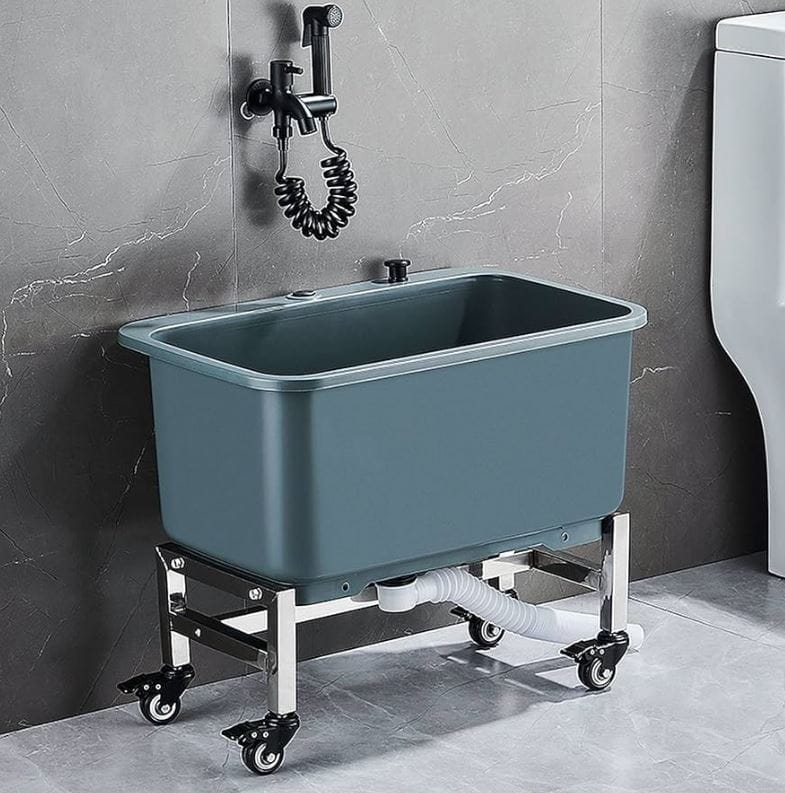
A service sink (or mop sink) is a specially designated sink or curbed cleaning facility with a floor drain, used for cleaning mops and disposing of mop water . It is distinct from sinks used for food preparation, dishwashing, or handwashing.
Critical Rule:
A food preparation, utensil washing, or handwashing sink must never be used as a mop or utility sink . This is a critical food safety violation designed to prevent cross-contamination.
Regulatory Requirements and Best Practices
To maintain compliance and operational integrity, consider the following detailed requirements.
1. Sanitary Sewer Discharge is Mandatory
The service sink must be connected to the sanitary sewer system. The wastewater then flows to a municipal treatment plant where pollutants are removed before the water is released . Discharge to a septic system is typically not permitted for commercial food establishments.
2. Pre-Treatment is Often Required
Before mop water can even enter the sanitary sewer, most restaurants must ensure it meets local “trade waste” requirements. This often necessitates pre-treatment to remove solids and FOG. This protects the sewer infrastructure from blockages .
Common Pre-Treatment Devices:
- Dry Basket Arrestors: These are strainers with a mesh of 3mm or less that capture large food solids and debris. They are often required on all sinks and floor drains in food prep areas . Solids are then disposed of as solid waste.
- Grease Arrestors (Traps): These devices cool wastewater, allowing FOG to separate and float to the top while solids settle to the bottom. They are mandatory for businesses with “hot food” preparation and are sized based on the establishment’s capacity . For instance, a minimum capacity of 1,000 liters is required in some regions, and they must be pumped out regularly by a licensed contractor .
3. The “Dry Clean-Up” Principle
Best practices dictate that solid waste (spilled food, grease) should be cleaned up using “dry” methods before mopping with water. This involves sweeping, shoveling, or scraping solids into the trash . This reduces the load of solids and FOG entering your pre-treatment devices and the sewer system, making the mop water less contaminated and easier to manage.
4. Employee Training is Essential
The most robust system fails if staff are not properly trained. All employees should be trained on:
- The “Only Rain in the Drain” Rule: Why dumping wash water outside is illegal .
- Proper Use of the Service Sink: Prohibiting the use of other sinks.
- Cleaning Protocols: Using dry methods first and not hosing down floors, which can wash grease and solids into drains .
- Maintenance: How to empty strainer baskets into the trash and report any issues with the grease trap .
Disposal Method Comparison
The following table summarizes the various disposal options and their compliance status.
Navigating Space Constraints
In some older or smaller establishments, a designated service sink may not be available. While the preference is always to install one, some health departments (e.g., Kitsap Public Health District) may allow an alternate plan . This often involves:
- Containment: The mop water must be captured in a dedicated container (like a mop bucket) in a manner that minimizes spillage.
- Transport: The water must be transported to a nearby, approved service sink (within a specified distance, e.g., 200 feet) .
- Written Plan: The operator must submit a written plan of operation that outlines this process for approval.
This is considered a secondary solution, and a dedicated sink should always be the long-term goal.
Conclusion
The proper disposal of mop water is a non-negotiable aspect of restaurant operations. It is a matter of legal compliance, environmental stewardship, and public health. The rule is simple: only clean water can go into a storm drain; all other water, especially mop water, must go into an approved service sink connected to the sanitary sewer, preferably with proper pre-treatment.
By investing in the correct infrastructure and training your staff, you protect your business from fines and legal action, and contribute to the health of your community.