The Ultimate Guide to Planning an Eco-Friendly Home Upgrade

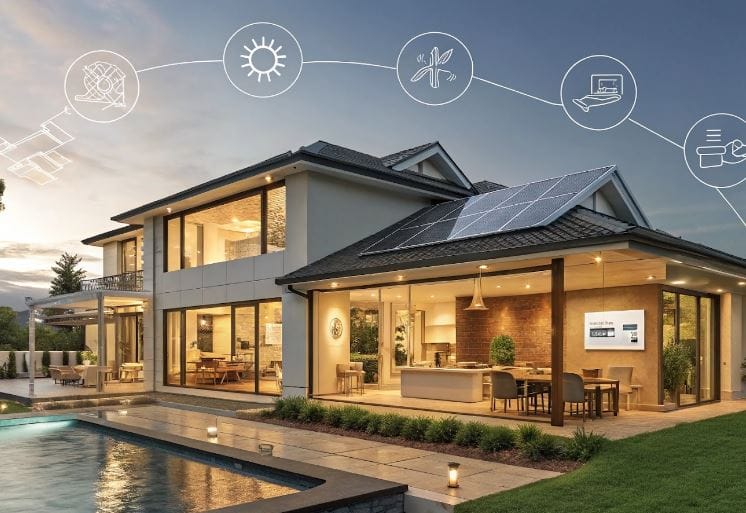
Many of the most environmentally sensitive home improvements provide the least bang for the buck if not applied correctly. Experts say the most effective savings and satisfaction often come from taking a series of down-to-earth steps to add and improve insulation and air sealing. That usually should come first, way ahead of swankier but far less productive-per-dollar improvements like adding solar panels, a tankless water heater, or energy-efficient windows.
Start With An Energy Audit, Not A Shopping List
Before you buy anything, figure out where your house is really losing energy. A pro home energy audit uses blower door tests and infrared cameras to pinpoint air leaks, insulation gaps, and duct losses you’d never spot walking through with a flashlight. Some utility companies give them free or at a reduced price, so call to see what’s available in your area before you pony up for the whole enchilada.
If pro’s not in the budget yet, a DIY checklist gets you most of the way there. Poke your head up in the attic to check out the insulation. Feel for drafts around windows and doors. And eyeball your energy bills for the last year to see when you’re spending the most. Whether you check or the pros do it, the point is the same: you want to see the data before you spend the money, not blindly trust that the good intentions of a product brochure’s eco-friendly claim will provide all the energy savings you’re hoping it will.
Seal and Insulate Before You Touch Equipment
Many people overlook this step because it’s not exciting. You won’t see anyone sharing pictures of their new attic insulation online. However, the U.S. Environmental Protection Agency says that homeowners can save an average of 15% on heating and cooling costs by sealing air leaks and adding insulation to attics, ducts, and crawl spaces. In fact, this is typically the single most cost-effective energy upgrade available for most homes.
So why is this a sequencing issue? Well, if your house is leaking conditioned air, a new high-efficiency furnace or heat pump will still be running full blast to make up for it. You’ll be paying top dollar for equipment that’s struggling because your building envelope is still leaky. It’s always cheaper to reduce the demand for heating and cooling than it is to generate or deliver it more efficiently. Get the insulation and air sealing out of the way, then size your HVAC replacement according to the new load – not the oversized old one.
Use Certifications To Cut Through Marketing Noise
Once you are at the stage where you are considering specific windows, doors, HVAC systems, and appliances, the first thing you should look at is whether they are ENERGY STAR certified. This is not a foolproof standard, but it is a verified one that eliminates a lot of the low-hanging fruit. For instance, a window that doesn’t have that certification and is simply “energy-efficient” over a base model will likely only offer you single-digit gains in performance, with no third-party organization verifying the numbers on the label.
This is the stage where most greenwash creeps into the process; “eco-friendly,” “sustainable,” and “green” actually have no legal definitions in the marketplace, and the same goes for most manufacturer’s claims about similar adjectives. If it doesn’t have a direct certification such as ENERGY STAR for equipment or WaterSense for plumbing fixtures, or isn’t FSC certified for wood products, broadly salt it in your mind. If a company can’t point directly at a standard or third party that does an audit that isn’t themselves, it’s a marketing claim, not a fact.
Protect Indoor Air Quality While You Renovate
Improving a home’s energy efficiency can reduce its overall impact on the environment and your wallet. But along with making sure that you are selecting energy-efficient appliances and adding insulation in the right places, you’ll want to also consider how suitable the different materials you are using for home improvement are. This is to ensure you aren’t causing unintended harm over their life cycle.
For example, paints, sealants, and finishes can continue to emit harmful volatile organic compounds (VOCs) for years after they have dried and, if they’re of the wrong sort, can wreak havoc on your home’s indoor air quality. Then there are wood finishes that aren’t durable or that contain biocides and other toxins to discourage mold and insect damage.
Choosing Sustainable Flooring: What Actually Matters
Flooring is typically the largest decision by material, in any renovation, and often one of the slipperiest places in green marketing, where it’s easy to skid on well-polished words. Bamboo and cork are both rapidly renewable materials, meaning they renew themselves far faster than hardwood trees, but that doesn’t make them equivalent. Bamboo is typically harder and more scratch-resistant, so it’s a better option for high-traffic installations. Cork is naturally cushioning and insulating, which makes it a desirable option for a bedroom or a home workspace.
Reclaimed wood and recycled tile go about it differently: instead of relying on a fast-growing resource, they subtract from the carbon total by reusing a material that has already been extracted, milled, or fired. (Embodied carbon accounts for all the emissions associated with extracting, manufacturing, and shipping a material, and it’s easy to forget in the shine of new flooring.) A floor plank of bamboo shipped halfway around the planet can have a bigger carbon footprint than a piece of reclaimed wood bought and laid locally, even if the bamboo is the one that gets the green rep.
Maintenance and disposal matter as much as the point of purchase or post-install. Cork, for instance, will require resealing every so often. Depending on its condition going in, a reclaimed wood floor will need a new finish after a few years, maybe more. And at the end of a floor’s life, some materials can be recycled into something new while others are headed for the landfill, no matter how “sustainable” someone branded them. Weighing all that against your budget, foot traffic, and climate is legitimately hard, and not something you want to suss out based on Yelp reviews. A firm like Wayne Wiles Floor Covering gives you access to samples, informed installation guidance, and advice on the environmentally friendly underlayments and adhesives that go with whatever you eventually select, so the sustainability gains don’t get undermined by an unrelated product choice underneath.
Don’t Forget Water, Even In An Energy-Focused Plan
Water conservation tends to have a lower profile than energy efficiency, but it’s frequently easier and cheaper to address, and the savings are immediate and overt. A relatively painless water upgrade typically doesn’t require the same upfront investment or renovation mess as an energy performance upgrade for the same order of savings.
Low-flow toilets, faucets, and showerheads are so good these days that most people don’t even notice they are low-flow; they just notice they’re using less water. Nothing will make you more aware of this than a teenager who takes 45-minute showers, and nothing will make you happier if you’re paying the water bill than a magic device that cuts their water consumption with no complaints. Swapping out an older, high-flow showerhead can save a household more than 2,300 gallons of water a year and all three fixtures cost less than $50 each.
Chase Incentives Before You Finalize Your Budget
Tax credits and rebates make so many major upgrades pencil out on paper, and yet too many people price out a project before they’ve seen what’s available. The Residential Clean Energy Credit covers a percentage of the costs of solar, heat pumps, and other qualifying equipment. And often, your local utility company has its own rebate program on top of the government incentive, particularly for insulation, smart thermostats, and water heaters.
Look at what’s available now in your area before you sign a contract with anyone. Incentives change annually, and a rebate that made something pencil last year might be much smaller or gone by the time you’re ready to plunk down the plastic.
Run The Numbers Before You Commit
You want to break the payback rule into “fast, medium, and slow.” That’s not about the size of the cost, but about the longer-term prospects of saving money faster thanks to a building performance upgrade. For instance, window replacement is rarely a fast-payback item, although homeowners are often persuaded by the emotional comfort benefits; new windows tend to leave a lot of cash in the hands of the sales reps. Certain equipment replacements, like a rooftop unit, will free up the cash you already spend on heating or cooling the outdoors, but they take a very long time to pay for themselves.
A word about financing: it can make the payback threshold a little fuzzier because now you’re deciding what percentage to apply to a financing term. A loan broker or your contractor should be able to tell you this, and this isn’t the same thing as an interest rate. Longer financing terms tend to result in a less attractive payoff period even for a marginal payback upgrade, because you’re still paying interest on equipment that will be past its useful life before you finish the loan.
Another financing strategy is to combine a high-return short-term loan for the quick wins with a loan on a lower-return long-term item that you couldn’t justify based on payback alone. Splitting it this way can give you the best of both worlds, so make sure you don’t tell your banker everything you’re thinking. They usually prefer you to drive one really expensive car rather than leasing a couple of good ones, because they get paid on the amount you borrow (as will your contractor, if he is brokering the financing).
Handle Removed Materials Responsibly
Renovations create waste, and the way we dispose of that waste has an impact. Numerous items such as old cabinetry, flooring, fixtures, and lumber can still be used. Donating these materials, recycling other materials, and using recycled content when making new purchases (especially insulation, countertops, and tiles) can decrease the total environmental impact of the renovation. If all materials are simply thrown away, the positive effects achieved during the rest of the renovation will be lost.
Verify The Results After Installation
The work is not done until the final screw is in place. Analyze your utility bills, making the proper adjustments for differing weather conditions, to be sure that the savings are happening as expected. Also, consider whether things are more comfortable: are the rooms a bit more even-temperatured, is the humidity a bit more subdued, does the air smell fresher? Those are real indicators even if they don’t appear as a line item on the ledger.
Maintenance ensures that your efficient investment will keep paying back. Filters need changing, duct seals can loosen, even the best insulation can settle over time. A quick yearly checkup will ensure that the savings you installed are the savings you keep getting.
Building A Home That Actually Performs
A green upgrade is not necessarily to go out and get the most expensive green thing. It is to look for the sequence that one decision is going to promote the next one, to look for the real data and not the marketing data, to look at verifying potential performance against actual performance and actual certificates, and use payback calculation to direct which project to do next. Get the envelope right first, and then the low-energy heating/cooling system, and then let the payback be your guide as you move forward.