Does Lysol Spray Kill Mold Spores in the Air? A Comprehensive Analysis

The presence of mold in indoor environments raises significant health and structural concerns. A common question among homeowners is whether spraying a readily available disinfectant, such as Lysol, can effectively neutralize airborne mold spores. This article provides a detailed, evidence-based analysis of Lysol’s capabilities against airborne mold, outlining why it is not an effective solution and detailing the appropriate strategies for managing mold spores in the air.
Understanding Mold Spores and Their Behavior
Molds are a type of fungus that reproduce by releasing microscopic structures called spores into the environment. These spores are exceptionally lightweight and resilient, allowing them to remain suspended in the air for extended periods. They can also remain dormant under unfavorable conditions, only to reactivate when they land on a surface with sufficient moisture and a food source. This resilience is what makes mold contamination a persistent problem.
The primary health risk associated with mold is inhalation of these airborne spores, which are known to trigger allergic reactions, asthma attacks, and other respiratory issues. The musty odor often associated with mold is caused by microbial volatile organic compounds (MVOCs) released by the growing fungi, another sign of poor indoor air quality.
Lysol Spray: Formulation and Intended Use
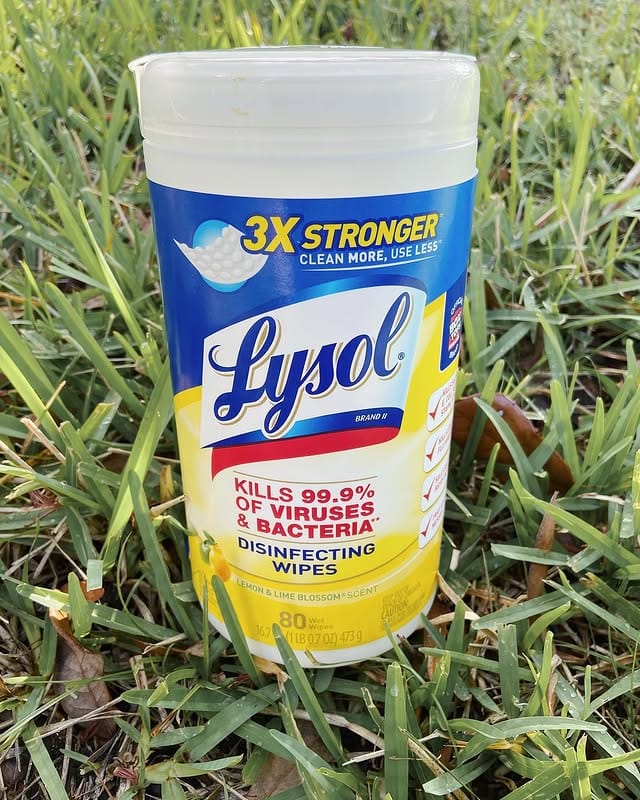
Lysol Disinfectant Spray is formulated with active ingredients such as ethanol (58% in some formulations) and alkyl dimethyl benzyl ammonium saccharinate. Its primary mechanism of action involves disrupting the cell membranes and denaturing the proteins of microorganisms, leading to their inactivation.
According to its label and manufacturer information, Lysol is designed for use on hard, non-porous surfaces. Its efficacy is well-documented for killing 99.9% of viruses and bacteria on these surfaces when the product is allowed to remain wet for the specified contact time (often up to 10 minutes). The product is also registered with the Environmental Protection Agency (EPA) and is described as hospital-grade against a range of pathogens.
Key Points on Lysol’s Functionality
- Surface Application: The spray format is intended to coat surfaces, allowing the active ingredients to make direct contact with the microorganisms present.
- Controlling Mold Growth on Surfaces: Lysol’s label indicates it can control the growth of mold and mildew on hard, non-porous surfaces when applied to a pre-cleaned area and allowed to remain wet for 3 to 10 minutes. This is a preventative measure and a treatment for surface-level mold, not airborne spores.
- Air Deodorization: Lysol can deodorize the air by neutralizing odor-causing bacteria on surfaces, but this is not the same as air disinfection or sterilization.
The Limitations of Lysol Against Airborne Mold Spores
Despite its efficacy on surfaces, using Lysol spray to “clean the air” of mold spores is a widespread misconception. Multiple sources and technical analyses confirm that Lysol spray is not effective against airborne mold spores. The reasons for this are grounded in both product design and physics.
1. Insufficient Contact Time and Concentration
For a disinfectant to be effective, it must maintain a sufficient concentration in contact with the microorganism for a specific duration. When Lysol is sprayed into the air, the active ingredients are instantly diluted, and the brief, transient contact with a passing spore is not enough for the chemicals to penetrate and neutralize the spore. The product is not designed to linger in the air; its mist quickly settles on surfaces.
2. Product Intended for Surfaces, Not Air
Lysol is a surface disinfectant, not an air purifier or sterilizer. Its formulation is optimized for coating and treating hard, non-porous surfaces, not for treating the air volume of a room. The Environmental Protection Agency (EPA) classifies Lysol as a disinfectant, not a device or chemical for air sanitation.
3. Comparison of Effective Airborne Spore Neutralization
To highlight the gap in capability, it is useful to compare Lysol’s limitations with technologies proven to neutralize airborne biological agents. The following table illustrates this distinction.
Alternative Solutions for Airborne Mold Spores
The most effective strategies for managing airborne mold spores do not involve spraying a surface disinfectant into the air. Instead, they focus on source control, physical removal, and advanced air filtration.
1. HEPA Air Purifiers
According to multiple experts and the EPA, HEPA (High-Efficiency Particulate Air) filter air purifiers are one of the most effective ways to remove mold spores from the air. These devices use powerful fans to draw in air and pass it through a fine mesh filter that captures microscopic particles, including mold spores.
2. Addressing the Source: Moisture Control
The most crucial step in mold control is addressing the underlying moisture problem. Mold cannot grow without a water source. Identifying and fixing leaks, reducing indoor humidity with dehumidifiers, and improving ventilation are essential first steps. An environmental professional must inspect the property to locate all sources of moisture.
3. Professional Mold Remediation
For extensive mold infestations, professional remediation is necessary. Professionals use EPA-registered fungicides, HEPA vacuums, negative air machines, and containment procedures to safely remove mold and prevent spore spread. This process involves the physical removal of mold-damaged porous materials like drywall and insulation, as relying solely on “killing” mold is not sufficient—the dead spores can still be allergenic and the structural root cause remains.
Conclusion: Does Lysol Spray Kill Mold Spores in the Air?
The definitive answer is no. Lysol Disinfectant Spray is not effective for killing mold spores that are suspended in the air. It is a surface disinfectant designed to kill bacteria and viruses on hard, non-porous surfaces.
Relying on Lysol spray to treat an airborne mold issue is not only ineffective but can create a false sense of security while allowing the underlying mold problem to worsen.
To effectively address airborne mold spores, homeowners and professionals must adopt a comprehensive, multi-pronged approach:
- Identify and Eliminate Moisture Sources: This is the foundational step to stop mold growth.
- Physically Remove Mold: Clean mold from hard, non-porous surfaces with appropriate cleaning agents and remove contaminated porous materials.
- Use HEPA Air Purifiers: These devices are proven to remove airborne spores from the indoor environment.
- Engage Professional Services: For significant or recurring mold problems, professional remediation is the only reliable long-term solution.
Spraying Lysol into the air will not solve a mold problem and is an ineffective use of a product designed for a different purpose.