How to Remove the Smell of Bleach from Your Hands: A Comprehensive Guide
The pungent, lingering odor of bleach on your hands is a frustrating and common problem for anyone who uses this powerful disinfectant. Standard handwashing often proves ineffective, leaving you with a persistent chemical smell that seems to defy removal. This article provides a definitive, science-backed guide to understanding why this happens and how to effectively and safely eliminate the odor.
Understanding the Chemistry: Why the Smell Lingers
The persistence of the bleach smell is not because the bleach itself is trapped on your skin. It is a chemical reaction. Household bleach contains sodium hypochlorite as its active ingredient. When this compound comes into contact with the natural oils, proteins, and other organic matter on your skin, it reacts to form new chemical compounds known as chloramines .
The Role of Chloramines
Chloramines are responsible for the characteristic “chlorine” or “bleach” smell that is so difficult to remove . This process is a form of halogenation, where the hypochlorite molecule binds to the organic material on your skin. This creates a volatile compound that releases the odor you smell.
Standard soap is designed as a surfactant to lift and wash away dirt and oils. However, it is not formulated to break the chemical bonds between the chloramines and the proteins in your skin’s top layers . Simply scrubbing with soap and water removes the surface-level bleach residue but leaves the odor-causing byproducts behind, which is why the smell persists.
The Science of Malodour Reduction
Procter & Gamble holds a patent that describes the mechanism of bleach malodour on skin. The patent identifies that the volatile products from the reaction between hypochlorite and skin amino acids are the cause of the residual bleach smell . The patent proposes using a polycarboxylate polymer in bleach formulations to form a hydrophobic film on the hands, reducing contact with the water phase containing hypochlorite and slowing this malodorous reaction .
Immediate First Steps: Safety and Basic Washing
Before attempting any odor removal method, it is crucial to follow these safety steps:
- Immediate Rinse: If you get bleach on your hands, immediately rinse them thoroughly with cool or lukewarm water for several minutes. Avoid using hot water, as it can open pores and potentially trap the odor-causing chemicals .
- Soap and Water Wash: Wash your hands with a mild soap and water to remove any residual bleach solution from the surface of your skin . This is a necessary first step but is unlikely to completely eliminate the odor on its own.
- Moisturize: Bleach is a strong alkaline substance that can strip your skin of its natural oils, leading to dryness and irritation. After washing, apply a moisturizer to help restore your skin’s barrier .
Effective Methods for Odor Removal
Since the problem is chemical in nature, a targeted, chemical approach is often required. The following methods are based on the principles of acid-base neutralization, physical exfoliation, and molecular binding. It is critical to understand that you should never mix bleach with any of these substances directly, as dangerous chemical reactions can occur. These methods are for use after the bleach has been thoroughly rinsed from your hands.
1. The Acidic Neutralizers (Lemon Juice & Vinegar)
This is widely considered one of the most effective remedies because it relies on a fundamental chemical reaction: acid-base neutralization. Bleach is highly alkaline, and the chloramines it produces are also alkaline in nature. Acids can neutralize these compounds, breaking them down and eliminating the odor .
- Lemon Juice: The citric acid in lemon juice effectively neutralizes the alkaline bleach residue and breaks down chloramine molecules . Squeeze fresh lemon juice onto your hands, rub them together for about a minute, and then rinse thoroughly with warm water. This method also leaves a pleasant, fresh scent.
- White Vinegar: Acetic acid, the active component in white vinegar, works on the same principle. Pour a small amount of vinegar into your hands, rub them together, and allow it to sit for a minute before rinsing . The vinegar smell itself will dissipate quickly, taking the bleach odor with it .
2. The Exfoliating Absorbers (Baking Soda & Coffee Grounds)
These methods work through a combination of gentle abrasion and odor absorption, physically removing the top layer of skin cells where chloramines are bonded and absorbing the volatile compounds.
- Baking Soda Paste: Baking soda is a mild abrasive and a natural odor absorber. It can help scrub away odor-causing particles from the skin’s surface . Create a paste by mixing baking soda with a small amount of water. Rub this paste over your hands for 60-90 seconds, paying attention to the spaces around your nails and skin creases. Rinse clean .
- Coffee Grounds: The strong, absorbent nature of coffee grounds makes them an effective odor neutralizer and exfoliant. Take a handful of damp coffee grounds and rub them vigorously over your hands . The grounds’ abrasive texture exfoliates, and their strong scent helps mask and absorb the bleach odor . Some methods suggest combining coffee grounds with a few drops of dish soap for a combined exfoliating and cleansing scrub .
3. The Catalytic Method (Stainless Steel)
A surprising but effective method involves rubbing your hands on a stainless steel object under running water. This is believed to work through a catalytic reaction where the stainless steel binds to and neutralizes the sulfur and chlorine molecules that cause persistent odors . A stainless steel spoon or a specialized “steel soap” bar can be used.
Comparative Analysis of Removal Methods
Prevention: The Best Strategy
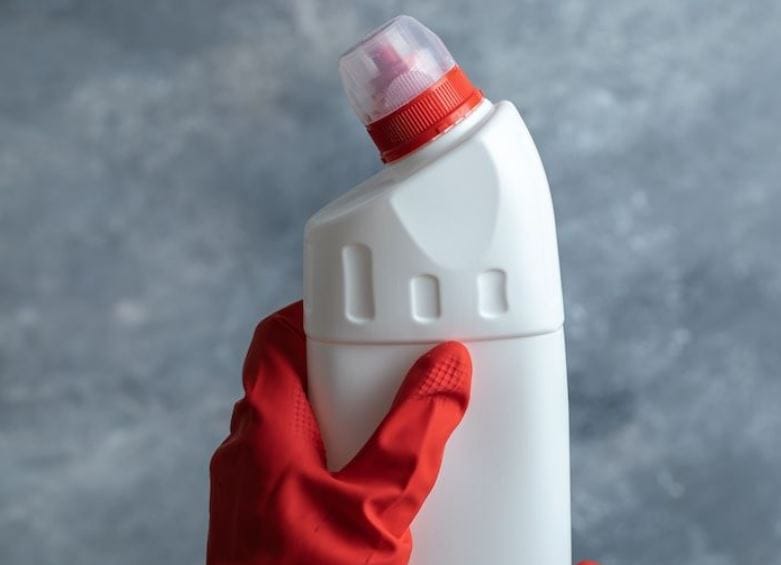
The most effective way to avoid the lingering smell of bleach on your hands is to prevent contact in the first place. The consistent use of rubber or nitrile gloves is the definitive solution . This not only prevents the odor but also protects your skin from the drying and potentially irritating effects of bleach, which can lead to chemical burns or dermatitis upon prolonged or repeated exposure .
Conclusion
The persistent smell of bleach on your hands is not a simple surface residue but the result of a chemical reaction forming chloramines. While standard soap is ineffective, a targeted approach using acid neutralizers (lemon juice, vinegar), exfoliating absorbers (baking soda, coffee grounds), or catalytic methods (stainless steel) can successfully eliminate the odor. However, the most prudent strategy remains prevention through the diligent use of protective gloves.