How to Clean a Sequin Dress: A Professional Guide to Preservation
Sequin dresses are a staple for festive occasions, from New Year’s Eve galas to red-carpet events. However, their delicate construction—thousands of small reflective discs attached by fine threads—makes cleaning them a high-risk task. Improper washing leads to broken threads, tarnished sequins, fabric distortion, or complete discoloration.
This guide provides evidence-based methods for cleaning sequin dresses at home, when to seek professional services, and how to avoid irreversible damage.
Before You Begin: The Critical “Sequin Check”
Not all sequins are equal. Perform these two tests before any cleaning attempt:
- The Light Test: Shine a flashlight on the sequins. If they appear iridescent or have a mirror-like backing, they likely have a metallic coating that can dissolve in alcohol-based cleaners or acetone (common in nail polish remover and some detergents).
- The Thread Test: Gently pull a single sequin sideways. Observe the thread color and tension. Dyed threads may bleed in water; loose threads will worsen during machine washing.
Phase 1: Pre-Cleaning – Spot Treatment & Odor Removal
Most sequin dresses do not need full immersion. Start with targeted interventions.
| Method | Best For | Application Technique |
|---|---|---|
| Lint roller (low-tack) | Dust, lint, pet hair | Roll with the sequin lay direction (usually downward). Never roll against, as edges lift threads. |
| Baking soda sachet | Musty odors, light perspiration | Place dress in a garment bag with 2 small muslin bags of baking soda. Seal for 48 hours. Shake off outdoors. |
| Vodka spray (60% ABV) | Bacteria-based odors (sweat, smoke) | Mix 1 part vodka : 3 parts distilled water. Lightly mist from 12” away. Hang to air-dry for 30 min. |
| Isopropyl alcohol (91%) + cotton swab | Spot stains (oil, makeup, wine) | Dab only the stain from the back side of the fabric. Never saturate sequins. Blot with white microfiber cloth. |
Warning: Do not use commercial stain removers containing benzalkonium chloride or citrus oils. These dissolve plastic-based sequins.
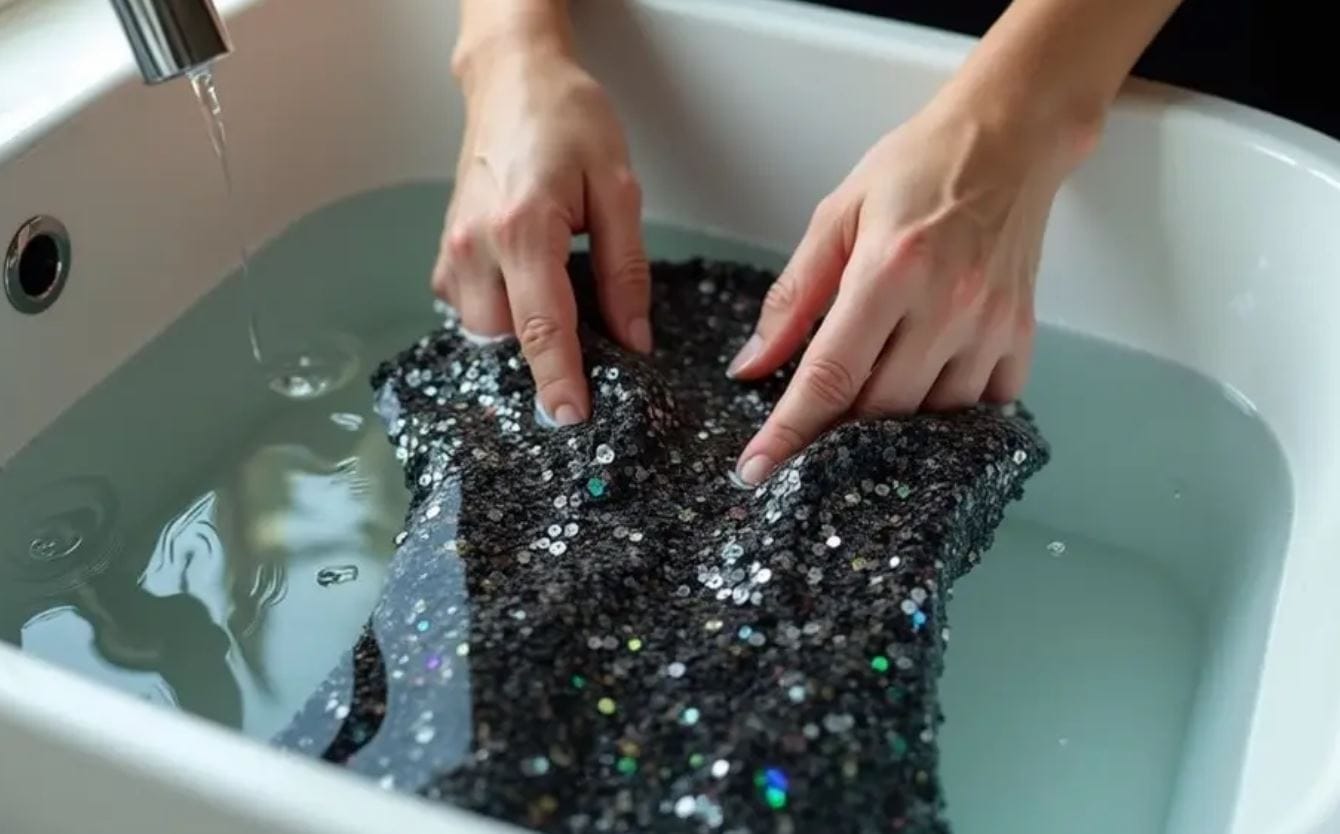
Phase 2: Hand Washing (The Only Safe Wet Method)
Machine washing – even on “delicate” – is not recommended for any dress with >30% sequin coverage. Hand washing is the gold standard.
Equipment Needed
- Large basin or clean bathtub
- Cool water (20–25°C / 68–77°F)
- Gentle detergent: Soak Wash, Eucalan, or Woolite (for synthetic sequins only)
- 2 white terry cloth towels
Step-by-Step Procedure
- Turn dress inside out. This protects sequins from rubbing against each other and the basin.
- Fill basin with cool water + detergent (follow detergent’s ppm guidelines – typically 1 tsp per gallon).
- Submerge and swish gently for 2–3 minutes. Do not scrunch, twist, or agitate. Sequins can cut each other’s threads.
- Drain and refill with clean cool water. Rinse by submerging and lifting vertically (no swishing). Repeat twice.
- Press water out – never wring. Lay dress flat on one towel, roll up like a jelly roll, and press firmly. Unroll, transfer to second dry towel, repeat.
Drying Protocol
- Lay flat on a drying rack, still inside out.
- No direct sunlight, no radiator, no dryer (heat warps sequins).
- Allow 24–48 hours drying time. Flip dress once at 12 hours.
Phase 3: Professional Dry Cleaning – When It’s Mandatory
Some sequin dresses should never see water. Refer to this decision table:
| Sequim Type | Home Hand Wash Safe? | Professional Dry Clean Required? |
|---|---|---|
| Plastic (polyester) – flat, round | ✅ Yes, with cool water | Only if heavily soiled |
| Metal-backed (gold/silver shimmer) | ❌ No – water tarnishes | ✅ Yes – request “no steam, no perchloroethylene” |
| Glass or crystal (heavy, rigid) | ❌ No – weight breaks threads | ✅ Yes – specify “gentle cycle, no friction” |
| Heat-sensitive (holographic, iridescent) | ✅ Yes, but spot-clean only | ❌ Risk of melting under press |
| Vintage (pre-1990, unknown material) | ❌ No – unknown glue/metal | ✅ Yes – find a vintage-textile specialist |
To your dry cleaner: Provide written instructions – “No steam, no perc, hand-turn only, bag individually.”
Phase 4: Storage & Maintenance Between Wears
Cleaning frequency: A sequin dress requires full cleaning only after 3–4 wears, unless visibly stained or odorous. Between wears:
| Action | Frequency | Tool/Product |
|---|---|---|
| Air out | After each wear | Garment rack in ventilated room (2 hours) |
| Brush with garment brush | Before storing | Soft horsehair brush, stroke with sequin direction |
| Fold (never hang) | Long-term storage | Acid-free tissue paper between folds; store flat in breathable cotton bag |
| Avoid plastic garment bags | Always | Plastic traps moisture → mildew on threads |
Comparison of Cleaning Methods – At a Glance
| Method | Effectiveness (Stain Removal) | Risk of Damage | Cost (USD) | Time Investment | Best Use Case |
|---|---|---|---|---|---|
| Spot clean + vodka spray | Low–Moderate | Very Low | 0–0–5 | 10 min + 30 min dry | Light wear, one event |
| Hand wash (cool water) | Moderate–High | Low (if done correctly) | 2–2–10 | 1 hour + 48 hr dry | Polyester sequins, sweat stains |
| Dry cleaning (specialized) | High | Moderate (depends on cleaner) | 25–25–60 | 2–5 days | Metal/glass sequins, set-in stains |
| Machine wash (delicate bag) | Moderate | High (thread breakage, tarnish) | 1–1–3 | 1 hour | Not recommended – avoid |
Final Verdict: The Two-Rule Cleaning System
- Rule One – Minimal water: Unless the dress is visibly soiled, use vodka spray + baking soda for odor and lint roll for dust.
- Rule Two – Know your sequin: If a magnet sticks to the sequin (metal-based), go directly to a professional dry cleaner. If it’s soft plastic and the dress is polyester, hand wash cold.
When in doubt, test a single sequin on the inner hem. Clean sequin dresses not as a weekly chore, but as a preservation ritual. Done correctly, a quality sequin dress will outlast a decade of New Year’s Eve parties.