How to Clean a Maple Fretboard: A Professional Guide to Safe Maintenance
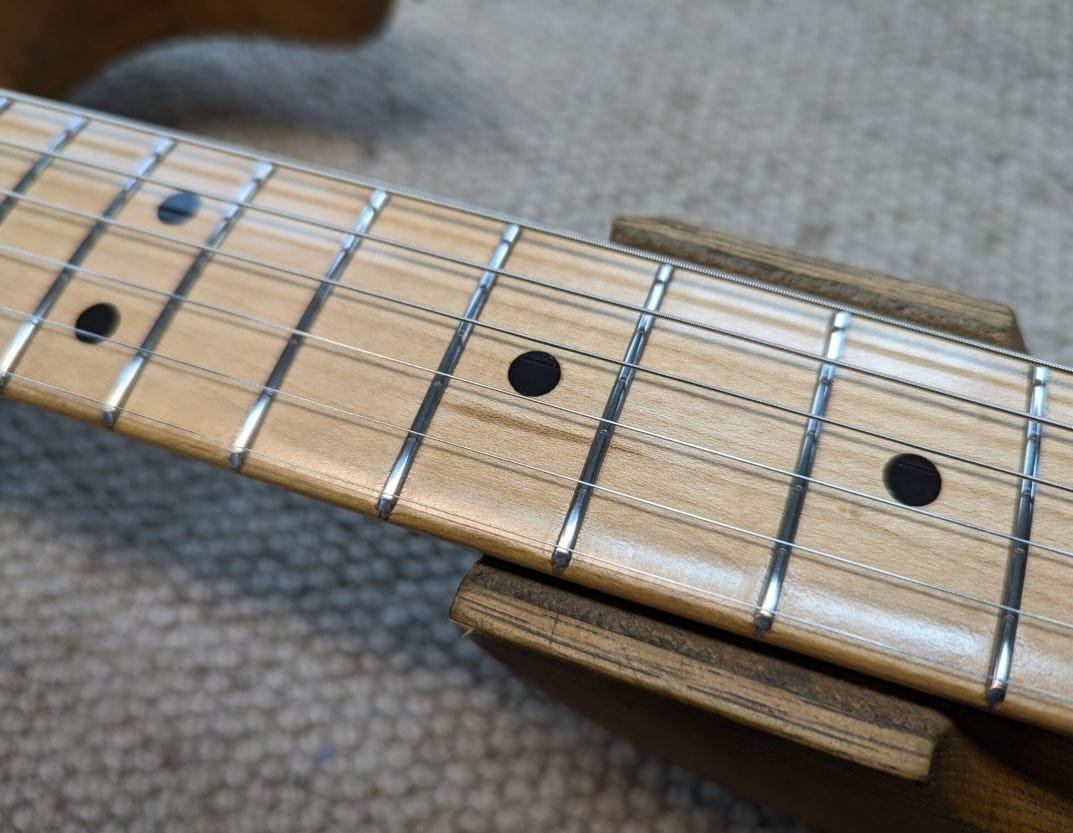
Maple fretboards are prized for their bright tone, smooth feel, and classic aesthetic. However, they differ fundamentally from rosewood, ebony, or pau ferro. Unlike open-pored, oiled woods, maple fretboards are almost always sealed with a hard finish—either polyurethane, nitrocellulose lacquer, or a thin UV-cured coating. This finish changes everything about how you should clean and condition the wood.
Clean a maple fretboard incorrectly, and you risk clouding the lacquer, lifting frets, or removing the finish entirely. Clean it correctly, and it will remain sleek, stable, and visually pristine for decades.
Below is a definitive, step-by-step methodology.
Critical Pre-Cleaning Knowledge: Finished vs. Unfinished Maple
Before any cleaning, verify your maple fretboard’s finish type. This dictates every product you will (or will not) use.
| Feature | Finished Maple (Most Common) | Unfinished / Lightly Oiled Maple (Rare) |
|---|---|---|
| Appearance | Glossy, satin, or matte sheen; feels smooth like the neck | Dull, dry-looking; feels like raw wood |
| Porous surface? | No – sealed | Yes – open grain |
| Can you use water? | Yes (damp, not wet) | No – causes swelling |
| Can you use lemon oil / mineral oil? | No – will not absorb; leaves residue | Yes – occasional conditioning |
| Fretboard cleaner type | Mild detergent or naphtha | Dedicated raw-wood cleaner |
| Risk level | Low to moderate (finish damage) | High (warping, staining) |
Professional note: Assume a maple fretboard is finished unless proven otherwise. Most Fender, Gibson, Ibanez, and PRS maple boards are sealed.
Tools & Materials Required
- Microfiber cloths (lint-free, 3–4 pieces)
- Soft-bristled toothbrush or detailing brush (nylon, not metal)
- Painter’s tape (low-tack, 1-inch width)
- Naphtha (VM&P Naphtha) – only for stubborn grime on finished maple
- Mild dish soap (e.g., Dawn, unscented)
- Distilled water (tap water leaves mineral deposits)
- Fine steel wool (0000 grade) – only for unfinished maple
- Fretboard-specific cleaner (e.g., MusicNomad F-One for unfinished; Gorgomyte for finished)
Step-by-Step Cleaning Protocol (Finished Maple Fretboard)
Step 1: String Removal & Neck Preparation
Remove all strings. Tape over the pickups with painter’s tape to prevent steel wool or metal debris from magnetically attaching to pole pieces. Place the guitar on a padded, flat surface.
Step 2: Dry Wipe
Using a dry microfiber cloth, wipe the entire fretboard lengthwise (with the grain) to remove loose dust, skin cells, and surface debris. Pay attention to areas near frets.
Step 3: Light Cleaning (Most Cases)
Mix two drops of mild dish soap into 8 oz of distilled water. Dampen (do not soak) a microfiber cloth with this solution. Wring it until nearly dry. Wipe the fretboard, moving along the grain. Immediately dry with a separate microfiber cloth.
Do not let liquid pool around frets. Sealed maple is water-resistant, not waterproof.
Step 4: Heavy Grime Removal (Sweat, Polymerized Oils)
If the fretboard looks hazy or has dark buildup along frets, use naphtha:
- Apply a small amount to a clean microfiber cloth (not directly to the wood).
- Rub gently in small circles over grimy areas.
- Naphtha evaporates quickly and removes oils without damaging polyurethane or nitro finishes.
Safety: Use naphtha in a well-ventilated area. No open flames.
Step 5: Fret Polishing (Optional but Recommended)
While the board is clean and exposed:
- Mask off the fretboard with painter’s tape, leaving only frets exposed.
- Polish frets with 0000 steel wool (for finished maple) or a fret polishing eraser.
- Remove tape. Wipe away any residue with a dry cloth.
Step 6: Final Wipe & Restring
Wipe the fretboard once more with a dry, lint-free cloth. Restring with your preferred gauge. Do not apply any oil, wax, or silicone-based conditioner to finished maple. It will not absorb and will create a sticky, dirt-attracting film.
Special Case: Unfinished Maple Fretboard
Unfinished maple is exceptionally rare, typically found on vintage instruments (pre-1960s Fenders) or custom builds. Here, cleaning must be minimalistic.
| Cleaning Task | Method | Frequency |
|---|---|---|
| Light dust / finger oils | Dry microfiber cloth | After each play |
| Embedded dirt | Damp cloth (water only) + immediately dry | Every 3–6 months |
| Deep clean | 0000 steel wool (lightly, with grain) | Annually (or as needed) |
| Conditioning | Raw linseed oil or tung oil (1 drop per 3 frets) | Every 12–18 months |
Warning: Never use commercial fretboard conditioners containing lemon oil or mineral oil on unfinished maple. They darken the wood unevenly and can soften the grain.
Comparison: Best Commercial Cleaners for Maple Fretboards
| Product | Type | Safe for Finished Maple? | Safe for Unfinished Maple? | Best For |
|---|---|---|---|---|
| MusicNomad F-One | Oil-based cleaner | ❌ (leaves residue) | ✅ | Unfinished maple conditioning |
| Gorgomyte | Impregnated cloth | ✅ (no residue) | ✅ (light use) | Quick wipe-downs on any maple |
| Dunlop 65 Ultimate Lemon Oil | Oil cleaner | ❌ | ✅ (sparingly) | Unfinished boards only |
| Naphtha (VM&P) | Solvent | ✅ | ❌ (too harsh) | Dissolving thick grime on finished boards |
| Simple Green (diluted) | Water-based cleaner | ✅ (damp cloth) | ❌ | Eco-friendly light cleaning |
Pro verdict: For 95% of players with finished maple, the best “cleaner” is a barely damp microfiber cloth with a drop of soap, followed by naphtha for stubborn spots. You do not need specialty fretboard oil.
Maintenance Schedule for Maple Fretboards
| Frequency | Action |
|---|---|
| After each playing session | Dry wipe with microfiber cloth |
| Every string change (3–6 months) | Step 3 (soap + water) or Step 4 (naphtha if needed) |
| Annually | Deep clean + fret polish |
| Never | Apply lemon oil, mineral oil, or wax to finished maple |
Common Mistakes That Ruin Maple Fretboards
- Using steel wool aggressively – Fine metal dust embeds in the finish and rusts.
- Soaking the board – Liquid seeps under frets, lifting them or causing finish peel.
- Applying lemon oil – On finished maple, it creates a cloudy, sticky layer that traps dirt.
- Using guitar polish (spray) – Many contain silicone or wax, which destroys lacquer finishes over time.
- Scraping with metal tools – Even a pick edge can score a soft nitrocellulose finish.
Final Verdict
Cleaning a maple fretboard is not difficult, but it requires discipline. Do not treat it like rosewood. Finished maple needs only mild solvents and friction, never hydration. Unfinished maple needs minimal moisture and very rare oiling.
When in doubt: wipe dry first. If that fails, use a damp cloth. If that fails, use naphtha. If that fails, consult a professional luthier—especially for nitrocellulose-finished vintage maple, which is fragile and collectible.
Clean correctly, and your maple fretboard will reward you with smooth playability and a timeless, bright look for life.