Common Basement Waterproofing Mistakes That Can Cost You Thousands
One thing that maintains a house’s structure sturdy is a dry basement. Moisture infiltration is one of the biggest threats to a property’s foundation. It starts off slowly with small amounts of moisture or a bad smell that won’t go away.
Many people make the mistake of ignoring these indicators. This may turn what should have been a simple correction into a complicated problem with unsafe mold and damaged foundations.
At this point, fixing the problem could cost tens of thousands of dollars. So, taking proactive steps to prevent problems and knowing what to do are necessary to keep a home safe and valuable.
Read on to learn how to avoid the costly basement waterproofing mistakes before they empty your wallet.
Skipping Professional Inspection and Maintenance
Think about the homeowner who fixes a crack every spring but doesn’t realize that the hydrostatic pressure under their foundation is getting worse with time. They see a cosmetic problem, but a professional would notice a problem that is becoming worse.
Here are the things to consider when it comes to keeping your basement dry and safe:
Professional inspection and evaluation
While you might see a dry wall, a professional is assessing the health of your foundation. They don’t just look for water; they diagnose the cause. Using tools like moisture meters and laser levels, they can detect the subtle bowing of a wall caused by hidden hydrostatic pressure. They can also trace the path of a leak back to a failed drain tile or identify a non-structural hairline crack that’s about to become a major water conduit.
Collaborating with a reliable waterproofing company
Many homeowners try to fix the problem piecemeal, like putting a sealant on one part and buying a drain at the shop for another, but the water keeps coming back. The reason for this is that they are only treating the symptoms and not the problem. A service like Waterproofing PD or another reliable waterproofing company can give you an expert evaluation of the whole system.
They will figure out if the problem is surface water, a high water table, or bad drainage outside, and then fix it for good with the right solution. Their complete plan is what gives you a permanent solution that will make your foundation stronger for a long time.
To avoid expensive repairs, it’s important to keep up with regular maintenance and professional inspections.
Ignoring the Root Cause of Moisture
Water is a smart intruder. The puddle in the corner of your basement is usually not where the water comes in. To find out where the problem started, true waterproofing needs a forensic-level study.
When trying to find the reason of moisture in the basement, these are some important things to look into:
Exterior grading and drainage
The primary role of exterior drainage is to control the bathtub effect. When the soil is saturated by negative grading (when it slopes toward the foundation) or overflowing gutters, the hydrostatic pressure against the foundation walls goes dramatically. This constant force will find any vulnerability and use it, like cold joints, fissures in the mortar, or porous concrete.
Foundation cracks and wall movement
Fractures in the foundation are a sign of stress on the structure. Different types of foundation cracks tell different stories. For example, horizontal cracks usually mean that the soil is too wet and putting too much weight on the sides, whereas stair-step cracks in concrete block walls mean that the foundation is settling. The big mistake is fixing the water leak without fixing the structural problems.
The first step in effective basement waterproofing is to know where the water comes from. If you deal with the real problem instead of just the symptoms on the surface, your basement will stay dry, stable, and safe all year.

Poor Exterior Drainage Solutions
It often starts with something small, like a gutter full of leaves in the fall. But when it rains in the spring, that obstruction creates a major problem. Water flows over the edge and collects in a flower bed close to your house that is lower than the rest of the yard. The water seeps deep into the earth, putting a lot of strain on your foundation wall without you seeing it.
This hydrostatic pressure is constant; it can gradually create new cracks by pushing the foundation wall inward over time. What could have been solved with a quick gutter cleaning can eventually threaten the home’s structural integrity.
This is a lesson in how outside drainage works: it’s a chain, and every link must hold. You need downspout extensions that operate like rivers to carry water away from your home to a safe delta.
Using the Wrong Waterproofing Products
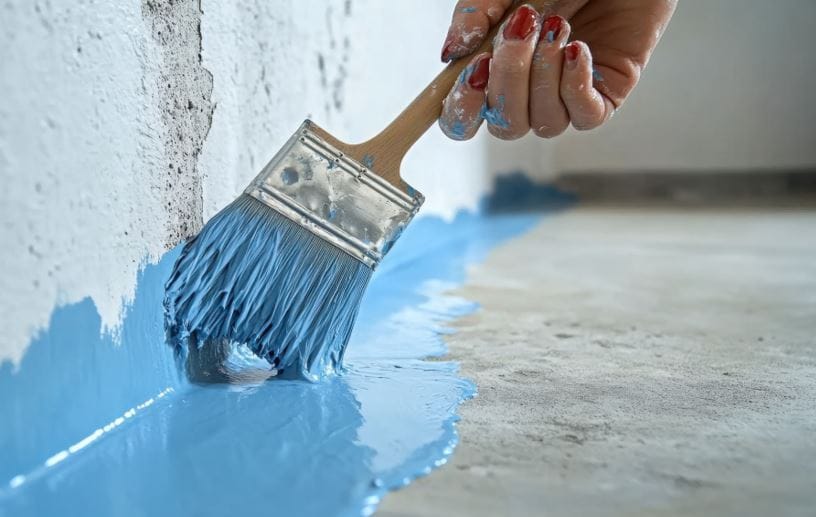
Putting waterproof paint on a basement wall that is leaking is like putting a bandage over a broken pipe. For a moment, things may look fine, but the real problem is getting worse. These paints are made for small amounts of water vapor, not the huge, secret force of hydrostatic pressure. If you keep that water inside your walls, you’ll get mold, concrete that falls apart, and a ten-times-larger repair bill.
So, how do you choose? A polyethylene air barrier will help you if your wall is just cool and damp. You’re in system land, though, if you see water seeping out. An internal French drain and a sump pump are what you need. This won’t fight the water but will just politely show it the way out. The most expensive sealing mistake you can make is skipping this for a quick fix.
Final Thoughts
Basement waterproofing requires making a whole system that keeps water out from all sides. You can keep your home’s foundation safe and avoid costly damage by fixing the problems at their source, keeping the drainage system in good shape, using the right supplies, and getting professional aid. Taking care of things today can save you thousands of dollars in repairs tomorrow