Is Toronto Real Estate Still a Good Investment?

Is Toronto real estate still a good investment in 2026? Learn what buyers should check before buying a home in Toronto.
Executive Summary: What Buyers Will Learn in This Guide
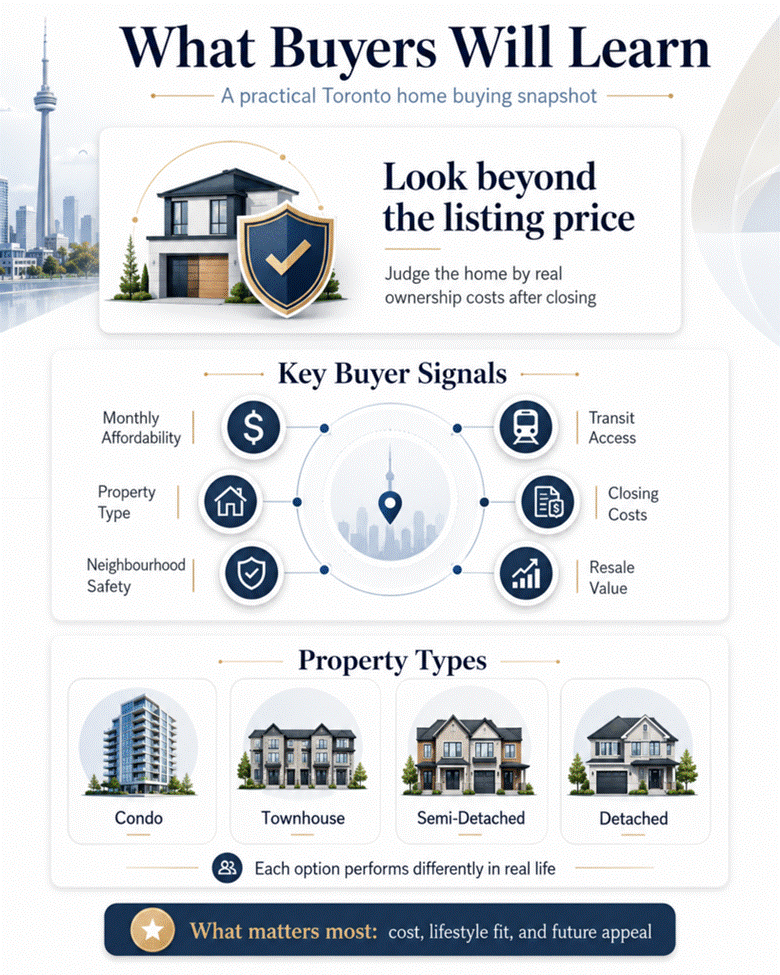
Before you treat a home as an investment, it helps to know what actually protects your money after closing. This guide explains how to judge Toronto real estate investment through buyer-focused signals like monthly affordability, property type, neighbourhood safety, transit access, closing costs, and future resale value. You will also learn why a condo, townhouse, semi-detached, or detached home can perform differently depending on real-life ownership costs, not just the listing price.
Is Toronto Real Estate Still a Good Investment?
Is Toronto Real Estate Still a Good Investment for Buyers in 2026?
For some buyers, yes. But in 2026, a smart Toronto real estate investment has to make sense beyond the hope that prices will rise. Think about how the home will feel six months after closing. Can you handle the mortgage, taxes, insurance, repairs, and daily commute without feeling stretched? Although Toronto still has strong long-term demand, not every property is worth the same risk. A better move is to compare recently sold prices, study the street, and choose a home that works for your life now and for resale later.
Toronto Housing Market 2026: What Buyers Should Know Before Investing
In 2026, it helps to look at the Toronto housing market slowly. Some listings may look like deals, but the real question is why the price feels lower. Is the seller motivated, or is the street, layout, building, or condo fee turning buyers away? Before calling any home a Toronto real estate investment, compare it with recently sold homes nearby. Also, check how long similar properties sit on the market. Those small details often tell you more than the asking price and help you spot real value before you make an offer.
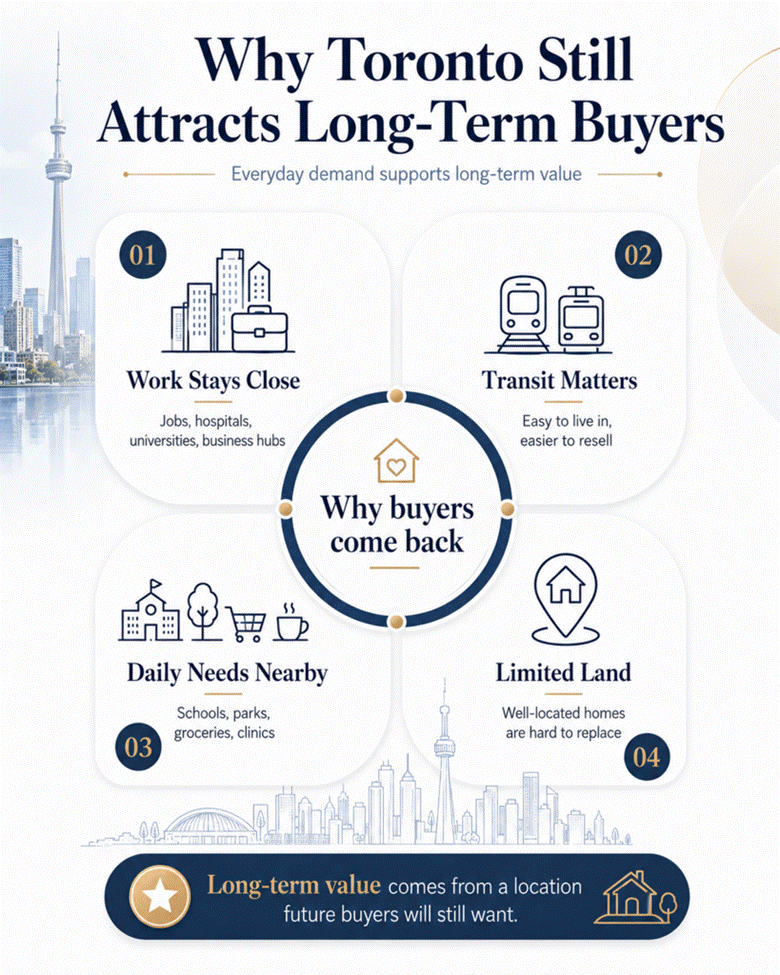
Why Toronto Real Estate Still Attracts Long-Term Home Buyers
People keep coming back to Toronto for a simple reason: it is not only a place to buy, but it is also a place to build a life. A good Toronto real estate investment often starts with that everyday demand.
- Work stays close: Many buyers want access to downtown jobs, hospitals, universities, and business hubs.
- Transit still matters: A home near subway, streetcar, GO, or strong bus routes is easier to live in and easier to sell.
- Daily needs are nearby: Schools, parks, groceries, clinics, and coffee shops quietly add long-term value.
- Good land is limited: In older Toronto neighbourhoods, well-located homes are not easy to replace.
So the real question is not just “Will prices rise?” It is whether another buyer will still want that same location years from now.
Why Toronto Real Estate Still Attracts Long-Term Home Buyers
Toronto Houses vs. Condos: Which Is the Better Investment in 2026?
There is no automatic winner here. A house can give you more space, more control, and land value, especially when you compare houses for sale in Toronto in older, well-connected areas. But the roof, furnace, basement, windows, and yard are now your problem. A condo may feel easier to buy, although the building can make or break the deal. For any Toronto real estate investment, look at condo fees, reserve fund health, layout, parking, storage, and whether another buyer would want it later. The best choice is the one that still feels manageable after the excitement fades.
Toronto Home Buying Costs: Can Your Investment Survive the Monthly Payments?
A home can pass the bank’s test and still feel tight in real life. Before you call it a Toronto real estate investment, run the numbers like you already live there.
- Mortgage payment: Check the payment now, then ask what it could look like at renewal.
- Property tax and insurance: These bills can creep up, even when your income does not.
- Condo fees: Look at what is included, what is not, and whether fees have jumped before.
- Repairs and utilities: An older house may need more breathing room every month.
- Cash buffer: Keep money untouched for the first surprise after closing.
If the home only works when nothing goes wrong, it is probably too close to the edge. A good investment should still leave you with room to live.
Toronto Neighbourhoods, Safety, and Transit: What Protects Resale Value?
A beautiful home can lose some appeal if the street does not feel right. For any Toronto real estate investment, the neighbourhood should pass a normal-week test, not just a weekend showing. Walk the block after dark, check lighting, traffic speed, parking pressure, and how busy nearby transit stops feel. Also, test the commute when you would actually travel, because ten minutes on a map can become thirty in real life. Buyers should also look at schools, parks, groceries, and nearby sold prices. These details often protect resale value better than a renovated kitchen alone.
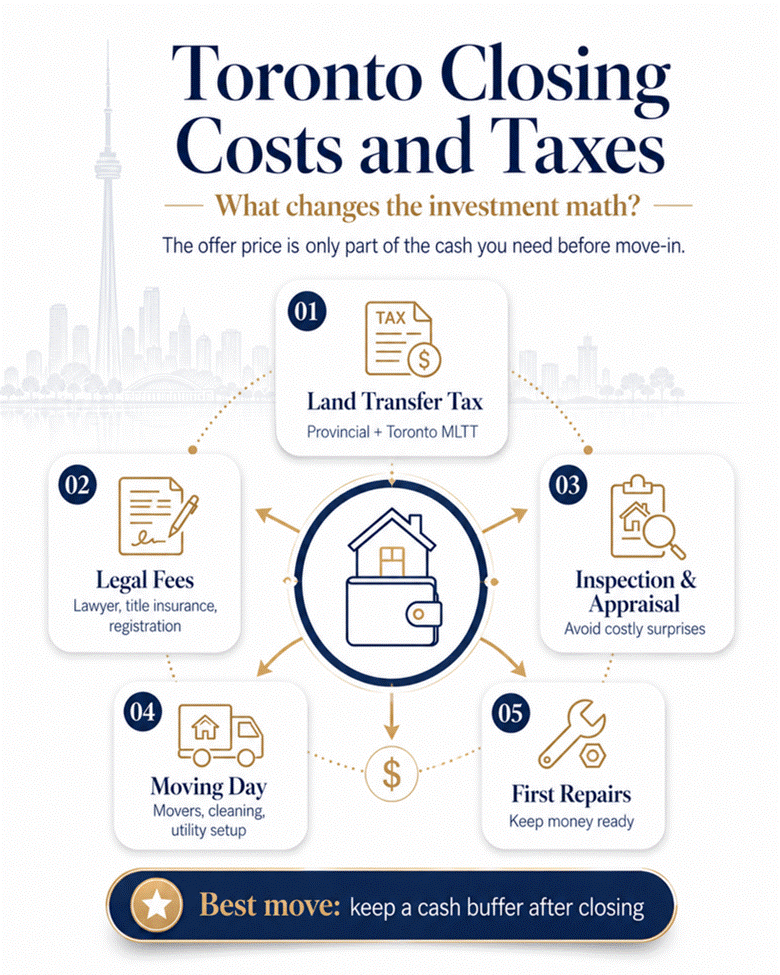
Toronto Closing Costs and Taxes That Can Change the Investment Math
The number on the offer is not the number you need in the bank. Before treating a home as a Toronto real estate investment, look at the money that has to leave your account before you even move in.
- Land transfer tax: In Toronto, buyers may need to pay both provincial and municipal land transfer tax.
- Legal fees: Your lawyer, title insurance, registration, and adjustments all belong in the budget.
- Inspection and appraisal: These costs can save you from a much more expensive mistake.
- Moving day: Movers, cleaning, locks, utility setup, and small fixes add up fast.
- First repairs: Something usually needs attention sooner than expected.
If closing wipes out your savings, the deal is already under pressure. A better purchase leaves you with a cash buffer after the keys are yours.
Toronto Closing Costs and Taxes That Can Change the Investment Math
When Toronto Real Estate Is Not a Good Investment for First-Time Buyers
Buying can be the wrong move when the decision is driven by pressure, not readiness. A Toronto real estate investment may become risky if you need perfect conditions to afford it, skip document review, ignore inspection concerns, or plan to sell again too soon. Be extra careful with unusual layouts, weak buildings, poor street feel, or homes that need repairs you cannot price clearly. For first-time buyers, the safest deal is not always the cheapest one. It is the one with manageable risk.
Final Verdict: Is Toronto Real Estate Investment Still Worth It in 2026?
For the right buyer, yes, but it has to be a careful yes. A Toronto real estate investment is still worth considering when the home fits your budget, your weekday routine, and your plan for the next five to ten years. Do not chase the prettiest listing or the lowest price. Choose the place you can actually hold, maintain, and one day resell with confidence.
FAQs
Is Toronto still worth buying in 2026?
Yes, but only if the home fits your real budget, not just your pre-approval.
What makes a good Toronto real estate investment?
A good Toronto real estate investment has a strong street, a useful layout, a fair price, and buyers who would want it later.
Condo or house: which is safer?
Neither is automatically safer. A condo depends on the building. A house depends on the repairs.
Does location matter more than size?
Often, yes. A smaller home in the right area can age better than a bigger one in the wrong pocket.
What should I check before offering?
Look at sold prices, total monthly costs, inspection risks, condo documents, commute, and neighbourhood feel.
When should I wait?
Wait, if buying would leave you with no savings, no repair buffer, or too much stress after closing.