Why a freshly cleaned carpet stays damp in humid weather
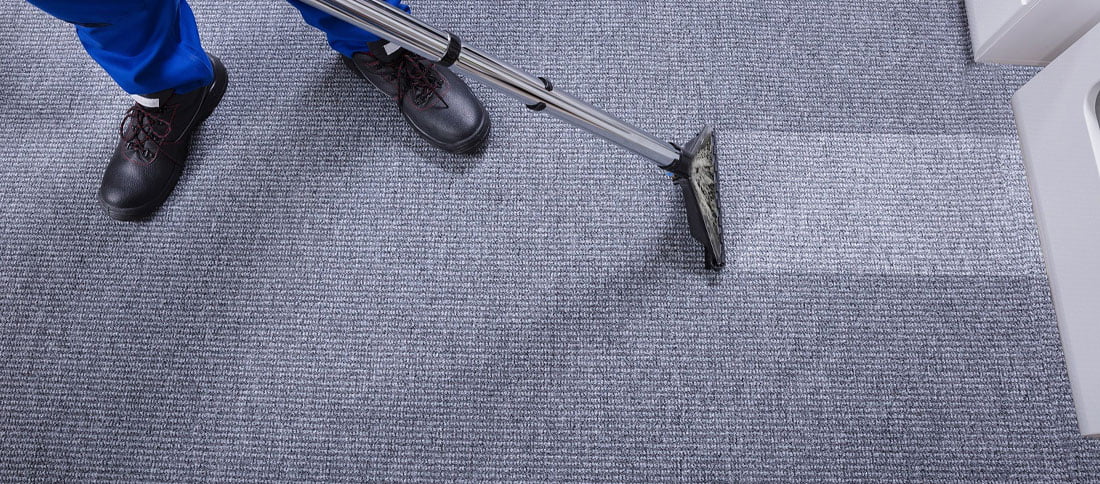
The reason a freshly cleaned carpet still feels damp the next morning is rarely the cleaner’s technique. It is the air in the room. Water leaves wet carpet by evaporating into the surrounding air, and humid air is already carrying close to as much water vapour as it can hold, so it takes the rest slowly. In a dry room a hot water extraction clean might be walk-on dry in a few hours. In a humid one the same carpet can stay damp for most of a day.
How humidity slows evaporation
Relative humidity is the measure that matters here: it describes how full the air already is. At 50 percent the air holds half the water vapour it could at that temperature; at 80 percent it is close to saturated. The higher that number, the smaller the gap the moisture has to move into, and the slower the pile gives up its water. Warm air holds more vapour than cold air, which is why a warm but dry day dries carpet faster than a cool damp one, and why running a dehumidifier or the air conditioner, both of which pull moisture out of the air, does more than heat on its own.
Underlay and the subfloor complicate the picture. A pile that feels dry to the hand can still hold water underneath, where almost no air moves across it. That trapped moisture is the part that decides what happens next.
Mould needs the carpet to stay wet
Mould and mildew grow where a food source stays damp long enough for them to establish. Carpet supplies the food readily: the fibres themselves, plus the dust and organic matter that settle into a pile over time. The moisture comes from the clean, and humidity decides how long it lingers before the carpet dries out. Of those, the drying time is the only one a cleaner can actually influence on the day.
When low-moisture cleaning beats a full steam clean
Hot water extraction is the more thorough clean for heavy soil, because it flushes detergent and loosened dirt out of the pile with a large volume of hot water. On a humid day that volume is exactly the problem: more water in means more water to get back out. Low-moisture methods work the other way. Very low moisture (VLM) encapsulation uses a cleaning agent that crystallises around the soil as it dries, and the dried residue is then vacuumed away, so the carpet takes in a fraction of the water and is often dry within an hour or two.
After a hot water extraction clean, carpet can hold moisture deep in the pile and underlay for 12 to 24 hours, and in humid conditions that drying window is exactly when mildew starts to take hold. Professionals manage it with slower extraction passes that pull more water out and air movers to speed the drying. They also match the method to the day’s conditions rather than steam cleaning regardless of the forecast. Operators in genuinely humid climates plan around this: a family-run Brisbane carpet cleaning business like Carpestology schedules jobs for lower-humidity days and switches to low-moisture encapsulation when a room has to be back in use within the hour. The same logic applies to an Ottawa home in a muggy July: on a high-humidity day, a low-moisture clean or a longer drying setup protects the carpet where a heavy steam clean would leave it damp overnight.
Matching the method to the day
None of this makes low-moisture cleaning a straight replacement for steam cleaning. Hot water extraction still removes more from a heavily soiled carpet and reaches the pet accidents that have soaked down into the backing, and skipping it to avoid a bit of dampness trades a real clean for a convenient one. The decision is about conditions and timing, not about one method winning outright.
On a dry day, or when a room can be closed off and left alone to dry, hot water extraction with proper drying support is the stronger choice. Check the forecast for a stretch of lower humidity, and keep air moving across the carpet until the underlay is dry rather than only the surface. Opening the windows helps only when the outside air is drier than the inside; on a humid day it usually is not, and a dehumidifier or the air conditioner will do more. When the room has to stay in use, or the weather will not cooperate, a low-moisture clean gets an acceptable result without the overnight damp that invites mould.
For an Ottawa household that mostly means reading July and August differently from October. The carpet has not changed. The air has, and the method should change with it.