Does Acetone Leave a Residue? The Definitive Technical Analysis
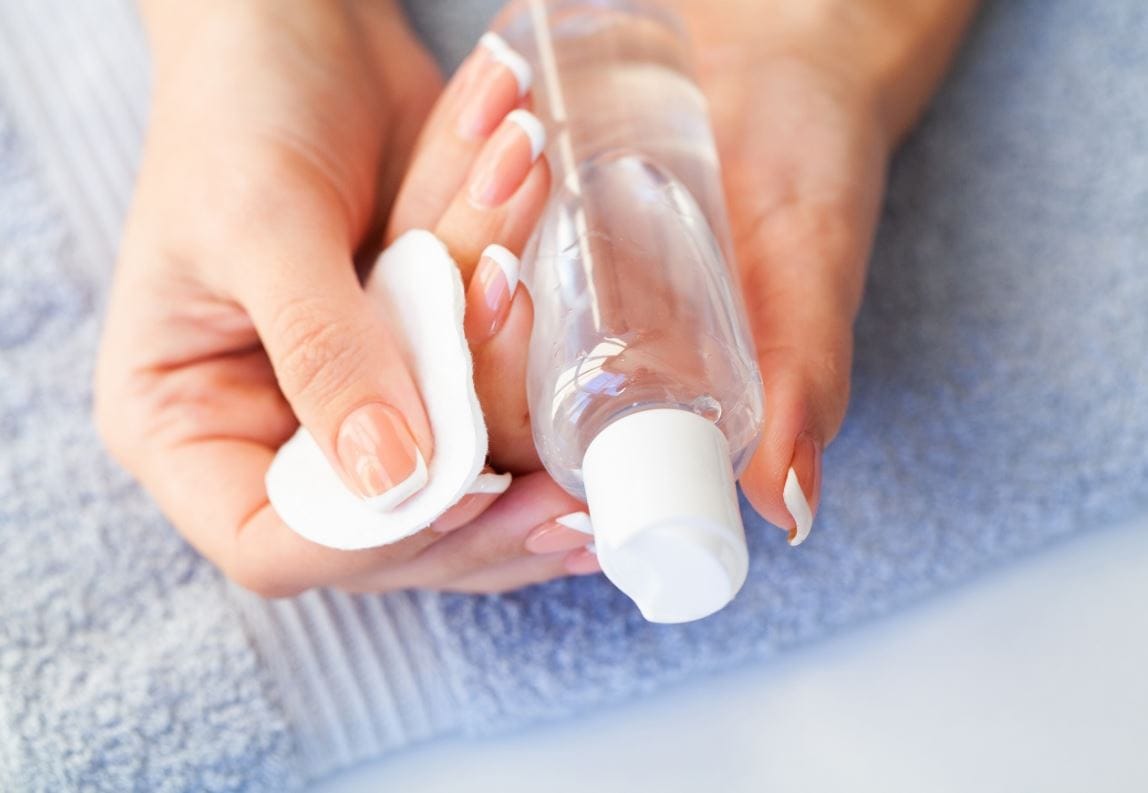
Acetone is one of the most widely used solvents in industrial, laboratory, and domestic settings, prized for its powerful solvency and rapid evaporation rate. However, a critical question frequently arises across these applications: does acetone leave a residue? The technically precise answer is nuanced: pure acetone, by its chemical nature, evaporates completely and leaves no inherent residue. However, in practice, residues are commonly observed due to contaminants, chemical reactions, and substrate interactions. This article provides a comprehensive, evidence-based examination of the factors governing residue formation, supported by empirical data and technical specifications.
1. The Fundamental Chemistry of Acetone Evaporation
Acetone (propan-2-one, (CH₃)₂CO) is a volatile, colorless, and flammable organic compound. Its high vapor pressure (approximately 184 mmHg at 20°C) drives rapid evaporation at room temperature . The fundamental principle is that if the acetone is pure, both the solvent and any volatile impurities will vaporize, leaving no non-volatile material behind.
This property is exploited across numerous industries, including aerospace and precision manufacturing, where “residue-free” drying is paramount. It is an effective solvent for dissolving gums, grime, and cosmoline from metal surfaces without leaving a film . The chemical structure of acetone ensures that it does not form strong, permanent bonds with most clean, inert surfaces upon evaporation.
2. The Source of Residues: Contaminants and Impurities
The presence of a residue after acetone use is almost always attributable to non-volatile contaminants. The purity of the acetone is the single most significant determining factor.
2.1. Grade and Purity Specifications
Acetone is produced in various grades, each with specific purity limits and allowable non-volatile residue (NVR) levels. The choice of grade must align with the application’s sensitivity to residues.
2.2. Storage and Container Leaching
Even high-purity acetone can become contaminated through improper storage. Acetone is a powerful solvent for many organic polymers. When stored in plastic containers, it can leach plasticizers, stabilizers, and oligomers from the container walls. These organic contaminants are non-volatile and will remain as a residue upon evaporation . This is why laboratories and manufacturers often store and handle acetone in glass containers, which are inert and prevent such contamination .
2.3. Contaminants in Low-Grade Acetone
Products sold for general domestic use, such as nail polish remover, frequently contain additives like oils, dyes, fragrances, or bittering agents. These are explicitly designed to remain after the acetone evaporates and are a primary source of residues. Forum discussions on 3D printing highlight users experiencing “white residue” after brushing pure acetone, which was eventually attributed to the acetone revealing additives present in the ABS plastic itself .
3. Chemical Reactions and Surface Interactions
Residues can also form from chemical processes occurring during or after evaporation.
3.1. Self-Aldol Condensation and Polymerization
Acetone is not entirely chemically inert. Under certain conditions, it can undergo self-aldol condensation to form heavier compounds like diacetone alcohol and mesityl oxide. These compounds have lower vapor pressures and may remain as a film-like residue. While this reaction is typically slow, it can be catalyzed by acids, bases, or light, and can contribute to residue formation over time .
3.2. Substrate Interaction and Dissolution
The solvent action of acetone can partially dissolve certain materials, especially plastics, paints, and coatings . The acetone will then evaporate, leaving the dissolved material behind as a residue. This residue is not from the acetone itself but is a deposit of the substrate that was altered by the solvent. On titanium dioxide surfaces, a small fraction of acetone can decompose and form acetate, which remains on the surface after evaporation .
4. Analytical Methods for Detection
Detecting acetone residue requires sensitive analytical techniques.
4.1. Qualitative “Evaporation Test”
A simple qualitative test involves placing a small amount of acetone on a clean watch glass or glass slide in a dust-free environment and allowing it to evaporate. The glass is then inspected over a black and white surface for any visible residue . This method, while useful, has a relatively high detection limit.
4.2. Quantitative Standard Methods
The pharmaceutical and chemical industries rely on standardized tests to quantify residue.
- USP <467> / NF Nonvolatile Residue Test: A specified volume of acetone (e.g., 50 mL) is evaporated on a steam bath. The dish is then dried in an oven at 105°C and weighed. The residue must not exceed 2 mg, or 0.004% .
- ASTM UOP810-84: This standard method, though withdrawn, specified a lower detection limit of 10 mass-ppm for residue on evaporation .
5. Best Practices for Minimizing Residue
To ensure a truly residue-free cleaning process, follow these evidence-based protocols:
- Select the Appropriate Grade: Use the highest purity grade appropriate for the task. ACS Reagent or CHROMASOLV™ grades are essential for analytical or critical applications .
- Use Glass Containers: Store and dispense acetone from clean glass to avoid plasticizer contamination .
- Implement Two-Step Cleaning Protocol: This procedure, used in aerospace and other precision industries, is effective:
- Use a Multi-Solvent Cleaning Regime: For extremely sensitive substrates, a sequence of solvents can be used to remove different classes of contaminants. A common sequence is: ethanol → toluene → acetone → ethanol, with drying steps in between .
6. Conclusion: The Verdict on Acetone Residue
In summary, the answer to “does acetone leave a residue?” is entirely dependent on context.
- Pure acetone will leave virtually zero, measurable residue on a clean, inert surface. This is a fact supported by numerous industry specifications .
- Practically, residues are common and originate from the impurities in the acetone itself (especially low-grade solvents), contamination from plastic storage containers, or dissolved material from the surface being cleaned .
Therefore, a professional cannot rely on acetone’s “residue-free” reputation alone. The solvent’s grade, handling, and the cleaning protocol must be rigorously controlled to achieve a true, residue-free result. The observable outcome is a direct function of the purity of the solvent and the diligence of the user.