How to clean linen curtains? Professional advice
Linen curtains bring a relaxed, breathable elegance to a room that few other fabrics can match, but their natural fibers require a deliberate approach to cleaning. Unlike synthetic blends that tolerate high heat and harsh chemicals, linen is prone to shrinkage, stiffness, and fiber damage if treated carelessly. The good news is that with the right method—cool water, gentle agitation, and air drying—linen curtains can be cleaned effectively at home while preserving their soft drape and texture for years.
This guide consolidates professional recommendations on how to clean linen curtains, covering preparation, washing methods, drying, stain removal, and the situations where dry cleaning is the wiser choice.
Understanding Linen: Why It Requires Special Care
Linen is derived from the flax plant, and its long, strong fibers produce a fabric that is breathable, durable, and naturally textured . However, those same fibers have three vulnerabilities that dictate every cleaning decision: heat causes shrinkage, harsh chemicals weaken the fibers and cause yellowing, and rough handling distorts the weave . Linen also wrinkles easily, which is part of its aesthetic appeal but can become problematic if the fabric is dried incorrectly or left bunched in a washing machine.
A critical distinction exists between unlined, washable linen curtains and lined or interlined panels. Lined curtains often contain a different fabric on the back, and the face fabric and lining may shrink at different rates during washing, leaving the panel puckered or twisted . For lined linen curtains, the care label should be treated as the final authority; if it recommends dry cleaning, that recommendation should be followed.
Pre-Wash Preparation: The Steps Most People Skip
Before any water touches the fabric, several preparatory steps prevent avoidable damage.
Remove all hardware. Curtain rings, hooks, clips, and tiebacks must be taken off before washing. A single metal hook left in the drum can snag the fabric, tear seams, or damage the washing machine . Taking a photograph of the hanging arrangement before removal simplifies reinstallation later .
Check the care label. This is non-negotiable. High-linen-content curtains may be marked dry-clean only, and ignoring that label risks irreversible shrinkage or distortion . The label may also specify temperature limits or drying restrictions that override general advice.
Remove loose dust first. Vacuuming the curtains with a soft brush attachment or shaking them outdoors before washing prevents dry dust from turning into muddy residue in the wash water . This step also allows inspection for small tears, which should be repaired before machine washing to prevent them from enlarging .
Washing Methods Compared: Machine, Hand, and Professional
The appropriate cleaning method depends on the curtain’s construction, fiber content, and care label. The table below summarizes the professional consensus on each approach.
For machine washing, the professional consensus is consistent: cold water, gentle cycle, and minimal detergent . A large mesh laundry bag provides additional protection against snagging and tangling . Detergent should be a mild, neutral-pH liquid formula; powder detergents are often too alkaline for natural fibers, and fabric softener coats the linen fibers, reducing their natural breathability and drape .
Hand washing is the safer choice for any panel that feels fragile or has an open weave. The fabric should be submerged and gently pressed through the water, never scrubbed. Wet linen becomes heavy and can stretch or distort if handled roughly, so the water should be pressed out against the side of the tub rather than wrung .
Drying Linen Curtains: The Most Important Step
How linen curtains are dried has a greater impact on their final appearance than how they are washed. The professional recommendation is nearly unanimous: air dry, and rehang while still damp.
After washing, curtains should be removed from the machine immediately. Leaving wet linen sitting in the drum promotes deep wrinkles and can produce a musty smell . The safest drying method is to rehang the curtains on the rod while they are still slightly damp. The weight of the water helps pull out wrinkles as the fabric dries, often eliminating the need for ironing altogether . Before doing this, the curtain rod and hardware should be checked to ensure they can support the additional weight of wet fabric .
Direct sunlight should be avoided during drying. Prolonged sun exposure can fade colored linen and contribute to fiber damage . A well-ventilated room with indirect light is ideal.
If a tumble dryer is used—only when the care label permits—the lowest heat setting or an air-only cycle should be selected, and the curtains should be removed while still slightly damp, then rehung to finish drying . High heat is the primary cause of linen shrinkage and stiffness .
Stain Removal and Odor Treatment
Linen curtains in kitchens or living areas may accumulate grease, cooking odors, or occasional spots. The principle for stain treatment is the same as for any delicate natural fiber: blot, do not rub, and use the mildest product that will address the problem.
For food or grease spots, a small amount of mild liquid detergent applied directly to the stain, allowed to sit for a few minutes, and then gently blotted is usually sufficient . Scrubbing pushes the stain deeper into the fibers and roughens the fabric surface. For stubborn stains, an ox-gall soap moistened and applied gently before washing is a traditional and effective option for linen .
Musty odors, common in humid climates or bathrooms, require ventilation and thorough drying rather than masking agents. If the odor has penetrated the fibers, a gentle wash followed by prompt drying in a well-ventilated space is the appropriate response . Chlorine bleach should never be used on linen; it weakens the fibers and can cause yellowing over time .
Removing Wrinkles: Steam Versus Iron
Linen’s natural wrinkles are increasingly embraced as a sign of quality and authenticity, and many people prefer the relaxed look of unironed linen curtains . For those who prefer a crisper finish, steaming is the safer and easier method.
A handheld steamer used while the curtains are hanging allows the fabric to be smoothed in place without the risk of scorching. The steamer head should be held a few centimeters from the fabric and kept moving—holding it still in one spot can cause water spots or uneven shrinkage on natural fibers . If an iron is used, it should be set to medium heat and applied to the reverse side of the fabric while the linen is still slightly damp . Ironing the face of the fabric can produce a shiny mark that is difficult to remove.
How Often Should Linen Curtains Be Cleaned?
Over-washing is one of the most common mistakes with linen. Every wash cycle causes some degree of fiber wear, and linen curtains do not need frequent deep cleaning if they are maintained between washes.
Professional guidance suggests deep cleaning every three to six months for most rooms, with more frequent cleaning in kitchens or homes with pets, and less frequent cleaning in low-traffic bedrooms or formal spaces . Between deep cleans, monthly vacuuming with a soft brush attachment removes dust before it settles into the fibers and reduces the need for washing . Spot-cleaning spills immediately prevents small marks from becoming permanent stains .
Frequently Asked Questions
Can I machine wash 100% linen curtains?
Yes, provided the care label permits it. Use cold water (no higher than 30°C), a gentle or delicate cycle, low spin speed, and a mild liquid detergent. Wash curtains separately or with plenty of room in the drum—never overcrowd the machine, as wet linen is heavy and a packed drum strains seams and creates deep creases . Place sheer or lightweight panels in a large mesh laundry bag for extra protection .
How do I prevent linen curtains from shrinking?
Shrinkage is primarily caused by heat—both in washing and drying. Use cold or lukewarm water only, and avoid the tumble dryer entirely or use the lowest heat setting, removing the curtains while still damp . Rehanging the curtains while damp allows them to dry in their intended shape and gently stretches the fibers as gravity acts on the water weight .
Can I wash lined linen curtains?
Only if the care label explicitly says they are washable. Lined curtains present a specific risk: the face fabric and lining may shrink at different rates when exposed to water, causing the panel to pucker, twist, or hang unevenly . For lined, interlined, or heavily embellished linen curtains, the safer choice is professional dry cleaning or careful spot cleaning and vacuuming without full immersion .
What should I do if my linen curtains already have deep wrinkles?
Rehang the curtains and mist them lightly with clean water, allowing them to hang dry. The combination of moisture and gravity will release many wrinkles . For more stubborn creases, use a handheld steamer while the curtains are hanging, keeping the steamer moving and a few centimeters away from the fabric . If ironing, do so on the reverse side while the fabric is slightly damp, using medium heat .
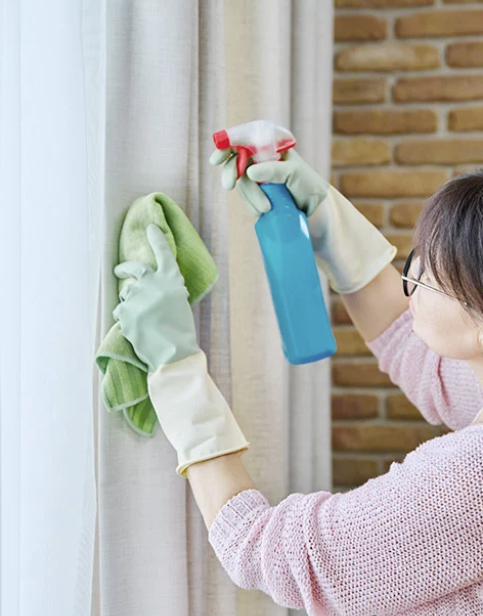
Can I clean linen curtains without taking them down?
Yes, for routine maintenance between washes. Vacuum the curtains in place using a soft brush or upholstery attachment on low suction, working from top to bottom and paying attention to folds and pleats where dust collects . A handheld steamer can refresh the fabric and release light wrinkles without removal. Spot-clean small marks with a damp white cloth and a tiny amount of mild detergent, blotting rather than rubbing .