Can You Wash a Wig with Regular Shampoo? A Complete Guide
The short answer is: it depends entirely on the material of your wig. Using the wrong shampoo can permanently damage synthetic fibers, while human hair wigs generally tolerate regular shampoo but still benefit from gentler formulas. Understanding the distinction between synthetic and human hair is the single most important factor in preserving your wig’s lifespan and appearance.
This guide breaks down the chemistry, the risks, and the correct procedures for washing both types of wigs, with comparison tables and expert-backed recommendations.
The Core Difference: Synthetic Fiber vs. Human Hair
To understand why regular shampoo behaves differently on wigs, you must first understand what a wig is made of.
Human hair wigs are composed of actual hair strands that have been processed, treated, and often colored. Like the hair growing from your scalp, these strands have a cuticle layer and can become dry, porous, or damaged by harsh detergents. They respond to conditioning agents and protein treatments in a way that mimics natural hair biology .
Synthetic wigs are made from engineered fibers—typically modacrylic, polyester, or PVC blends—that are heat-set into a specific style during manufacturing. These fibers do not produce natural oils, cannot absorb moisture or nutrients, and have a protective coating that gives them their shine and softness . Regular shampoo is designed to strip oils from the scalp; on a synthetic wig, it instead strips the fiber’s coating, leaving the hair dull, rough, and prone to tangling .
The Verdict: Material-Specific Compatibility
Why Regular Shampoo Damages Synthetic Wigs
Hairstylist Brittany Johnson notes that regular shampoo on synthetic wigs leaves the hair “super slimy or tangled to the point that even when it dries, it’s really too matted to comb through anymore” . The mechanism behind this is twofold.
First, sulfates—the primary cleansing agents in most commercial shampoos—are designed to bind to oils and lift them away. Synthetic fibers have no oils to remove, so the sulfates attack the manufacturing coating instead. Once this coating is compromised, the fiber becomes porous and rough, catching on itself and creating tangles that cannot be brushed out without causing further stretching or breakage .
Second, heavy conditioners, proteins, and “repair” additives found in many modern shampoos cannot penetrate synthetic fiber. They sit on the surface, creating a sticky residue that attracts dust and dulls the shine. Over time, this buildup makes the wig look greasy and lifeless, even immediately after washing .
Important Note: Some synthetic wigs are labeled “cannot be washed” at all. Always check the manufacturer’s care tag before submerging the wig in water. If the label prohibits washing, surface cleaning with a damp cloth or dry shampoo formulated for synthetics is the safer route .
The Correct Way to Wash a Human Hair Wig
Human hair wigs can generally be washed with regular shampoo, but treating them like natural scalp hair is a mistake. The hair is no longer attached to a scalp that produces sebum, so it dries out faster and lacks the natural conditioning that scalp oils provide.
Step-by-step protocol:
- Detangle completely before wetting the wig. Use a wide-tooth comb or loop brush, starting at the ends and working upward to the roots. Never wash a tangled wig .
- Use lukewarm water (never hot, which can damage the hair and loosen knots) and a sulfate-free shampoo if possible. Apply the shampoo diluted in water rather than directly to the wig to avoid concentrated product sitting on one area .
- Wash gently by smoothing the shampoo through the hair in a downward direction. Do not scrub, twist, or bunch the hair together.
- Rinse thoroughly from roots to ends with cool water until the water runs clear.
- Condition generously from mid-lengths to ends, avoiding the roots and lace area. Conditioner at the roots can loosen the knots that secure the hair to the cap .
- Blot dry with a clean towel—never wring or twist—and place on a wig stand to air dry at room temperature .
The Correct Way to Wash a Synthetic Wig
Synthetic wigs require a gentler, more controlled approach. The goal is to lift away dust, sweat, and product residue without disturbing the fiber’s heat-set style or protective coating.
Step-by-step protocol:
- Detangle dry with a wide-tooth comb or wig brush, working from ends to roots. Do not brush a synthetic wig while wet, as wet fiber stretches and can snap .
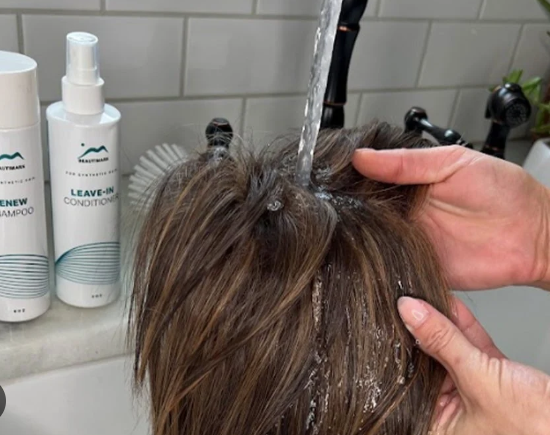
- Fill a basin with cool water (not lukewarm—cool is safer for synthetic fibers). Add a capful of wig-specific shampoo and swirl to distribute .
- Submerge and soak the wig for 5 to 10 minutes. Do not rub, scrub, or agitate the water. The diluted shampoo will lift debris without mechanical action .
- Rinse with cool running water from roots to ends until all shampoo is removed. Hold the wig by the cap to avoid stretching the fiber.
- Apply a synthetic-safe conditioner sparingly to mid-lengths and ends only, if desired. Many synthetic wigs do not require conditioner at all; a leave-in spray after drying is often sufficient .
- Blot with a towel and place on a wig stand to air dry completely at room temperature. Never use a blow dryer, radiator, or direct sunlight, as heat can permanently alter or melt the fiber .
Frequency: How Often Should You Wash?
Over-washing is a more common error than under-washing. Every wash introduces stress to the fibers or hair strands. If a wig merely looks flat, a gentle brush and a night on a wig stand often restores volume better than a full wash would .
What to Look For in a Wig Shampoo
If you are shopping for a dedicated wig shampoo, scan the label for these attributes:
| Ingredient/Claim | Why It Matters |
|---|---|
| Sulfate-free | Sulfates strip synthetic coatings and over-dry human hair wigs |
| Alcohol-free | Alcohols accelerate dryness and fiber brittleness |
| pH-balanced | Maintains the integrity of both hair cuticles and synthetic coatings |
| No heavy silicones or proteins | These build up on synthetic fiber and cannot be absorbed |
| Formulated for wigs | Indicates testing on both human hair and synthetic fiber applications |
For synthetic wigs, a clear, fragrance-free baby shampoo is the safest emergency substitute if wig shampoo is unavailable, but it should not be a permanent replacement . For human hair wigs, a sulfate-free shampoo designed for color-treated or dry hair is an acceptable everyday option .
Frequently Asked Questions (FAQ)
1. What happens if I accidentally use regular shampoo on my synthetic wig?
A single wash with regular shampoo will not necessarily destroy the wig, but it may leave the fiber feeling coated, stiff, or unusually tangled once dry. Rinse thoroughly with cool water to remove as much residue as possible, then apply a small amount of synthetic-safe conditioner to the ends and air dry fully. Avoid brushing while wet. If the fiber feels rough after drying, a second wash with wig-specific shampoo may help restore the coating .
2. Can I use regular conditioner on a synthetic wig?
No. Regular conditioner is formulated to penetrate hair cuticles and bind to proteins. Synthetic fiber has no cuticle and cannot absorb these ingredients. The conditioner will sit on the surface, attracting dust and weighing down the style. Use only conditioners labeled for synthetic wigs, and apply them sparingly to the ends only .
3. Is it safe to wash a wig in the shower?
It is not recommended. A basin or sink gives you control over water temperature, water pressure, and the concentration of shampoo. Shower water pressure can tangle the wig, and hot shower water can damage synthetic fibers. If you must wash in the shower, use cool water and hold the wig away from the direct stream .
4. How do I dry a wig without a wig stand?
If you do not have a wig stand, you can dry a wig by laying it flat on a clean, dry towel in a well-ventilated area away from direct sunlight and heat sources. Stuff the cap lightly with tissue paper or a small towel to help it hold its shape. Turn the wig occasionally to ensure even drying. Never hang a wet wig by the ends, as the weight of the water can stretch the cap or fibers .
5. Can I use dry shampoo on a wig between washes?
Yes, but only if the dry shampoo is formulated for wigs or is a gentle, translucent formula with minimal residue. Spray it lightly from a distance of at least 8 inches, let it sit for a minute, then brush gently to distribute. Dry shampoo is a temporary refresh, not a substitute for washing, and should not be used on synthetic wigs that are labeled “no washing” without first testing on a small, inconspicuous area .