What Causes Hairline Cracks in a Toilet Bowl? A Complete Diagnostic Guide
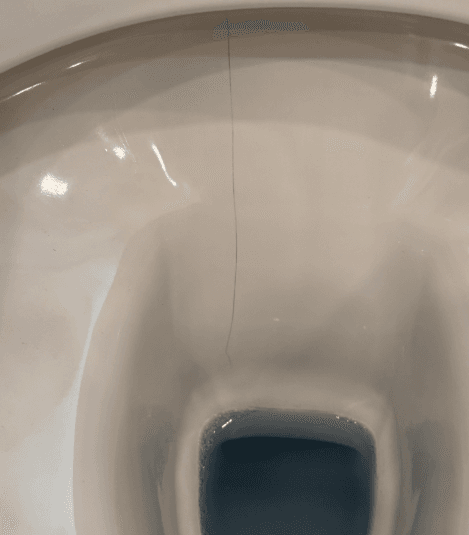
Hairline cracks in a toilet bowl are among the most misunderstood issues in residential plumbing. Many homeowners dismiss them as purely cosmetic blemishes, while others panic at the first sign of a thin line in the porcelain glaze. The reality lies somewhere in between—and the distinction matters enormously for both property protection and household safety.
This guide examines the root causes of hairline cracks, distinguishes between superficial crazing and structural fractures, and provides a professional framework for determining when repair is viable and when replacement is the only responsible course of action.
Understanding the Material: Why Porcelain Cracks
Toilets are manufactured from vitreous china, a ceramic material fired at temperatures exceeding 2,000°F. The finished product consists of two distinct components:
- The body (bisque): The structural porcelain layer that provides strength and rigidity.
- The glaze: A glass-like coating applied to the surface that provides impermeability and aesthetic finish.
Hairline cracks can develop in either layer, but the location and depth of the fracture determine whether the issue is cosmetic or structural. A critical distinction exists between crazing—fine, spiderweb-like lines in the glaze only—and true cracks that penetrate the porcelain body.
A simple diagnostic test: run a fingernail across the line. Crazing feels smooth, as though the line sits beneath the surface. A true structural crack will catch the nail.
Primary Causes of Hairline Cracks
Thermal Shock and Freezing
Temperature differentials represent one of the most common and well-documented causes of toilet cracking. Vitreous china has a limited tolerance for rapid temperature changes.
Boiling water exposure: Pouring boiling water into a cold toilet bowl—a common DIY remedy for clogs—can cause immediate thermal shock. As Kohler explicitly warns, boiling water can crack the toilet bowl, especially in ceramic fixtures.
Freezing in unheated environments: Water expands approximately 9% by volume when it freezes. A toilet with standing water in the bowl or tank, subjected to sub-zero temperatures, will experience internal pressure sufficient to fracture the porcelain. A documented case involving over 150 TOTO toilets in a Chongqing resort community attributed the widespread cracking to winter freezing in unoccupied units. The national standard for sanitary ceramics (GB6952) explicitly states that toilets should not be used or stored in water environments below 0°C.
Manufacturing glaze imbalances: Research on ceramic glaze durability demonstrates that the coefficient of thermal expansion of the glaze must closely match that of the body to prevent stress-induced crazing. When the glaze is placed in tension—due to an expansion mismatch—fine networks of cracks develop over time. Japanese patent research further confirms that improper thickness ratios between glaze layers can dramatically reduce thermal shock resistance, with crack occurrence rates reaching 50–80% in poorly formulated products under 170°C temperature differentials.
Mechanical Impact and Physical Stress
Accidental impact: Dropping a heavy object—a shampoo bottle, cleaning tool, or even a toilet tank lid—onto the bowl can introduce fractures that remain invisible for months before propagating. The impact creates a stress concentration point that eventually develops into a visible crack.
Overtightened bolts: This is among the most frequent installation errors leading to hairline cracks. The bolts securing the toilet to the floor flange or attaching the tank to the bowl must be tightened to specification—typically snug, not forced. Excessive torque places the porcelain under continuous tension, eventually producing cracks that radiate from the bolt holes.
Improper use as a step: Standing or squatting on a toilet seat or bowl lid concentrates the full body weight on a structure designed only for seated loads. This misuse frequently results in cracks near the base or bowl rim.
Installation and Structural Factors
Uneven flooring: A toilet installed on an uneven floor surface rocks slightly with each use. This movement creates cyclical stress on the porcelain and the wax seal, eventually leading to fatigue cracks—often near the base.
Excessive cement or mortar: In some installation practices, toilets are set in a bed of cement or mortar. Research on hospital toilet damage found that excessive cement quantity or improper water-to-cement ratios created uneven drying stresses, producing cracks typically oriented vertically near the front of the bowl.
Seismic activity: The same hospital study documented significantly higher damage rates on upper floors following the 921 earthquake in Taiwan, demonstrating that ground movement—even at moderate intensity—can crack brittle ceramic fixtures. Upper-floor toilets experienced greater damage than those on lower floors closer to the building foundation.
Age-Related Deterioration
Vitreous china does not degrade in the conventional sense, but decades of thermal cycling, minor impacts, and stress accumulation can cause micro-damage to coalesce into visible cracks. A toilet that has been in service for 15–20 years is inherently more vulnerable to cracking from minor incidents that a newer fixture would withstand without issue.
Comparative Analysis: Crazing vs. Structural Cracks
| Characteristic | Glaze Crazing | Structural Hairline Crack |
|---|---|---|
| Depth | Glaze layer only | Penetrates porcelain body |
| Fingernail test | Feels smooth; line is beneath surface | Catches nail; tactile interruption |
| Appearance | Fine network of interconnecting lines | Single or few distinct lines |
| Leak potential | None | Present if at or below waterline |
| Progression | Stable; may not worsen | Typically propagates over time |
| Repairability | No repair necessary | Epoxy may work only above waterline |
| Recommendation | Monitor; cosmetic only | Replace if below waterline or near base |
Location-Based Risk Assessment
The location of a hairline crack determines its severity far more than its visual appearance. The following table categorizes risk by crack location:
| Location | Risk Level | Rationale | Recommended Action |
|---|---|---|---|
| Outer tank surface, above waterline | Low | Cosmetic; no water contact | Monitor; waterproof epoxy acceptable |
| Outer bowl surface, above waterline | Low to Moderate | May spread to waterline | Monitor closely; prepare for replacement |
| Inside bowl, any position | High | Structural; under constant water pressure | Plan replacement immediately |
| At or below waterline | Severe | Active leak with every flush | Replace immediately; do not patch |
| Near base or floor flange | Severe | Seal compromise; instability risk | Professional inspection; likely replacement |
| Crack originating from bolt hole | Severe | Structural failure imminent | Replace immediately |
The Hidden Risks of Ignoring Hairline Cracks
Water Damage and Mold
A crack at or below the waterline leaks with every flush. The volume may be small—a few ounces per use—but it accumulates in the subfloor, promoting mold growth and structural rot. A minor fixture issue can escalate into a flooring and subfloor repair project within months.
Structural Failure and Injury
Porcelain cracks propagate. A hairline fracture near the base or bowl rim can suddenly give way under normal use. With an average toilet weighing approximately 100 pounds, a catastrophic failure can cause serious injury, particularly to children or elderly individuals who may lean on the fixture for support. Broken porcelain fragments create additional laceration hazards.
Water Waste
A cracked toilet that loses water from the tank will trigger frequent refills. This constant cycling wastes water and inflates utility bills—often the first detectable symptom of a hidden crack.
Sewer Gas Misconception
It is worth clarifying that a hairline crack in the porcelain itself does not release sewer gas. The water trap and wax ring serve as the primary barriers. However, a crack near the base that causes the toilet to rock can compromise the wax seal, indirectly creating an odor pathway.
Diagnostic Protocol: When to Repair vs. Replace
| Factor | Favor Repair | Favor Replacement |
|---|---|---|
| Location | Above waterline, outer surface | Below waterline, inside bowl, near base |
| Age of toilet | Less than 10 years | 10+ years or unknown |
| Progression | Stable over months | Spreading or visibly worsening |
| Moisture | No water seepage | Any moisture at base or crack line |
| Structural stability | Solid; no rocking | Any wobble or movement |
| Economic consideration | Minor cosmetic issue | Cost of potential water damage exceeds replacement |
Professional Prevention Strategies
For installation: Ensure the floor flange is level and the toilet sits without rocking. Tighten bolts to hand-tight plus a quarter turn—never force them. Avoid excessive cement or mortar beneath the base.
For daily use: Never pour boiling water into the bowl. Do not stand on the toilet. Place heavy objects away from the tank lid.
For seasonal or vacation properties: If the property will be unoccupied during freezing months, shut off the water supply and flush to empty the tank and bowl. Antifreeze specifically formulated for plumbing systems can be added to the trap to prevent residual water from freezing.
For inspection: Periodically run a fingernail around the bowl rim, base, and tank exterior. Early detection of a forming crack allows planned replacement before failure occurs.
Conclusion
Hairline cracks in a toilet bowl result from thermal shock, mechanical impact, installation stress, or cumulative age-related deterioration. The critical distinction is not the crack’s visual width but its depth and location. Glaze crazing is cosmetic; structural cracks—particularly those at or below the waterline or near the base—represent an active threat to property and potentially to personal safety.
When in doubt, consult a licensed plumber for an on-site assessment. The cost of a professional evaluation is negligible compared to the expense of water damage remediation or the risk of a catastrophic fixture failure.