What Causes Blue Stains in Toilet Bowl? A Complete Diagnostic Guide
Blue stains in a toilet bowl are a common but frequently misunderstood problem. While a blue tint might initially seem like a sign of cleanliness—especially if you use a blue toilet cleaner—persistent stains that resist scrubbing indicate an underlying issue that requires proper diagnosis. This article examines the two primary causes of blue toilet bowl stains, provides comparison tables to help you identify your specific situation, and offers evidence-based solutions.
The Two Main Causes of Blue Toilet Stains
Research and field studies have identified two distinct sources of blue staining in toilet bowls: blue dye from toilet cleaning products and copper corrosion compounds from plumbing systems. Each produces a visually similar blue discoloration but requires completely different remediation approaches.
Cause 1: Blue Dye from Toilet Bowl Cleaners
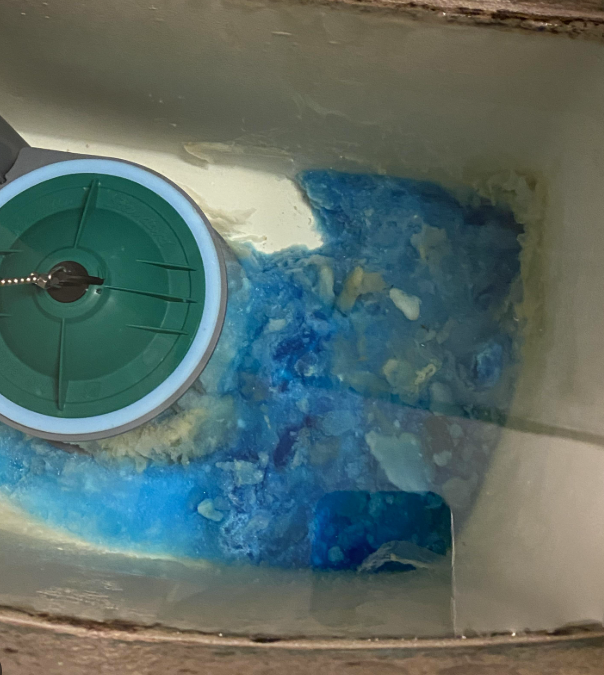
The most common and easily resolved cause of blue stains is the use of blue-dyed toilet cleaning products, particularly drop-in tank tablets and automatic cleaners. These products contain acid blue dyes that are designed to tint the water as a visual indicator that the cleaner is working.
The mechanism behind dye-based staining is straightforward: the blue dye particles bind to minerals naturally present in hard water—calcium, magnesium, and iron—forming a colored complex that adheres stubbornly to the porcelain glaze. When the cleaner dries on the bowl surface between flushes, this dye-mineral bond becomes increasingly resistant to removal.
The problem is particularly pronounced in toilets that are not flushed frequently. As one product reviewer noted, “If you don’t use the toilet frequently, it does stain the bowl and you have to scrub it out”. The dye coalesces around the water line and underneath the rim where water flows in from the tank, creating dark blue rings that a standard toilet brush cannot remove.
Cause 2: Copper Corrosion from Plumbing
A more serious cause of blue staining is copper corrosion within household plumbing. The blue-green or blue discoloration is actually a copper compound—specifically chrysocolla, a copper silicate mineral—that precipitates on fixture surfaces when copper pipes corrode.
This phenomenon occurs under specific water chemistry conditions. Research from Talca, Chile, documented cases in three- to nine-year-old houses with copper pipes exposed to soft well water with low pH and low buffer capacity. The acidic water dissolves copper from the pipe walls, and the dissolved copper subsequently deposits on bathroom fixtures, including toilet bowls.
Japanese research on “bluish water phenomena” confirmed that copper corrosion is more likely when pH is low, free carbonic acid concentration is high, and dissolved salt concentration is elevated. The Water Quality Association similarly identifies blue-green stains on plumbing fixtures as a primary indicator of copper corrosion in household plumbing.
Comparison Table: Dye Stains vs. Copper Stains
| Characteristic | Blue Dye Stains | Copper Corrosion Stains |
|---|---|---|
| Color | Bright, uniform blue | Blue-green, turquoise, or teal |
| Location | Water line, under rim, bowl surface | Water line, bowl surface, also sinks/tubs |
| Texture | Smooth, may feel slightly tacky | Powdery or crusty deposit |
| Appearance with water | Color intensifies in standing water | May appear as visible blue water initially |
| Onset | Coincides with use of blue cleaner | Develops gradually over months/years |
| Other fixtures affected | Toilet bowl only | Sinks, bathtubs, kettles, laundry |
| Water color | Clear (unless cleaner in tank) | May appear blue when first drawn |
| Health concern | None | Potential copper/lead exposure |
| Remediation | Acidic cleaners, pumice stone | Water treatment + fixture cleaning |
Diagnostic Table: Identifying Your Stain Type
| Observation | Likely Cause |
|---|---|
| Blue stains appeared after starting blue tank tablets | Dye staining |
| Toilet is used infrequently | Dye staining |
| Blue-green stains also on sinks, tubs, or kettles | Copper corrosion |
| Home has copper pipes and acidic water (pH < 7) | Copper corrosion |
| Water appears blue when first drawn from tap | Copper corrosion |
| Stains confined to toilet bowl only | Dye staining |
| Blue stains resist all cleaning attempts | Copper corrosion (requires water treatment) |
Health Implications: When Blue Stains Signal a Concern
Blue dye stains from cleaning products are purely cosmetic and pose no health risk. However, blue-green stains from copper corrosion warrant attention because they indicate that the same corrosive water that dissolves copper can also leach lead from solder and brass fittings in older plumbing systems.
The Water Quality Association notes that discoloration from copper corrosion serves as a visible warning that water chemistry is actively degrading plumbing materials. While copper is an essential nutrient, elevated levels can cause gastrointestinal distress. More concerning is the potential for lead co-contamination, as lead is a cumulative toxin with no safe level of exposure.
If your blue stains are accompanied by blue-tinted water when first drawing from a tap, the water should be tested by a certified laboratory for pH, copper, and lead.
Removal Methods by Stain Type
Removing Blue Dye Stains
The key to removing dye-based blue stains is breaking the bond between the dye and mineral deposits. Effective methods include:
Acidic dissolution with vinegar: Lowering the water level, applying undiluted white vinegar with paper towels pressed against the stain, and allowing a dwell time of at least one hour before scrubbing with baking soda.
Oxalic acid treatment: For stubborn dye stains, Bar Keepers Friend (powder form) applied as a thick paste and allowed to dwell for 15–30 minutes before scrubbing is highly effective.
Mechanical removal: A wet pumice stone can remove tenacious dye-mineral deposits, though it must be kept wet to avoid scratching the porcelain.
Addressing Copper Corrosion Stains
Stains from copper corrosion will recur until the underlying water chemistry issue is corrected. The appropriate response involves:
- Water testing for pH, copper, and lead by a certified lab
- Installation of an acid-neutralizing filter to raise pH and stop pipe corrosion
- Reverse osmosis at the kitchen tap to remove dissolved metals from drinking water
- Cleaning existing deposits with household anti-scaling products or acidic cleaners
Prevention Strategies
| Prevention Method | Effectiveness | Notes |
|---|---|---|
| Avoid blue tank tablets | High | Eliminates dye source entirely |
| Use clear liquid cleaners | High | No dye to bind to minerals |
| Regular weekly brushing | Moderate | Prevents mineral buildup |
| Periodic descaling (vinegar/citric acid) | Moderate | Removes mineral layer |
| Acid-neutralizing filter | High (for copper) | Corrects root cause of corrosion |
| Flush new copper pipes thoroughly | High (for new construction) | Prevents initial corrosion period |
For those who prefer the visual confirmation of a blue cleaner, rim-mounted clip-on cleaners offer a dye-free alternative that does not sit in the tank and degrade rubber components. This distinction matters because drop-in tablets continuously expose the tank’s flapper and seals to concentrated chemicals, causing premature failure and leakage.
Conclusion
Blue stains in a toilet bowl are not a single problem with a single solution. The diagnostic process begins with a simple question: Are you using a blue toilet cleaner? If yes, the stains are almost certainly dye-mineral complexes that can be removed with acidic cleaners and prevented by switching to dye-free products. If no, and especially if blue-green discoloration appears on other fixtures or in the water itself, the cause is likely copper corrosion from acidic water—a more serious condition that requires water testing and treatment rather than simply cleaning the bowl.