The Definitive Guide to Removing Rust from a Stainless Steel Sink
A Professional’s Approach to Restoration and Prevention
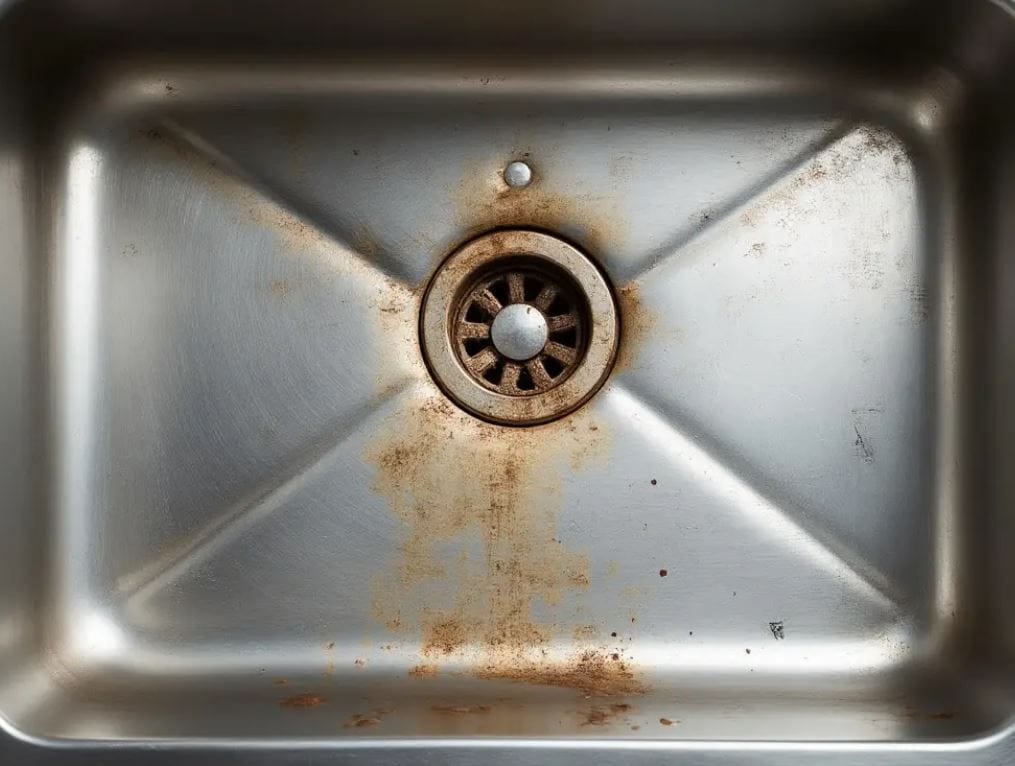
Stainless steel is heralded for its corrosion resistance, but the name itself holds a deceptive promise. It stains less, not never. Discovering a rough, reddish-brown bloom on your sleek sink basin can be alarming, but it is rarely a sign of irreversible failure. This guide provides a scientific breakdown of why rust forms and a tiered, methodical approach to removing it without damaging the underlying metal.
The Metallurgical Paradox: Why “Stainless” Rusts
To restore the sink, you must first understand the enemy. Stainless steel is an alloy of iron, carbon, and a minimum of 10.5% chromium. The chromium reacts with oxygen to form an invisible, self-healing passive layer of chromium oxide on the surface. This layer prevents oxygen from bonding with the iron inside.
Rust occurs when this passive layer is compromised. This is known as deposit corrosion or pitting corrosion.
The Primary Culprits:
- Free Iron Contamination: The most common cause. Microscopic iron particles from steel wool pads, cast iron pans, or even contaminated water pipes embed themselves in the sink’s surface. These particles rust, and the stain “bleeds” onto the sink.
- Aggressive Chemicals: Chlorine bleach, hydrochloric acid (often found in drain cleaners), and heavy-duty oven cleaners dissolve the chromium oxide layer instantly.
- Galvanic Corrosion: When two dissimilar metals (e.g., a cast iron pan left wet in the sink) interact in the presence of an electrolyte (water), a battery-like reaction occurs, sacrificing one metal.
The Golden Rule: A Guide to Cleaning Abrasives
Before beginning, understand the concept of “scratching the grain.” Stainless steel sinks are manufactured with a directional polish (the grain). Always scrub parallel to this grain. Ignoring this rule will result in a murky, scratched finish that traps more dirt and rust in the future.
Never use: Steel wool (unless specifically labeled “stainless steel wool” and never used on carbon steel), abrasive scouring powders with sand, or wire brushes. They leave behind microscopic iron deposits that rust instantly.
Methodological Tiered System for Rust Removal
Do no harm. Start with the gentlest method and escalate only if necessary. The following methods address surface rust and light pitting. Deep, structural pitting requires professional grinding and re-passivation.
Tier 1: The Mechanical Polish (Light Surface Rust)
This is for “flash rust” or a light, orange haze that hasn’t etched the metal.
- The Agent: Non-abrasive stainless steel cleaner (e.g., Bar Keepers Friend Soft Cleanser, 3M Stainless Steel Cleaner).
- The Tool: A soft microfiber cloth or a non-abrasive white nylon scrub pad.
- Technique: Dampen the sink. Apply the cream. Rub vigorously in the direction of the grain. The oxalic acid in many cleaners chelates the iron oxide without tearing out the nickel.
- Rinse: Rinse with distilled water if possible (to avoid hard water spots containing iron). Dry immediately with a lint-free cloth.
Tier 2: The Mild Abrasive & Acid Reaction (Stubborn Deposit Corrosion)
This is for distinct, dark spots that are flush with the surface but don’t wipe off.
Method A: The Oxalic Acid Slurry (The Industry Standard)
- Compound: Powdered Bar Keepers Friend or Zud cleanser.
- Oxalic acid dissolves iron oxide chemically, reducing the need for harsh physical grinding.
- Mix with a few drops of water to form a paste the consistency of toothpaste.
- Apply the paste to the rust spot. Let it sit for 45–60 seconds (no longer, or you risk acid etching).
- Using a damp, soft cloth or a cork, rub the paste into the stain following the grain.
Method B: The Baking Soda & Citric Acid Purging
- Sprinkle baking soda over the damp stain.
- Drizzle lemon juice or white vinegar onto the baking soda to create a fizzing reaction (effervescence helps lift particles).
- Before the reaction subsides, scrub with a soft nylon brush in the grain direction.
Tier 3: Passivation & Chelation (Micro-Pitting)
If the rust has eaten slightly below the surface, mechanical removal isn’t enough; the pit must be re-passivated.
The Naval Jelly/Phosphoric Acid Protocol (Hazardous)
Warning: Phosphoric acid is toxic and caustic. Use nitrile gloves and eye protection.
- Apply a commercial rust dissolver (Naval Jelly) containing phosphoric acid strictly to the rusted pit using a cotton swab.
- Wait 10 minutes. The acid converts red iron oxide into black ferric phosphate.
- Wipe away the black residue.
- Immediately wash with a high-pH cleaner (baking soda slurry) to neutralize the acid.
- Force-dry the area. The chromium needs air immediately to reform its passive layer. Leave the sink empty and dry for 24 hours.
Comparative Analysis of Methods
Choosing the wrong method for the wrong rust type can worsen the problem. Use the table below as a diagnostic tool.
| Rust Type | Visual Identifier | Recommended Method | Prohibited Action | Chemistry Behind Method |
|---|---|---|---|---|
| Flash Rust / Surface Haze | Looks like a cinnamon powder wipe. No texture. | Tier 1: Non-abrasive cream cleaner, microfiber cloth. | Do not use green scrub pads; they leave deep scratches. | Physical lift of loose iron oxide; minimal metal removal. |
| Deposit Corrosion | Dark brown/black spots, often shaped like a water droplet or outline of a pot/can. | Tier 2: Oxalic acid paste (Bar Keepers Friend), soft scrubbing. | Never use bleach; it oxidizes the chromium and creates black pits. | Oxalic acid reduces insoluble Fe(III) oxide to a water-soluble complex. |
| Pitting Rust | Rough, cratered texture. Dark gray/black dot in the center of a brown halo. | Tier 3: Phosphoric acid jelly (spot treatment), 24-hour air passivation. | Do not sand the pit flat. You will thin the metal and remove surrounding chromium. | Converts rust to inert ferric phosphate; relies on atmospheric oxygen to rebuild chromium oxide in the pit. |
| Chloride Corrosion | Crystal-like shallow pinholes with white edges. Usually from salt or bleach. | Professional Intervention: Passivation paste containing nitric or citric acid. | Do not ignore it. Chlorides continue to propagate the crack even after cleaning. | Requires stripping a micron of iron to expose the chromium, not just cleaning the surface. |
The Professional Finish: Re-Passivation Protocol
Removing the rust is 50% of the job. Forcing the sink to rebuild its immune system is the other 50%. Professionals use a citric acid passivation bath, but you can mimic this at home.
- Deep Clean: Ensure all rust and oil fingerprints are removed with acetone or rubbing alcohol.
- Citric Acid Treatment: Mix a 4-10% citric acid solution (approximately 1 tablespoon food-grade citric acid powder per cup of warm distilled water). Wipe this solution over the entire basin.
- Air Exposure: Do not rinse the citric acid yet. Allow the surface to remain wet with the solution for 20 minutes. It is gently stripping free iron from the surface.
- Final Rinse: Rinse thoroughly with distilled water.
- Oxygen Cure: The critical step. Leave the sink completely dry and untouched for 24 hours. The chromium must react with oxygen to form the protective glass-like barrier.
Prevention: A Standard Operating Procedure
To prevent recursive rusting, integrate these habits into your kitchen workflow:
- Exile Cast Iron: Never leave wet cast iron pans or grates to soak in the basin. Use a silicone mat or a trivet if you must set them down.
- Rubber Mat Hygiene: Rubber sink mats trap stagnant water and leach chlorides. Remove them after every use and dry both the mat and the sink floor.
- Terminate the Steel Wool: Do not use standard steel wool (S.O.S pads, Brillo) on the sink. If you need a metal scourer, use a copper mesh scrubber or a pad specifically labeled “stainless safe.”
- Water Quality: If you have high iron content well water, the sink will constantly show flash rust. Consider a point-of-use sediment filter for the kitchen cold tap.
- Post-Cleaning Ritual: Once a week, after washing dishes, rinse the sink with clean water, spray with a white vinegar/distilled water solution (1:1), and wipe dry with a microfiber cloth. This removes the mineral film that traps iron particles.
By understanding that stainless steel is a dynamic surface requiring oxygen and chromium—not just a passive basin—you can maintain a spotless, corrosion-free sink for decades.