How to Clean Granite Stairs: A Professional’s Guide to Preservation & Safety
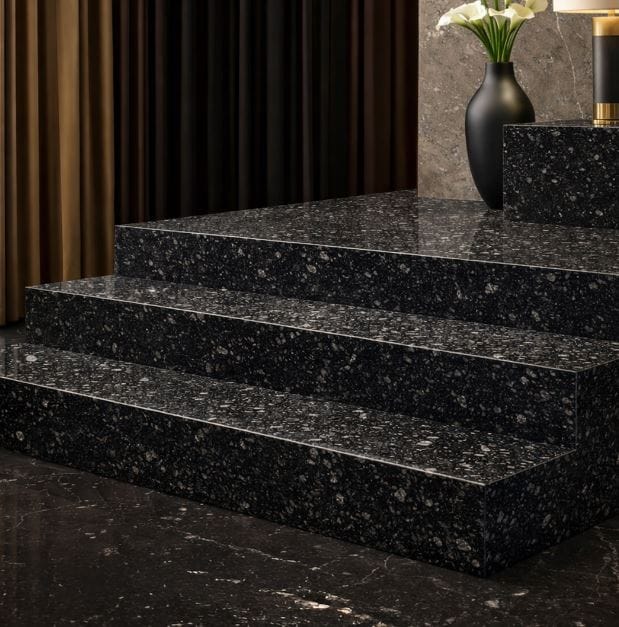
Granite stairs are a hallmark of luxury, durability, and architectural sophistication. Whether installed indoors as a grand entryway or outdoors as garden steps, they withstand heavy foot traffic and harsh weather—but only if maintained correctly. Improper cleaning is the leading cause of dullness, etching, and structural weakening. This guide delivers evidence-based methods, pH chemistry insights, and a step-by-step protocol to keep your granite stairs pristine and slip-resistant.
Why Granite Stairs Require Specialized Care
Unlike ceramic or wood, granite is a natural igneous rock composed primarily of quartz, feldspar, and mica. While highly scratch-resistant, it is not invincible. Key vulnerabilities include:
- Acid sensitivity – Acids (vinegar, lemon, bleach) etch the polished surface, leaving dull rings.
- Porous nature – Even dense granite has microscopic pores that absorb oils, wine, and dirt.
- Sealant dependency – Factory-applied sealers wear off after 1–5 years, exposing raw stone.
- Slip hazard – Improper cleaning leaves soap films that become dangerously slick when wet.
Professional rule: Clean first, test pH second, seal third, and never guess.
Essential Tools & pH-Neutral Cleaners
Using the wrong equipment scratches or floods the stone. Below is the approved checklist.
| Category | Recommended Item | Why It Works |
|---|---|---|
| Daily dusting | Microfiber flat mop or soft-bristle broom | Captures grit without scratching; no static residue |
| Deep cleaning | Lambswool pad or soft nylon brush | Gentle agitation into pores |
| Wet vacuum | Wet/dry vac with squeegee attachment | Removes dirty water before it reabsorbs |
| pH-neutral cleaner | StoneTech KlenzAll, MB-5, or Simple Green Stone Cleaner | pH 7–8; dissolves oils without etching |
| Sealer | Impregnating sealer (solvent-based for outdoor) | Penetrates 3–5mm; repels water and oil |
Avoid at all costs:
❌ Vinegar, ammonia, bleach, Windex, Lysol, CLR, or any “all-purpose” cleaner.
❌ Steel wool, scouring pads, or abrasive powders.
❌ Pressure washers above 500 PSI (blows out grout and sealer).
Pre-Cleaning Assessment: Determine Your Granite Type & Sealer Status
Perform two simple tests before applying any liquid.
Test 1: Absorption Rate (Water Test)
- Drip 3–4 drops of water on different stair treads.
- If absorbed within 1 minute → pores open → need sealing.
- If beads for 5+ minutes → sealer still active.
Test 2: Surface Finish
| Finish | Cleaning Approach |
|---|---|
| Polished (glossy, mirror-like) | Extremely acid-sensitive; use only pH-neutral sprays. |
| Honed (matte, smooth) | More forgiving but stains faster; requires sealing every 12–18 months. |
| Flamed (textured, rough) | Outdoor only; use stiff brush; no polishing needed. |
Step-by-Step Cleaning Protocol for Granite Stairs
Phase 1: Dry Soil Removal (Daily to Weekly)
- Sweep from top to bottom using a microfiber dust mop.
- For outdoor stairs: Use a leaf blower first, then broom.
- Inspect corners for sand or gravel – these cause micro-scratches under foot traffic.
Phase 2: Spot Treatment for Stains
| Stain Type | Remedy | Wait Time |
|---|---|---|
| Oil-based (cooking, lotion) | Apply baking soda + acetone paste; cover with plastic wrap | 24 hours |
| Organic (coffee, wine, juice) | 12% hydrogen peroxide + few drops of ammonia on a white cloth | 15 minutes |
| Rust (from furniture or hard water) | Commercial poultice for rust (e.g., StoneTech Oil Stain Remover) | 48 hours |
| Ink or dye | Denatured alcohol wipe, then rinse | Immediate |
Never pour stain remover directly on stairs – use a poultice (paste) to draw out the stain upward.
Phase 3: Wet Cleaning (Every 2–4 weeks or after heavy soiling)
- Prepare solution – Mix pH-neutral cleaner with lukewarm water per label (typically 2 oz per gallon).
- Apply to one stair – Use a mop or sprayer. Avoid flooding the riser (vertical part).
- Dwell time – Let sit for 3–5 minutes to emulsify dirt. Do not let dry.
- Agitate – Gently scrub with a soft nylon brush, especially along edges and nosings.
- Extract – Use a wet vac to remove all dirty liquid. Do not rinse by flooding – that pushes dirt deeper.
- Rinse correctly – Lightly spray with distilled water, vac again. Repeat until water runs clear.
- Dry – Use a squeegee or microfiber cloth to eliminate standing water.
Critical for outdoor stairs: Clean on a cloudy day or early morning. Direct sun dries cleaner into a haze.
Phase 4: Drying & Polishing (Indoors Only)
- Allow 4–6 hours of air drying.
- For polished granite: Buff with a clean, dry microfiber cloth using small circles.
- For honed or flamed: No buffing needed – skip to sealing.
Sealing Granite Stairs: The Most Overlooked Step
Even “low-porosity” granite needs sealing. A quality impregnating sealer does not create a surface film; it chemically lines the pores.
Sealer Comparison Table
| Sealer Type | Best For | Durability | Application Ease | Cost per sq ft |
|---|---|---|---|---|
| Water-based impregnating | Indoor polished stairs | 1–2 years | Easy – spray & wipe | 0.25–0.25–0.50 |
| Solvent-based impregnating | Outdoor or high-traffic | 3–5 years | Moderate – good ventilation needed | 0.40–0.40–0.80 |
| Enhancing sealer | Honed or flamed (darkens stone) | 2–3 years | Easy but messy | 0.35–0.35–0.60 |
| Topical sealer | Never for stairs – too slippery | N/A | Do not use | – |
How to Apply Impregnating Sealer to Stairs
- Clean stairs thoroughly (Phase 1–3) and dry for 24 hours.
- Perform a water test again to confirm pores are open.
- Apply sealer with a lambswool applicator or lint-free rag – one stair at a time.
- Wait 10–15 minutes, then buff off excess with a dry cloth.
- Let cure for 12 hours before foot traffic (24 hours for outdoors).
- Re-test with water: beading means success.
Seasonal & Outdoor-Specific Maintenance
Outdoor granite stairs face freeze-thaw cycles, algae, and deicing salts.
| Problem | Solution |
|---|---|
| Moss or algae | Mix 1 part 3% hydrogen peroxide with 3 parts water. Scrub, rinse, vac. Never use bleach – it feeds regrowth. |
| Winter salt residue | Sweep immediately. Rinse with warm water + pH-neutral cleaner. Salt pulls moisture from stone. |
| Ice removal | Use calcium chloride (magnesium chloride is safer). Never use rock salt (sodium chloride) – it spalls the surface. |
| Heavy rain soil | Install a gutter diverter above stairs. Standing water accelerates sealer failure. |
Common Mistakes & Professional Fixes
| Mistake | Consequence | Professional Remedy |
|---|---|---|
| Using vinegar or lemon juice | Chemical etching – permanent dull marks | Diamond polishing powder re-grind (expensive) |
| Mopping without vacuuming | Dirty water wicks into pores | Deep poultice cleaning by a stone restorer |
| Over-sealing (leaving residue) | Sticky, dust-attracting surface | Strip with sealer remover; reapply correctly |
| Pressure washing outdoor stairs | Erodes grout and sealer | Allow 3 days drying; reseal; use gentle hand scrubbing thereafter |
When to Call a Professional Stone Restoration Team
Consider professional service if you observe:
- Lipped edges (uneven treads from expansion) – needs grinding.
- Black or white discoloration that doesn’t lift with poultice – indicates sugar-based salt damage or mold in pores.
- Loss of slip resistance despite cleaning – professionals can apply a non-slip topical treatment (grip-enhancing additive).
- Large-scale etching – diamond abrasive pads can restore a mirror finish for 5–5–10 per stair.
Quick Reference: Daily, Weekly, Monthly, Annual Schedule
| Frequency | Task |
|---|---|
| Daily | Dry mop or sweep indoor stairs; outdoor stairs – leaf blow |
| Weekly | Spot-clean spills; check for new stains |
| Monthly | Wet clean + extract (indoor); outdoor after rainstorms |
| Every 6 months | Water test; reapply sealer if absorption <1 min |
| Annually | Professional inspection; outdoor stairs – reapply solvent-based sealer |
Conclusion
Cleaning granite stairs is not about elbow grease—it’s about chemistry and consistency. Use only pH-neutral cleaners, never acid or abrasives, and vacuum every drop of dirty water. Seal before you see stains, not after. A set of granite stairs maintained via this protocol will outlast the building they serve, retaining their natural luster and, more importantly, their safety.
Final pro tip: Tape a laminated copy of this cleaning protocol inside a utility closet. Every cleaning staff or homeowner should know: If it smells like vinegar or lemon, keep it away from granite.