Braces Aren’t the Only Way to Straighten Your Teeth
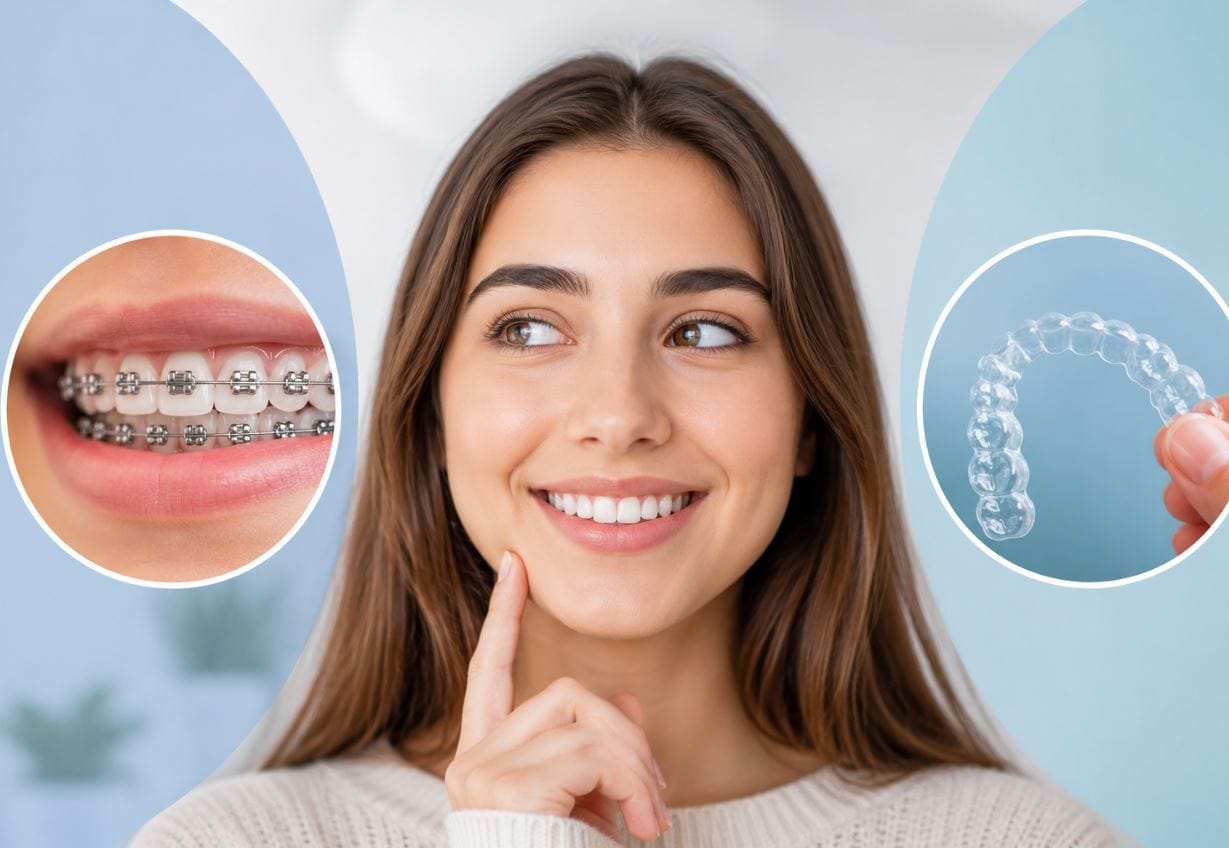
Say the word “orthodontics” and most people picture the same thing: a mouth full of metal brackets and wire. For a lot of adults, that image is exactly why they never book the appointment. They assume the answer is braces, they decide they don’t want braces, and the whole idea gets shelved for another five years.
That’s the bottleneck. Not the treatment itself, but the assumption about what the treatment has to be.
Braces are a genuinely great tool. They’re also one of several, and the right one depends far more on what’s going on in your mouth than on what you’ve seen in other people’s mouths.
Start With the Problem, Not the Hardware
Here’s the thing that surprises people: orthodontics isn’t really about straight teeth. Straight teeth are the visible result. The actual goal is a bite that works, meaning your upper and lower teeth meet the way they should, your jaw joint isn’t under strain, and nothing is wearing down unevenly over the next thirty years.
Appliances are how you get there. Which one your orthodontist picks depends on a handful of things:
- What kind of bite problem you have and how severe it is
- How crowded or spaced out your teeth are
- Whether your jaw is still growing
- Your age and the overall health of your teeth and gums
- What you can realistically live with day to day
- Whether you’ll actually follow the instructions
That last one matters more than most people expect, and we’ll come back to it.
The American Association of Orthodontists makes a point that’s worth repeating: the appliance matters less than the diagnosis behind it and the person supervising the treatment. A skilled orthodontist with metal braces will beat a rushed plan with the fanciest aligners every time.
So the question to walk in with isn’t “do I need braces?” It’s “what’s actually wrong, and what’s the safest way to fix it that will still look good in ten years?”
What Else Is There?
Clear aligners
Custom plastic trays, swapped out every week or two, each one nudging your teeth a little further along. They’re removable, they’re hard to spot from across a table, and you take them out to eat and brush. For a lot of people with crowding, gaps, or mild-to-moderate crookedness, they work well.
The catch is that they only work when they’re in your mouth. Most plans call for 20 to 22 hours a day. If you’re the kind of person who takes something out at lunch and finds it in your coat pocket three days later, be honest with your orthodontist about that. It’s not a character flaw, it’s just useful information for choosing a treatment.
Aligners also have limits. Big rotations, large gaps to close, and some serious bite problems are harder to control with plastic. Fixed appliances give the orthodontist more direct leverage.
Ceramic braces
Same mechanics as metal braces, but the brackets are clear or tooth-colored. From a few feet away, they’re much less obvious.
These suit people who need the control of a fixed appliance but want something subtler. They typically cost more than metal, and they need careful cleaning. Ceramic can stain, so coffee, red wine, and curry become a daily negotiation.
Lingual braces
Brackets bonded to the back of your teeth, facing your tongue. Essentially invisible from the front.
They’re a real option for people who need fixed treatment and can’t have anything showing, though not every bite is suited to them. They take some getting used to, your tongue will have opinions for the first couple of weeks, and not every practice offers them. Worth asking about specifically if this appeals to you.
Removable appliances
Custom plastic devices that sit in the mouth and handle limited movements, often as one stage of a bigger plan rather than the whole treatment. Useful for what they do. Not a substitute for braces or aligners in most cases.
Functional appliances
These work on the relationship between the upper and lower jaws, and they’re mainly used while a child or teenager is still growing. That growth window is the whole point, which is why timing matters so much with kids.
Many are removable, and consistency is everything. Worn as instructed, they can do a lot. Worn haphazardly, they mostly do nothing.
Palatal expanders
An expander gradually widens a narrow upper jaw. It’s used for crossbites, serious crowding, or when there simply isn’t room for permanent teeth to come in properly. Again, mostly for growing children and younger teens, because you’re working with bone that hasn’t fused yet.
Expansion usually sets the stage rather than finishing the job. Braces or aligners often follow.
Orthodontics plus jaw surgery
Sometimes the problem isn’t the teeth at all. It’s the size or position of the jaws themselves, and no amount of moving teeth around will fully fix it.
In those cases treatment combines orthodontics with corrective jaw surgery, usually with fixed braces before and after to get the teeth positioned so the jaws can meet correctly once they’re repositioned. It’s a bigger commitment, and it’s reserved for cases where it’s genuinely the right answer.
When Metal Braces Are Still the Best Call
None of this is an argument for avoiding braces. They’re often the strongest option available.
Fixed braces give continuous, precise control. For complicated crowding, stubborn rotations, or severe bite problems, they can do things removable appliances can’t. And because they’re bonded to your teeth, they keep working whether or not you remember them. For teenagers, or for adults with chaotic schedules, that reliability is a feature, not a compromise.
The tradeoff is maintenance. Brushing takes longer, flossing takes patience, and there’s a list of foods that will pop a bracket off. Popcorn, hard candy, ice, and corn on the cob are the usual suspects.
The best treatment isn’t the newest one or the least visible one or the one with the biggest advertising budget. It’s the one that balances effectiveness, safety, comfort, appearance, and staying power for your particular situation.
Retainers Are Not Optional
Whatever moved your teeth, the job isn’t finished when they stop moving.
Teeth sit in bone, surrounded by ligaments and gum tissue, and all of that needs time to settle into the new arrangement. Retainers hold everything in place while that happens. Skip them and teeth drift back, sometimes surprisingly quickly.
Teeth also shift naturally throughout life, braces or no braces. Retainers are how you protect the result long term. Think of them as part of the treatment, not an accessory you’ve been upsold.
What to Ask at Your Consultation
Bring these with you. A good orthodontist will welcome them:
- What’s actually causing my problem?
- Which options would work for my case?
- Why are you recommending this one specifically?
- Would clear aligners work for my bite? If not, why not?
- Will I need more than one type of appliance?
- Roughly how long will this take, start to finish?
- What does each option cost, and what does my insurance cover?
- What happens if I do nothing?
- What does retention look like afterward?
If a recommendation comes before a proper look at your teeth, gums, bite, and jaws, that’s worth noticing. The plan should follow the diagnosis, not the other way around.
The Bottom Line
Don’t let an assumption about metal brackets keep you out of the chair.
Clear aligners, ceramic or lingual braces, removable appliances, functional appliances, expanders, and surgical cases all have their place. Sometimes braces really are the most reliable route. Sometimes something quieter will do the job just as well.
You won’t know which until someone qualified takes a proper look. Start there, ask good questions, and choose a plan built around your teeth and your life rather than around a single appliance.
This article is general information, not personal dental advice. Talk to a qualified orthodontist about your own situation.