Are Paper Towels Made in the USA? The Complete Guide to Domestic Manufacturing
In an era of complex global supply chains, the provenance of everyday household essentials has become a priority for consumers. If you’ve ever stood in the cleaning aisle wondering, “Are any of these paper towels actually made in America?”, the answer is a resounding yes—but with critical caveats.
While the United States remains a manufacturing powerhouse for paper products, the label “Made in the USA” is not universal. This article dissects the current landscape of American paper towel production, examines the major players, and clarifies the confusing intersection of corporate ownership, raw material sourcing, and final assembly.
The Manufacturing Reality: Ownership vs. Production
The most significant point of confusion for consumers is the difference between a brand’s corporate parentage and the physical location of its factories. A paper towel can be manufactured in the USA by workers in South Carolina, but the brand itself may be a subsidiary of a multinational conglomerate based in Europe or South America. Conversely, a classic American-named brand might produce its paper goods in Canada or Mexico for logistical efficiency.
To understand the market, we must categorize brands into three distinct tiers: American-Made by American Corporations, American-Assembled by Foreign Parents, and Fully Imported.
Category 1: The “Star-Spangled” Giants
U.S. Manufacturing with U.S. Corporate Headquarters
These brands are vertically integrated in the United States. They operate massive “mill-to-shelf” networks, owning the timberlands, pulp mills, and converting facilities on domestic soil.
1. Georgia-Pacific (Koch Industries)
Flagship Brands: Brawny, Sparkle, Angel Soft
HQ: Atlanta, Georgia
Production Footprint: Massive. GP operates a coast-to-coast network of mills. Key paper towel hubs include Green Bay, WI (Day Street Mill), Palatka, FL, and Crossett, AR. Brawny, specifically, is famously produced in Maumelle, Arkansas.
“Made in USA” Verdict: Yes. Georgia-Pacific is the largest American-owned manufacturer of paper towels. It is a privately held American corporation.
2. Procter & Gamble
Flagship Brands: Bounty, Charmin
HQ: Cincinnati, Ohio
Production Footprint: P&G’s “Family Care” division is intensely domestic. The iconic Bounty towels are manufactured in massive plants such as Mehoopany, Pennsylvania (the largest P&G plant globally), Box Elder, Utah, and Greenville, North Carolina. The proximity to Northeastern hardwood forests is strategic for raw fiber sourcing.
“Made in USA” Verdict: Yes. Bounty is an American brand, manufactured in American factories, by a publicly traded American corporation.
3. Cascades Tissue Group
Flagship Brands: Cascades PRO, North River
HQ: Kingsey Falls, Quebec, Canada
U.S. Production Footprint: While the parent HQ is technically Canadian, Cascades operates significant converting facilities within the US border (e.g., Eau Claire, WI, and Waterford, NY) specifically to serve the American market. The “North River” brand is largely an American-produced secondary line.
“Made in USA” Verdict: Yes (Product-Specific). Many Cascades products bear the “Made in USA” label because they are converted, packaged, and shipped from US facilities, despite the parent company’s Canadian domicile.
Category 2: “Designed in America, Parented Abroad”
U.S. Manufacturing, Non-U.S. Parent Companies
This category dominates a huge portion of the store shelf. The factories, employees, and logistics are American. However, the profit ultimately flows to a parent company overseas. Legally, these products qualify for “Made in the USA” marking because they are substantially transformed in the United States, but they are not American-owned.
1. Essity AB (Swedish Parent)
Flagship Brands: Tork, Lotus (commercial focus)
Production Footprint: Essity is the world’s largest hygiene company. In the U.S., they run massive manufacturing sites in Menasha, Wisconsin; Harrodsburg, Kentucky; and Barton, Alabama. The Tork brand is manufactured here for the North American market.
“Made in USA” Verdict: Yes (Physically). These are jobs for American workers, but the corporate tax domicile is Stockholm.
2. Sofidel Group (Italian Parent)
Flagship Brands: Nicky, Soft & Easy (Private Label focus)
Production Footprint: Sofidel is highly aggressive in the U.S. They operate six integrated plants, including the world’s largest private-label paper mill in Circleville, Ohio. If you buy a Wegmans, Target, or Costco store brand, there is a high statistical probability it was made by Sofidel in Ohio, Florida, or Oklahoma.
“Made in USA” Verdict: Yes (Physically). A significant employer in the American Midwest, owned in Rome.
3. Kruger Products (Canadian Parent)
Flagship Brands: White Cloud (sold exclusively at Walmart), SpongeTowels (in Canada)
Production Footprint: Kruger opened a state-of-the-art tissue plant in Memphis, Tennessee, specifically to produce White Cloud for Walmart USA.
“Made in USA” Verdict: Yes (Physically). This is a clear case of a foreign entity building a new plant in the U.S. rather than importing goods from their Canadian mills.
Category 3: The Private Label Enigma (Store Brands)
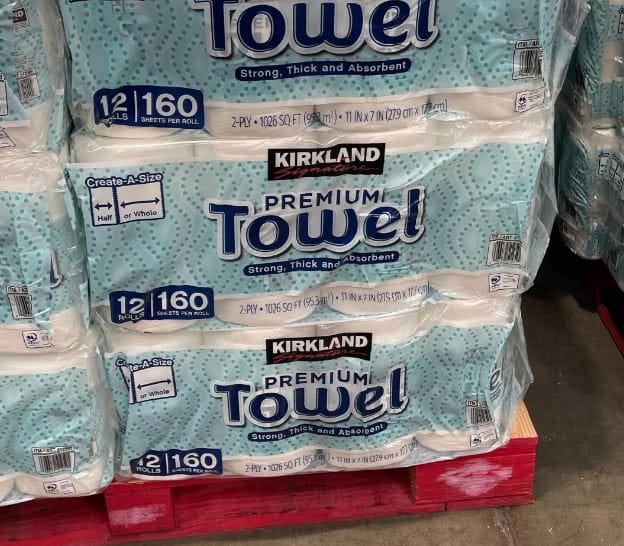
Store brands (Great Value, Kirkland, Up&Up, 365) do not own factories. They bid out contracts annually to the manufacturers listed above. The origin of a store brand paper towel can literally change quarter to quarter based on logistics costs and market pulp pricing.
However, due to the high weight-to-value ratio of paper, importing private label paper towels from Asia is often cost-prohibitive.
- Kirkland Signature (Costco): Historically sourced heavily from Clearwater Paper (USA) and Sofidel (Italian parent, US-made).
- Up&Up (Target): Often supplied by Sofidel (USA-made) or first-tier domestic players.
- Great Value (Walmart): A mix. While White Cloud is Kruger (Memphis-made), the base Great Value tier can be sourced from Georgia-Pacific or Clearwater.
Verdict: Almost always “Made in USA,” but check the label to be certain.
Comparative Analysis: The Major Brands
Use this table as a quick reference guide for the next time you are shopping.
| Brand | Parent Company | Parent HQ | Primary Manufacturing Location | “Made in USA” Label? | Notes |
|---|---|---|---|---|---|
| Bounty | Procter & Gamble | USA | PA, UT, NC | ✔️ | The gold standard for American-made. |
| Brawny | Georgia-Pacific | USA | AR, WI, FL | ✔️ | Often marketed with “American Jobs” imagery. |
| Sparkle | Georgia-Pacific | USA | WI, FL | ✔️ | Budget tier, but fully domestic. |
| Tork | Essity | Sweden | WI, KY, AL | ✔️ (Made in) | Foreign ownership, American labor. |
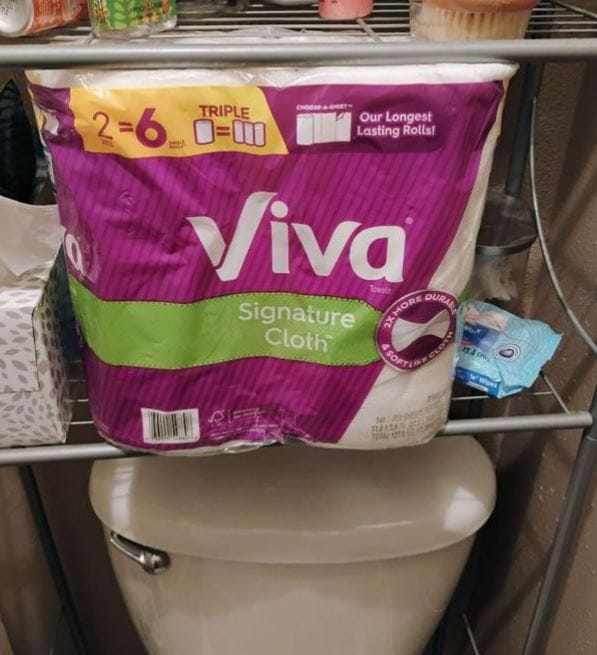
| Viva | Kimberly-Clark | USA | OK, CT* | ✔️ | K-C has shuttered some US plants but Viva remains largely domestic. |
| Scott | Kimberly-Clark | USA | Mixed (USA/Mexico) | ⚠️ Check Label | Classic American brand, heavily cross-border production. |
| Seventh Generation | Unilever | UK | Quebec, Canada | ❌ | Although a US-founded brand, production largely shifted to Canada. |
| Presto! (Amazon) | Amazon | USA | Mixed (USA/Import) | ⚠️ Check Label | Sourced via multiple contracts; increasingly US-made to reduce shipping costs. |
*Specific plant lines can shift due to corporate restructuring.
The “Check the Label” Imperative: FTC Regulations
Why can’t you just trust the brand name? The Federal Trade Commission (FTC) “Made in USA” standard is strict: for an unqualified “Made in USA” claim, “all or virtually all” of the product must be made in the 50 states, the District of Columbia, or U.S. territories.
With paper towels, the “all or virtually all” test usually focuses on:
- The Pulp: Is it domestic hardwood/softwood, or imported eucalyptus?
- The Converting: Was the giant “parent roll” turned into perforated sheets in a US factory?
- The Packaging: Was it wrapped and cased domestically?
If a roll is made of U.S. pulp, puffed with air, embossed, and chopped in Wisconsin, it qualifies. If a company ships massive “parent rolls” from a mill in Brazil or Indonesia, and merely perforates them in Texas, the FTC still requires significant qualifiers (like “Made in USA from imported materials”). Most major US brands utilize the vast North American timber basket for pulp, which gives them a legal and marketing advantage.
Why Is Production So Concentrated in America?
Paper towels are a terrible product to import for mass-market retail. This inherent economic reality protects domestic manufacturing:
- The “Air Tax”: Paper towels are intentionally puffed with air to increase softness and absorbency. You cannot compress a Brawny roll without destroying its performance. Shipping a container of paper towels is essentially shipping air. This makes high-volume ocean freight from Asia economically unsound compared to shipping compact electronics.
- Water Weight: The supply chain revolves around water. It is more efficient to ship dry pulp to a coastal US mill than to ship finished, water-logged (or highly processed) products.
- Just-In-Time Delivery: Retailers like Walmart hold paper towels for hours, not weeks. Regional mills in Arkansas or Ohio can restock shelves in 48 hours; a ship from Shanghai takes weeks.
Conclusion: A Stable American Staple
If your purchasing decision hinges on supporting American factory workers, paper towels are a safe category. Brands like Bounty and Brawny represent the pinnacle of American-owned, American-made manufacturing. If you are okay with foreign ownership but strict American manufacturing, Tork or Sofidel-made store brands offer excellent alternatives.
The critical takeaway is vigilance at the shelf edge. While the industry is historically domestic, corporate consolidation and cross-border logistics for specific tiers (like ultra-premium or 100% recycled fibers, which often rely on imported feedstock) mean the only way to be absolutely certain is to ignore the brand logo and look for the “Made in the USA” text on the bottom of the plastic wrap.