Will Irish Spring Keep Mice Away? The Evidence-Based Answer
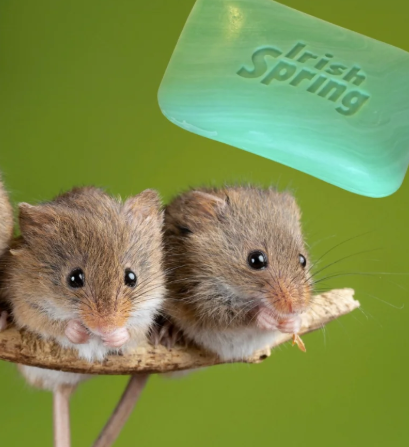
Bottom line: No. Irish Spring soap is not a reliable mouse repellent. There is no published scientific study showing that Irish Spring—or any scented bar soap—repels house mice. In practice, many homeowners report that mice gnaw on the soap rather than avoid it. The idea that it works appears to be a myth that migrated from a 1991 study on deer repellents, not rodents . If you have mice, soap will not solve the problem; sealing entry points and trapping will.
Where the Irish Spring Myth Comes From
The Irish Spring myth is often repeated online, particularly in RV and camping communities, where people place bars of soap in campers, garages, or under vehicle hoods hoping to deter rodents . The logic seems intuitive: Irish Spring has a strong, perfumed scent, and mice are known to have a sensitive sense of smell.
However, the origin of the claim is shaky. Pest control researchers trace the idea to a 1991 study on deer browsing, which found that tallow-based soap bars reduced deer damage to crops and young trees—but only over very small areas . That study said nothing about mice. Since then, the soap-repellent idea has been extended to rodents without any equivalent research to support it.
A review of the evidence by pest control professionals concludes plainly: “No study shows Irish Spring repels mice or rats” . Wildlife damage specialists add that scent-based repellents in general are unreliable for rodents because hunger, warmth, and shelter will override unpleasant smells .
What Actually Happens When You Put Out Irish Spring
The most consistent finding across homeowner reports and pest control analyses is that mice often eat the soap. Bar soap is made primarily from fatty acid salts (tallow or palm oil), making it soft, chewable, and calorie-dense enough to attract gnawing rodents .
Even in the anecdotal reports where people claim success, the mechanism is rarely the soap itself. One RV owner who swore by Irish Spring later realized their cat was traveling with them . Another credited the soap but had also sealed all openings in the trailer—the actual effective measure.
How Irish Spring Compares to Other Deterrent Methods
The table below compares Irish Spring against methods with actual evidence behind them. Note that even the “moderate” ratings for scent deterrents reflect short-term, inconsistent effects—not reliable control.
The pattern is clear: scent-based methods rank at the bottom in reliability, while physical exclusion and trapping rank at the top.
Why Scent Deterrents Fail Against Mice
Three biological realities explain why Irish Spring—and most scent repellents—cannot be relied upon:
1. Mice prioritize food and shelter over avoiding smells. House mice rarely travel more than 30 feet from their nest and food source . If your pantry, garage, or camper offers warmth and accessible food, a strong smell is not a meaningful obstacle. A University of Georgia wildlife specialist summarized all scent repellents as “temporary at best” .
2. Mice habituate quickly. Rodents exhibit neophobia—avoidance of unfamiliar objects—for a few days. A fresh bar of soap may cause brief hesitation simply because it is new. Once the mouse learns the soap is harmless (or edible), the effect disappears .
3. The scent fades before the mice give up. A dry bar of soap loses its fragrance over days to weeks. Mice are patient; they wait out temporary annoyances. Registered rodent repellents also lose strength over time, and soap is far weaker than any regulated product .
What Actually Works to Keep Mice Away
If Irish Spring is not the answer, what is? Pest control professionals and extension services consistently recommend a three-part approach:
Step 1: Seal Every Gap Wider Than a Quarter Inch
Mice can squeeze through openings the size of a pencil. Inspect foundations, walls, vents, utility pipe penetrations, door sweeps, and garage thresholds. Use steel wool (mice cannot chew through it) packed into gaps, then seal with caulk or expanding foam . In RVs and vehicles, cover vents and cabin air intakes with metal mesh .
Step 2: Remove Food, Water, and Nesting Material
Store pantry food in airtight containers. Clean up crumbs and spills promptly. Remove birdseed, pet food left out overnight, and clutter (cardboard, rags, insulation) that mice use for nesting. In vehicles, remove all food and nesting material .
Step 3: Trap the Mice Already Inside
Snap traps and electric traps are the most effective and humane options for elimination. Place traps along walls—mice travel along edges—and check them daily. Bait with peanut butter or a small piece of food. Avoid glue boards (inhumane) and rodenticides (risk of poisoning pets or children, and mice may die in inaccessible spaces) .
When to Call a Professional
If you have sealed entry points, removed food sources, and set traps but still see droppings or hear scratching at night, the infestation may be larger than a DIY approach can handle. A professional can identify hidden entry points, assess the severity of the problem, and use targeted treatments that are safe for your household. This is especially important in apartments or attached homes, where the source may be in an adjoining unit you cannot access .
Frequently Asked Questions
Does Irish Spring soap repel mice?
Not in any reliable way. No published study has tested Irish Spring on house mice, and pest control researchers say scent-based repellents are not a dependable method for managing rodents. At best, the smell might cause a mouse to hesitate for a short time; food and shelter will quickly override any hesitation .
Do mice eat Irish Spring soap?
Yes, they often do. Bar soap is made from fatty acid salts (tallow or palm oil), which makes it chewable and attractive to rodents. Homeowners frequently report finding teeth marks or partially eaten bars. A gnawed bar is evidence that the soap failed as a deterrent .
How long does Irish Spring keep mice away?
There is no tested answer because it has never been shown to keep mice away at all. Any temporary effect comes from a mouse’s natural caution around new objects, which fades within days. The soap’s fragrance also diminishes as the bar dries out, leaving nothing but a chewed-up bar .
What smells actually keep mice away?
No household scent is a reliable stand-alone mouse repellent. Peppermint oil and other essential oils may have weak, short-term effects, but they must be reapplied frequently and are not a substitute for exclusion and trapping. Mothballs are ineffective and toxic; ammonia has shown no effect in studies . The most effective “deterrent” is a sealed building.
What is the fastest way to get rid of mice in a garage or camper?
Seal all gaps with steel wool and caulk, remove all food and nesting material, and set snap traps along walls. For vehicles, drive them regularly (mice avoid vibration and noise), cover vents with metal mesh, and keep the interior clean. Soap is not a plan—traps and exclusion are .