How to Remove Water Stains from Quartzite: A Professional Guide
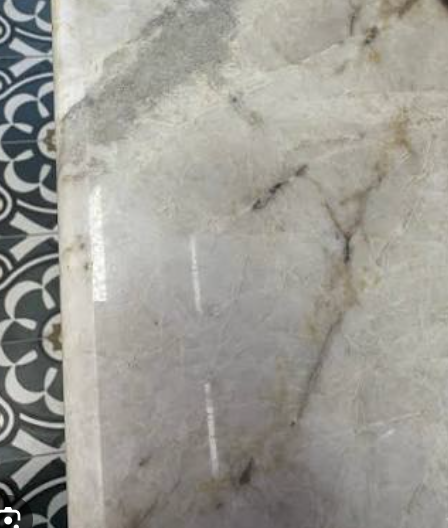
Water stains on quartzite are a common concern, but the solution depends entirely on correctly identifying the nature of the mark. Unlike granite, quartzite is moisture-sensitive and varies in porosity from slab to slab . What appears as a simple “water stain” may actually be trapped moisture, a mineral deposit, or even a silicone bleed from installation. This guide provides a structured, professional approach to diagnosis and removal, ensuring you protect your stone’s integrity while restoring its appearance.
Key Takeaways
- Identify the Stain Type First: Dark rings are usually trapped moisture that fades naturally; white chalky rings are mineral deposits requiring gentle abrasion; persistent dark spots may be oil or silicone.
- Avoid Harsh Chemicals: Never use vinegar, lemon juice, bleach, or abrasive scourers, as these can etch the surface or degrade the sealer .
- Reseal After Cleaning: Once the stain is removed and the stone is fully dry, applying a penetrating sealer is the only way to prevent recurrence .
Step 1: Diagnose the Stain
Before applying any product, determine what you are dealing with. Quartzite can exhibit different types of discoloration based on the source.
Step 2: Removal Procedures by Stain Type
A. For Dark Moisture Rings (Most Common)
If the stain looks like a dark, damp patch and the stone was recently exposed to water, it is likely just trapped moisture.
- Dry the Surface: Wipe the area completely dry with a clean cloth.
- Increase Airflow: Place a fan near the counter or open a window. Do not use a hairdryer or heat gun, as intense heat can drive moisture deeper or damage the resin fill .
- Wait: Most dark moisture rings will evaporate and fade on their own within 24 to 72 hours . If the ring persists after a week, it is likely a stain from a liquid other than water.
B. For White Mineral Deposits
These are physical deposits sitting on top of the stone.
- Soften the Deposit: Apply a pH-neutral stone cleaner or warm water to the ring and let it sit for a few minutes.
- Gentle Abrasion: Use a new plastic razor blade held flat against the surface to gently lift the mineral ring. Avoid metal blades or steel wool, which will scratch the polish .
- Rinse and Dry: Wipe away the residue with a damp cloth and dry immediately.
C. For Persistent Oil or Deep Stains (Poultice Method)
If the stain is dark and does not respond to drying, or if it was caused by oil or wine, you must draw the substance out using a poultice.
- Prepare the Poultice: Mix a commercial stone poultice powder (or a thick paste of baking soda and water) .
- Apply: Apply a thick layer (about 1/4 inch) over the stain, extending slightly beyond the edges.
- Cover: Cover the paste with plastic wrap and tape the edges down to create an airtight seal.
- Wait: Leave it for 24 to 48 hours to allow the poultice to draw the stain out of the stone .
- Remove: Remove the plastic, scrape away the dried paste with a plastic razor, and clean the area.
Step 3: Comparison of Cleaning Agents
Using the wrong cleaner is a leading cause of quartzite damage. Many “natural stone” cleaners contain acids that dull the finish of calcium-sensitive stones.
Step 4: Prevention and Sealing
Quartzite is naturally microporous. If water is absorbing and leaving dark marks, it is a clear indicator that the protective sealer has worn off or was never applied correctly .
- The Water Test: Place a teaspoon of water on the counter. If the stone darkens within 10 minutes, it is time to reseal .
- Sealing Frequency: Most quartzite countertops require resealing annually to maintain stain resistance .
- Application: Ensure the stone is completely dry and dust-free before applying a penetrating sealer. Apply a thin, even coat with a clean cloth, let it absorb for the manufacturer’s recommended time (typically 5–15 minutes), and buff off any excess .
Frequently Asked Questions (FAQ)
1. How long does it take for a water stain to dry out of quartzite?
Most surface moisture that has darkened the stone will evaporate and fade within 24 to 72 hours if left uncovered with good airflow . If the mark remains after a week, it is likely not water but a different liquid (like oil) or a silicone stain.
2. Can I use vinegar to remove hard water stains from my quartzite?
No. Vinegar is acidic and will etch the surface of quartzite, dulling the polish and degrading the sealer . Use a pH-neutral cleaner or a plastic razor blade to gently lift mineral deposits instead.
3. Why does my quartzite keep getting water rings even after I wipe it?
If water rings appear immediately after wiping, your sealer has likely failed. Quartzite is microporous; when the sealer wears down, water can penetrate the surface and darken it until it evaporates . You need to clean the surface and apply a new penetrating sealer.
4. What if the stain is from silicone used during installation?
Silicone bleed appears as dark, spreading stains, often near seams or edges. Unfortunately, poultices are generally ineffective against silicone . In many cases, silicone staining is permanent and may require replacement of the affected slab, though a professional stone restorer may attempt to torch it out as a last resort .
5. Is it normal for quartzite to have water spots beneath the polished surface?
If you see dark spots that look like they are “under” the finish (especially on new installs), this could be residual moisture from the fabrication process that was trapped before the stone dried. In some cases, it may also indicate that the stone was sealed while still wet during fabrication . Contact your fabricator immediately if these appear shortly after installation.