How to Clean Algae Stains from Pool Liner: A Professional Guide
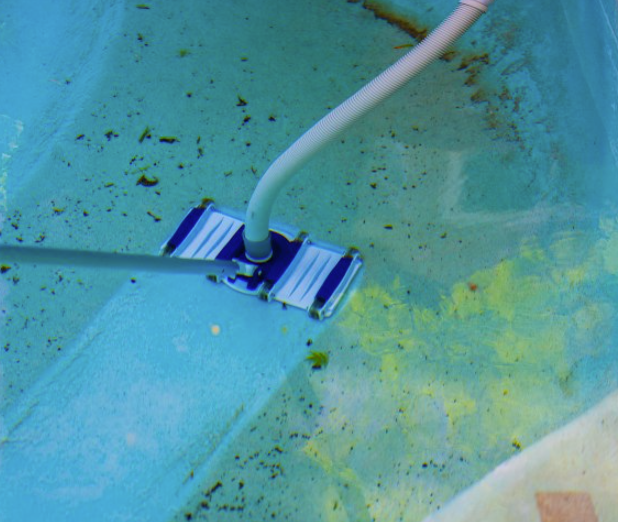
Algae stains on a vinyl pool liner are more than an aesthetic nuisance; they signal a breach in water chemistry and can permanently disfigure the liner if addressed incorrectly. Unlike plaster or concrete, vinyl liners are delicate and reactive to harsh abrasives and improper chemical concentrations. Cleaning algae stains successfully requires a methodical approach that prioritizes material integrity while eradicating the organic source.
This guide provides a professional, step-by-step protocol for identifying, treating, and preventing algae stains on vinyl liners, ensuring you restore clarity without compromising the membrane’s structural lifespan.
1. Diagnosis: Identify the Stain Before You Treat
Before applying any chemical or brush, you must determine whether the discoloration is active algae, a dead algae stain, or a metallic stain masquerading as algae. Misdiagnosis can lead to “locking in” a stain or damaging the liner.
Active vs. Dead Algae: Live green algae often appears as a slimy, uniform film that brushes away easily. If the stain is embedded and does not brush off, it is either a dead algae stain (organic matter bonded to the liner) or black algae (which has roots).
The Chlorine Test: Before using a specialized stain remover, perform a spot test. Hold a chlorine tablet against the stain for 30 seconds. If the stain lightens, it is organic (algae). If it does not change or darkens, it is likely a metal stain (iron or copper), which requires a different treatment (acidic removal) rather than oxidation.
2. Preparation and Safety
Vinyl liners are sensitive to high concentrations of chlorine and low pH. Before beginning, ensure the following:
- Lower Chlorine Levels: For chemical stain removers (like ascorbic acid or specific commercial products) to work, the free chlorine must often be reduced to 0 ppm or below 1 ppm. High chlorine oxidizes the remover before it can lift the stain.
- Balance pH: Ensure the pH is at the lower end of the normal range (7.2) to maximize the efficiency of any shock treatment you will use later.
- Tools: Use only a nylon-bristled brush and a soft sponge. Never use steel wool, wire brushes, or abrasive pads; these create micro-abrasions that harbor future algae.
3. Method Selection: Comparison of Cleaning Approaches
The table below compares the primary methods for treating algae stains on vinyl liners, balancing efficacy against the risk of liner damage.
Protocol A: The Shock and Brush Method (Active Blooms)
If the stain is active algae, you must kill it before you can remove the stain.
- Pre-dissolve: Never broadcast granular shock directly onto the liner; it will bleach the vinyl permanently. Pre-dissolve calcium hypochlorite in a bucket of water.
- Apply: Pour the solution around the perimeter while the pump is running.
- Brush: Vigorously brush the stained areas with a nylon brush. This opens the algae’s protective coating and allows chlorine to penetrate.
- Vacuum to Waste: After 24 hours, vacuum the dead algae directly to waste (bypassing the filter) to prevent it from re-circulating and re-staining.
Protocol B: Targeted Stain Removal (Embedded Organic Stains)
If the algae is dead but the stain remains, you need a targeted lifting agent.
- Spot Treatment: For localized stains, place a commercial organic stain remover (or a crushed vitamin C tablet) inside a clean sock or pantyhose. Tie it to a telescopic pole and suspend it directly over the stain. Do not let the concentrated powder sit directly on the liner without the sock barrier.
- Circulation: For widespread staining, dissolve the stain remover in a bucket and pour it around the pool perimeter with the filter running.
- Settling Time: Allow 24–48 hours for the chelating agents to lift the stain. Do not swim during this period.
4. Post-Treatment: Restoring Balance
After the stain has lifted, the pool water will likely be depleted of chlorine and have a low pH.
- Rinse and Filter: Brush the treated areas again and run the filter continuously to catch any residual particles.
- Rebalance Slowly: Add pH increaser (soda ash or sodium bicarbonate) very slowly. Rapid pH swings can cause the lifted stain (especially metals) to re-deposit onto the liner.
- Re-Sanitize: Once the pH is stable at 7.4–7.6, bring the chlorine level back up to the normal range of 1–3 ppm.
5. Prevention: The Chemistry of Stain-Free Vinyl
Stains are a symptom of imbalance. To prevent recurrence:
- Maintain pH: Keep pH strictly between 7.2 and 7.6. Low pH corrodes vinyl plasticizers; high pH renders chlorine ineffective.
- Brush Weekly: Algae cannot adhere to a surface that is regularly disturbed. Brush walls and floor weekly to disrupt biofilm formation.
- Avoid Copper Algaecides: Never use copper-based algaecides in a vinyl pool. Copper ions bind to vinyl and cause permanent blue-green staining that is extremely difficult to remove.
Frequently Asked Questions (FAQ)
1. Can I use household bleach to clean algae stains on my vinyl liner?
No, it is not recommended. While bleach is chlorine, household bleach is unstabilized and often contains additives. Pouring it directly on a liner can cause permanent yellowing or bleaching of the vinyl pattern. Always use pool-grade shock (calcium hypochlorite or sodium hypochlorite) that is pre-dissolved and distributed evenly.
2. How do I remove black algae spots from a vinyl liner?
Black algae have deep roots and a protective slime layer. You must brush the spots vigorously with a nylon brush to break the coating. Then, lower the pH to 7.2 and shock the pool to 30 ppm. After shocking, add a polyquat algaecide (not copper-based) to prevent regrowth. Continue brushing daily until the spots disappear.
3. The stain won’t come out after shocking. What is it?
If shock and brushing fail, the stain is likely metallic (iron, copper, or manganese) or a “dead” organic stain that has bonded to the liner. Perform the chlorine tablet test mentioned in Section 1. If it’s a metal stain, use a chelating stain remover (like ascorbic acid) rather than more chlorine.
4. Is it safe to drain my pool to clean the liner?
Do not drain a vinyl liner pool completely. Draining a vinyl pool can cause the liner to shrink, wrinkle, or pull away from the walls, resulting in total failure. Cleaning must be done with the pool full or at most partially drained by a professional who can secure the liner in place.
5. How long does it take for algae stains to disappear after treatment?
For active green algae, the water will clear within 24–48 hours of shock and filtration. For embedded organic stains treated with a stain remover, it can take 2–3 days for the stain to fully lift. If the stain persists after a week, the treatment may need to be repeated or the diagnosis reconsidered.