How Often Should You Clean Your Air Conditioner? A Homeowner’s Schedule
Keeping your home spotless takes more than scrubbing floors and wiping counters. One of the most overlooked contributors to a truly clean, healthy home is your air conditioner. It runs quietly in the background, cycling air through every room — and if it’s dirty, that air carries dust, mold spores, and allergens right back into your living space.
So how often should you actually clean it? The answer depends on the component, your usage habits, and your home environment. Total Aircond Service, a reputable air conditioner servicing company based in Malaysia, recommends following a consistent maintenance schedule rather than waiting for problems to show up — because by the time you notice something is wrong, the damage is usually already done. Here’s a practical homeowner’s schedule to keep your AC running clean all year long.
Every 2–4 Weeks: Clean or Check the Air Filter
The air filter is your AC’s first line of defense. It traps dust, pet dander, pollen, and fine particles before they circulate through your home. When it gets clogged, airflow drops, the unit works harder, and your electricity bill climbs.
What to do: For reusable filters, rinse with water, let dry completely, and reinstall. For disposable filters, simply replace them. If you have pets, live near a construction zone, or run your AC around the clock, lean toward every 2 weeks. For light users, once a month is fine.
Signs it’s overdue: Visible grey dust buildup on the filter surface, weaker airflow from vents, or a musty smell when the unit kicks on.
Every 3 Months: Wipe Down the Indoor Unit and Vents
Dust settles on your indoor unit’s casing, air vents, and louvers over time. While this doesn’t affect performance as immediately as a clogged filter, it does affect air quality — and it makes your room look neglected.
What to do: Use a dry or lightly damp microfibre cloth to wipe down the exterior casing. For vents and grilles, a vacuum brush attachment works well to pull out embedded dust. Don’t spray water directly into the unit.
This is also a good time to check that nothing is blocking the vents — furniture, curtains, or clutter pushed too close can restrict airflow significantly.
Every 6 Months: Clean the Evaporator Coil and Drain Pan
This is where mold and mildew love to grow. The evaporator coil sits inside your indoor unit and gets cold and wet as it dehumidifies the air. Over time, biological growth accumulates on the coil surface and inside the drain pan beneath it.
What to do: Turn off the unit at the power source. Open the indoor unit casing (refer to your manual). Use a no-rinse coil cleaner spray, let it foam and drip into the drain pan, then wipe the pan with a diluted bleach solution to kill any mold. Flush the drain line with water to prevent blockages.
If you notice water dripping from the indoor unit onto your wall or floor, a blocked drain line is usually the culprit — don’t ignore it. In Malaysia’s humid climate, drain line blockages are especially common due to the consistently high moisture levels in the air, so this step is worth paying extra attention to.
Once a Year: Service the Outdoor Condenser Unit
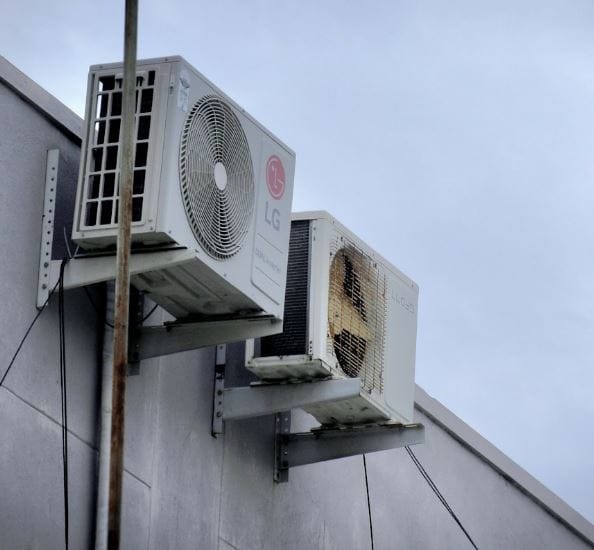
The outdoor unit works just as hard as the indoor one, but it faces the elements directly — leaves, dirt, grass clippings, and insects all find their way into the condenser fins and housing.
What to do: Turn off power to the unit. Use a garden hose to gently spray the fins from the inside out to push debris away (never from outside in, as this packs dirt deeper). Trim any vegetation within 30–60 cm of the unit to ensure adequate airflow. Check that the unit sits level on its pad — vibration over time can cause it to shift.
This annual clean is also the ideal time to book a professional aircond service. A trained technician can check refrigerant levels, inspect electrical connections, test capacitors, and clean components that are difficult or unsafe to access without proper tools.
When to Call a Professional Instead of DIY-ing It
While homeowners can handle filters, vents, and light surface cleaning, certain tasks genuinely require professional attention:
- Refrigerant top-up — handling refrigerant without certification is illegal and dangerous
- Deep coil cleaning — chemical washes and pressure cleaning done incorrectly can bend delicate fins
- Electrical faults — flickering, tripping breakers, or the unit not starting
- Persistent odors — if the smell returns within days of cleaning, mold may be deeper in the system
In Malaysia, where air conditioners run almost year-round due to the tropical heat, the wear and tear on units is significantly higher than in countries with seasonal climates. A professional service twice a year — rather than the once-a-year minimum recommended in cooler countries — is strongly advised to keep your unit in good shape and your warranty intact.
Build It Into Your Cleaning Routine
The easiest way to stay on schedule is to pair AC maintenance with tasks you already do. Check the filter when you change your bedsheets. Wipe the unit when you do your quarterly deep clean. Book a professional service the same time each year so it never slips.
A clean air conditioner means cleaner air, lower bills, and a unit that lasts. It’s one of the highest-return maintenance habits a homeowner can build — and it takes far less time than most people expect.