How Modern Sink Designs Improve Kitchen Efficiency
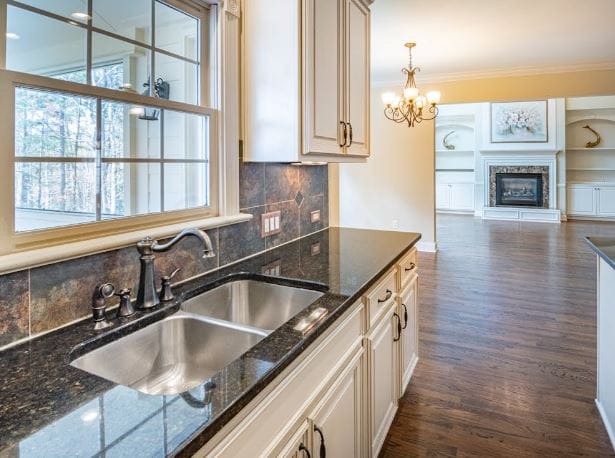
Modern kitchen sink designs contain more than just a faucet and a basin. Often, in expensive, modern sinks, you’ll find a range of additional features that help to make your work easier in the kitchen, whether it’s cooking or washing.
For instance, workstation sinks come with different accessories that can be installed on top of the sink bowl. You can have a colander right under the faucet, where you can rinse vegetables without having to make all the extra effort of finding a separate one in the cabinet, washing it, using it, and putting it away.
In the same way, condiment bowls, cutting boards, etc., are also provided with such sinks.
If you’re looking to invest in a modern kitchen sink but aren’t sure how it will help in making your daily tasks more efficient, read this post till the end. That’s what we’re going to be talking about.
We’ll describe different types and elements of modern sink designs along with how they improve efficiency in day-to-day tasks.
- Workstation Sinks Bring Everything You Need to One Spot
Workstation sinks improve kitchen efficiency by consolidating prep, rinsing, and clean-up into a single space, eliminating the constant back-and-forth between the sink, the counter, and the cabinet that makes everyday cooking more tedious than it needs to be.
What is a workstation sink?
A workstation sink is a sink designed with a ledge running along the top rim of the basin. This ledge acts as a rail system on which a range of accessories can be placed, slid, and repositioned as needed during kitchen tasks.
Accessories you’ll typically find with a workstation sink
- Colanders and rinse baskets sit directly over the basin, letting you wash vegetables, fruits, or pasta right under the faucet without needing a separate bowl.
- Cutting boards slide across the rim, giving you a prep surface directly over the sink so that trimmings and waste can be pushed straight in.
- Condiment and prep bowls drop into the basin for mixing, marinating, or holding prepped ingredients while you continue working.
- Drying racks slot into the same ledge system, keeping drying dishes contained above the basin rather than sprawled across the counter.
Key benefits of workstation sinks
- Prep, rinse, and clean-up happen in the same spot, cutting down on the back-and-forth that makes cooking feel more laborious than it needs to be.
- Counter space stays free because the accessories live above the sink rather than beside it.
- Everything has a designated place, which makes the kitchen feel more organized during and after cooking.
How much does a workstation sink cost?
Basic models start at around $300, while premium workstation sinks can range up to $1,500. The latter options usually come with a full set of accessories.
- Smart Faucet Designs Cut Out Unnecessary Steps
A well-designed modern faucet does more than deliver water. It reduces the small friction points that slow you down during cooking and cleaning. While small and ignorable on their own, they can add up to be pretty annoying.
Types of smart faucet designs
- Touchless faucets use motion sensors to turn the water on and off, which means you’re not transferring raw meat, dough, or soil from your hands onto the handle every time you need to rinse.
- Pull-down and pull-out faucets come with a spray head on a flexible hose, giving you the range to rinse the entire basin, fill large pots on the counter, and wash produce more thoroughly than a fixed faucet allows.
- Dual-function spray heads switch between a steady stream and a wide spray, so you’re not fighting a powerful jet when you just need a gentle rinse.
- Temperature memory faucets return to your last used temperature setting each time, saving you a few seconds of adjusting every single time you turn the tap on.
Key benefits of smart faucets
- Touchless operation keeps the faucet cleaner and reduces the spread of bacteria during food prep.
- A pull-down hose makes filling large pots and pans significantly easier, removing the awkward maneuvering that a fixed faucet demands.
- Small time savings across multiple daily uses add up to a noticeably smoother kitchen routine over time.
How much do smart faucets cost?
A decent pull-down faucet starts at around $80. Touchless models with additional features typically begin at $150 and can reach $600 or more for high-end brands with advanced sensor technology and finish options.
- Multi-Basin Configurations Let You Tackle Several Tasks at Once
A single basin sink asks you to do one thing at a time. Multi-basin sinks remove that limitation, letting you keep separate tasks running simultaneously without one getting in the way of the other.
Common multi-basin configurations
- 50/50 split basins divide the sink into two equal bowls, one for washing and one for rinsing, which is the most straightforward way to speed up dish cleaning.
- 60/40 split basins give you one larger bowl for bigger items like pots and pans, and a smaller bowl for rinsing or food prep, which suits most cooking workflows better than an equal split.
- Triple basin sinks are less common but offer a dedicated zone each for prep, washing, and rinsing, making them particularly useful in larger kitchens where multiple people cook at the same time.
Key benefits of multi-basin configurations
Here are some of the benefits of using these types of sinks for your day-to-day kitchen tasks.
- Soaking dishes in one basin while prepping food in another means you’re never waiting on the sink to be free before moving to the next task.
- Keeping raw food prep separate from the washing zone is a cleaner, more hygienic way to work.
- For households that cook frequently or in larger quantities, the time saved across a week of cooking is substantial.
How much do multi-basin sinks cost?
Two basin sinks are widely available starting at around $150 for basic stainless steel models. Higher-end undermount options in composite or fireclay materials start at around $400 and can exceed $1,200 for premium configurations.
- Built-In Drainage and Drying Zones Free Up Your Counter Space
Counter space is one of the most fought-over resources in any kitchen. Modern sinks with integrated drainage and drying features give you some of it back by pulling those functions into the sink itself rather than letting them spill out onto the counter.
What to look for
- Sloped sink bases are angled toward the drain so that water moves off immediately rather than pooling at the bottom of the basin, keeping the sink cleaner between uses.
- Integrated draining boards are built directly into the sink unit beside the basin, channeling water back into the bowl as dishes dry rather than letting it run across the counter.
- Over-sink drying racks sit on the workstation ledge or span across the basin, holding dishes above the sink while they drip dry so your counter stays clear.
- Low-divide basins have a shorter dividing wall between two bowls, making it easier to move large items across while still keeping the two zones functionally separate.
Key benefits of built-in drainage and drying zones in the kitchen sink
- An integrated draining board eliminates the need for a freestanding dish rack sitting permanently on your counter.
- Sloped bases mean less standing water, which reduces the buildup of water stains and makes daily cleaning faster.
- Keeping drying contained to the sink zone makes the kitchen look tidier with minimal effort.
How much do these sinks cost?
Sinks with integrated draining boards start at around $200 for basic models. Workstation sinks that combine a sloped base, ledge system, and drying rack accessories typically start at $400 and go up depending on size and material.
- Noise Reduction and Durability Features Make the Sink More Pleasant to Use Daily
Efficiency isn’t only about speed. A sink that rattles every time a pan lands in it, or one that scratches and stains after a few months of use, creates its own kind of friction. Mental friction, rather than physical.
Modern sinks address both these types of friction.
Features to look for in these types of sinks
- Sound-dampening pads are thick rubber or foam pads bonded to the underside of the sink basin. They absorb the vibration caused by water and impact, significantly reducing the clanging noise that thinner sinks produce.
- Scratch-resistant coatings on stainless steel sinks, or the naturally hard surface of composite and fireclay sinks, hold up far better under daily use than standard finishes and stay looking clean with less effort.
- Undermount installation removes the exposed rim that sits on top of the counter in drop-in sinks, eliminating the grime-collecting gap between the sink edge and the countertop and making the whole surface easier to wipe down.
- Thick gauge stainless steel (16 gauge and lower) is more rigid and resistant to denting than the thinner 18 or 20 gauge steel found in budget sinks, and it produces noticeably less noise under impact.
Key benefits of “sound-friendly” sinks
- A quieter sink makes the kitchen a more comfortable place to work, particularly during early mornings or late nights when noise carries more.
- Durable finishes mean less time scrubbing and maintaining the sink and more time actually using it.
- Undermount installation makes counter cleaning faster and more thorough, which matters in a space that sees as much activity as the kitchen.
How much do these features add to the cost?
Sound-dampening and heavier gauge steel are standard in most mid-range sinks starting at around $200. Composite and fireclay sinks, which offer the best durability and scratch resistance, typically start at $300 and can go well beyond $1,000 for larger or designer models.
Choosing the Right Sink for Your Kitchen
The best sink for your kitchen depends on how you actually use the space. A few things worth thinking through before you buy:
How much do you cook? If you’re in the kitchen daily preparing full meals, a workstation sink or a multi-basin configuration will pay for itself in convenience fairly quickly. If the kitchen sees lighter use, a well-made single basin with a good faucet may be all you need.
How much counter space do you have? Smaller kitchens benefit most from sinks that absorb functions that would otherwise live on the counter, integrated drying, prep space via a workstation ledge, and undermount installation for easier cleaning.
What’s your material preference? Stainless steel is the most practical and widely available. Composite granite offers better scratch and heat resistance with a more premium look. Fireclay is the most durable, but also the heaviest and most expensive. Each has a different maintenance requirement worth researching before committing.
Final Thoughts
Modern sink design has come a long way from a simple basin and a tap. The features covered in this article, from workstation ledges and smart faucets to multi-basin layouts and sound dampening, are all aimed at reducing the small inefficiencies that accumulate during everyday kitchen use.
Whether you’re planning a full kitchen renovation or simply replacing an aging sink, understanding what modern designs offer makes it easier to choose something that genuinely improves how the kitchen works for you.