Can Porcelain Rust? A Comprehensive Technical Analysis
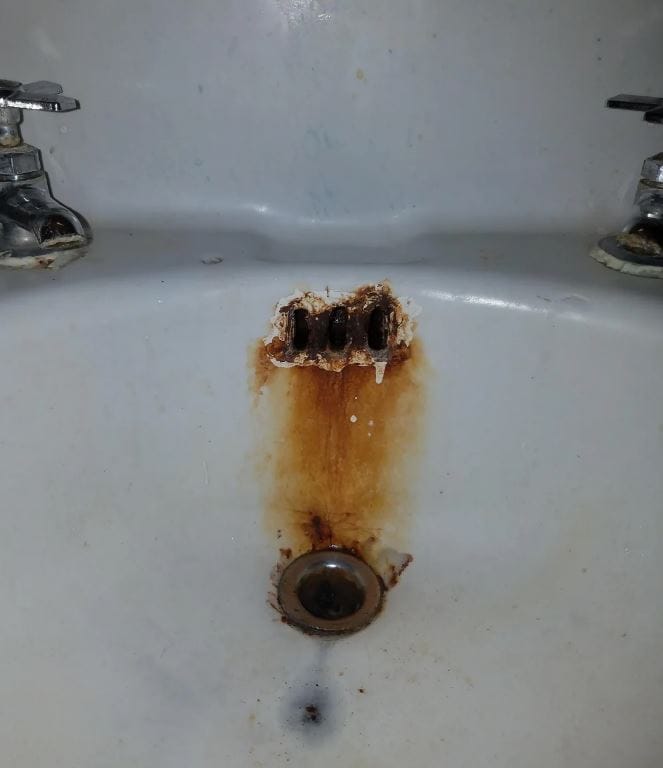
The question of whether porcelain can rust is a common point of confusion. The short, definitive answer is no—porcelain itself cannot rust. However, the presence of brown, rust-like stains on porcelain items is a widespread issue, which often leads to the misconception that the porcelain material is rusting. This article provides a comprehensive, technically detailed explanation of why porcelain does not rust, the true nature of “rust stains,” the difference between porcelain and metals, and the chemical processes that can affect ceramic glazes.
The Science of Rust: A Metal-Specific Phenomenon
To understand why porcelain doesn’t rust, it is essential to first understand the chemistry of rust. Rust is a specific type of corrosion that occurs exclusively on iron and its alloys, such as steel .
The process is an electrochemical oxidation reaction. When iron (Fe) is exposed to oxygen (O₂) and moisture (H₂O), it undergoes a chemical reaction to form iron oxides, commonly known as rust [citation:1, citaion:5]. The simplified chemical equation is:
4Fe + 3O₂ + 6H₂O → 4Fe(OH)₃
This reaction requires three elements: iron, oxygen, and water. Without any one of these components, the reaction cannot proceed. As porcelain is a ceramic material composed of inorganic minerals and contains no metallic iron in its structure, the fundamental prerequisite for rusting is absent.
Material Composition: Why Porcelain Is Inherently Rust-Proof
Porcelain is a ceramic material, not a metal. It is primarily manufactured from a mixture of natural, non-metallic minerals, including:
- Kaolin Clay: A fine, white clay that provides plasticity and forms the base of the porcelain body .
- Feldspar: A flux that acts as a binder, lowering the melting temperature of the other components and helping to form a glassy matrix [citation:1, citation:5].
- Quartz: Provides structural integrity and increases the hardness and strength of the final product [citation:1, citation:5].
These materials are combined with water, shaped, and then fired in a kiln at extremely high temperatures (typically between 1,200°C and 1,400°C). At these temperatures, the materials undergo a process of vitrification, where they melt and fuse together to create a dense, non-porous, glass-like structure .
Because the chemical composition of porcelain contains no free iron, the electrochemical reaction that produces rust cannot occur. This is confirmed by archaeological evidence: ceramic and porcelain artifacts, unlike metal items, can survive for thousands of years in the ground with minimal degradation . For an archaeologist, the answer is clear: ceramics last longer .
The Protective Role of Glaze
In addition to its inert material composition, most porcelain items are coated with a layer of glaze. The glaze is a glass-like, vitreous coating that is applied before the final firing. During firing, it melts and fuses to the porcelain body, creating an impermeable, waterproof barrier .
This glaze serves as a crucial protective layer that:
- Prevents Moisture Absorption: Its non-porous nature stops water and other liquids from penetrating the porcelain body, which further eliminates any possible environment for a rust-like chemical reaction.
- Resists Chemical Attack: While not invulnerable to all chemicals (a point we will discuss later), the glaze provides excellent resistance to acids, alkalis, and salts at room temperature .
Scientific analysis of historic and ancient porcelain glaze (e.g., from the Jingdezhen kilns) shows it is typically composed of a quaternary system of CaO-MgO-Al₂O₃-SiO₂ . This composition, while resistant, is not chemically inert.
The Source of “Rust Stains” on Porcelain
If porcelain cannot rust, what are those stubborn brown, orange, or reddish stains that appear on porcelain sinks, bathtubs, and tiles? These stains are often mistaken for the porcelain rusting, but they are instead external contaminants deposited onto the surface.
Iron Deposits from Water
The most common cause is iron in the water supply. Groundwater, which is a common source of household water, often contains dissolved minerals, including iron . When this water evaporates from a porcelain surface, it leaves behind a thin film of the dissolved minerals. The iron salts left behind then react with oxygen in the air to form iron oxide—the same chemical compound as rust—on top of the porcelain surface .
Contamination from External Sources
Other sources of the stains include:
- Metal objects left in contact with a wet porcelain surface.
- Wear and tear on metal fixtures (like faucets or sink stoppers) that releases microscopic metal particles.
- Flash rust from metal racks or cutlery in a dishwasher .
In all these cases, the porcelain itself remains intact; it is the contaminant that is rusting.
True Corrosion of Porcelain: Glaze Degradation
While porcelain does not “rust,” it is not entirely immune to degradation. The scientific literature refers to the weathering of porcelain glazes as corrosion or glaze degradation [citation:6, citation:9, citation:10]. This is a process of chemical and physical alteration of the ceramic surface, not rust formation.
Modern research on ancient porcelain has challenged the traditional view that porcelain is completely corrosion-resistant . Over centuries, exposure to harsh conditions can cause chemical changes.
Mechanisms of Glaze Corrosion
- Ion Exchange: Water, especially in acidic or alkaline environments, can cause an exchange of ions. Alkali and alkaline earth metal ions (like calcium, potassium, and sodium) within the glaze can be leached out and replaced by hydrogen ions (H⁺ or H₃O⁺) from the water [citation:2, citation:10]. This alters the glaze’s composition and makes the surface dull, rough, and cloudy.
- Dissolution of Crystalline Phases: Some glazes, particularly historical ones, contain crystalline structures (e.g., wollastonite). Research shows these crystals can be preferentially attacked by corrosion, forming pits and craters on the surface and allowing the degradation to penetrate deeper into the glaze layer .
- Aggressive Cleaning and Dishwashing: In modern contexts, aggressive chemical cleaning agents, high temperatures, and mechanical abrasion (from stacking or scrubbing) can accelerate the corrosion of softer, lower-quality glazes . This is particularly noticeable in commercial settings with intensive dishwashing.
Porcelain vs. Metal: A Comparative Overview
FAQ
1. Can porcelain rust if exposed to water for a long time?
No. Porcelain is a ceramic material, not a metal, so it cannot rust. Its glaze is also non-porous and waterproof, ensuring it remains durable even in constantly wet environments [citation:1, citation:5].
2. What causes the brown stains on my porcelain sink if it’s not rust?
These are typically external rust deposits. The most common culprit is water with a high iron content. When the water evaporates, it leaves iron salts behind, which oxidize and create a rust stain on the sink’s surface .
3. Can a cracked or chipped porcelain bathtub rust?
The porcelain itself will not rust. However, if the porcelain is covering a metal substrate, such as a cast-iron bathtub, and the porcelain coating chips, it exposes the iron to water and air. This will cause the underlying metal to rust, and the rust will eventually show through the damaged area .
4. What is the difference between rust and porcelain glaze corrosion?
Rust is a specific chemical reaction (oxidation) that occurs only in iron and steel. Glaze corrosion is a different process involving the chemical leaching of ions (like sodium and potassium) from the glaze by water or chemicals, or the physical abrasion of the surface. It results in a dull, rough, or “blind” surface, not a flaky, reddish-brown oxide .
5. Are there metal elements in porcelain that could rust?
No. While porcelain’s raw materials may contain traces of iron oxide as an impurity (which can affect the color of the finished piece, often giving it a blue-green tint in a reducing kiln atmosphere ), there is no free metallic iron within the ceramic body or glaze that can undergo the oxidation process of rusting .
6. Can certain cleaning products damage porcelain?
Yes. While porcelain itself is extremely durable, the glaze can be damaged. Abrasive cleaners can scratch the surface, making it appear dull. Highly alkaline chemicals or aggressive dishwasher detergents can cause chemical corrosion, leaching ions from the glaze and making the surface look milky, matte, or stained [citation:1, citation:10].
7. Does porcelain tile “rust” in a shower?
No. Porcelain tile is one of the most durable and moisture-resistant materials for a shower. It will not rust. However, you might see brown stains on it, which, as discussed, are usually mineral deposits from the water or rust from a metal drain or fixture .
8. Why do some people refer to “porcelain rust” if it’s impossible?
This is a misuse of the term “rust.” People use it colloquially to describe any brownish, reddish, or discolored stain on a white surface. The accurate descriptions are “staining,” “contamination,” or “glaze corrosion,” depending on the cause [citation:1, citation:13].
9. Can I use rust remover on my porcelain sink?
Yes, but with caution. Many commercial rust removers contain acids (like oxalic or phosphoric acid) that dissolve iron oxide stains. However, you must follow the product’s instructions exactly and ensure the product is safe for porcelain. Avoid leaving acidic solutions on the glaze for prolonged periods, as they can contribute to glaze corrosion.
10. Is all porcelain equally resistant to corrosion?
No. The quality of porcelain is a major factor. Genuine hard porcelain, fired at very high temperatures (over 1,300°C), has a denser, harder, and more chemically resistant glaze. Lower-quality ceramics, bone china, or other variants fired at lower temperatures are more susceptible to chemical attack and abrasion, which can lead to glaze corrosion over time .