Can I Mix Vinegar with Pine-Sol? The Dangerous Chemical Reaction You Must Avoid

The quest for a sparkling, disinfected home often leads to creative mixing of cleaning products. Among the most common questions in household chemistry is this: Can I mix vinegar with Pine-Sol? On the surface, it seems logical—Pine-Sol is a powerful degreaser and disinfectant, while vinegar is a natural acid excellent for cutting mineral deposits and soap scum. Combining them feels like a “super-cleaner.”
However, this is a dangerous, and potentially life-threatening, mistake. The definitive answer is NO. You should never mix Pine-Sol (or any other commercial cleaner) with vinegar.
This article provides a deep dive into the acid-base chemistry behind this hazardous reaction, the specific health risks, and a structured guide to safe, effective cleaning alternatives.
The Chemistry of the Reaction: Acid Meets Hypochlorite (or Glycolic Acid)
To understand the danger, we must first deconstruct the ingredients. The risk profile varies slightly depending on the specific Pine-Sol formulation, but the outcome is universally hazardous.
Ingredient Breakdown
| Component | Vinegar (5% Acetic Acid) | Pine-Sol (Original Multi-Surface) | Pine-Sol (Lemon/Alternative Variants) |
|---|---|---|---|
| Primary Active | Acetic Acid (pH ~2.4) | Glycolic Acid (pH ~3.5 – 4.0) | Glycolic Acid + Surfactants |
| Secondary Actives | Water | Alcohol ethoxylates, Fragrance | Surfactants, Fragrance |
| Critical Inert | None | None (Hypochlorite-free) | None (Hypochlorite-free) |
Historical Context Note: Decades ago, original Pine-Sol contained pine oil as the primary active. Today, most retail “Pine-Sol” variants (with the notable exception of the “Pine-Sol Original Pine” cleaner) use glycolic acid and surfactants, and merely add pine fragrance. The modern formula does not contain sodium hypochlorite (bleach).
The Two Primary Chemical Risks
If Pine-Sol does not contain bleach, why is mixing it with vinegar dangerous? The danger bifurcates into two categories: The direct chemical conflict with the cleaning base, and the existential risk of cross-contamination.
1. Acid-Base Neutralization (The Efficacy Trap)
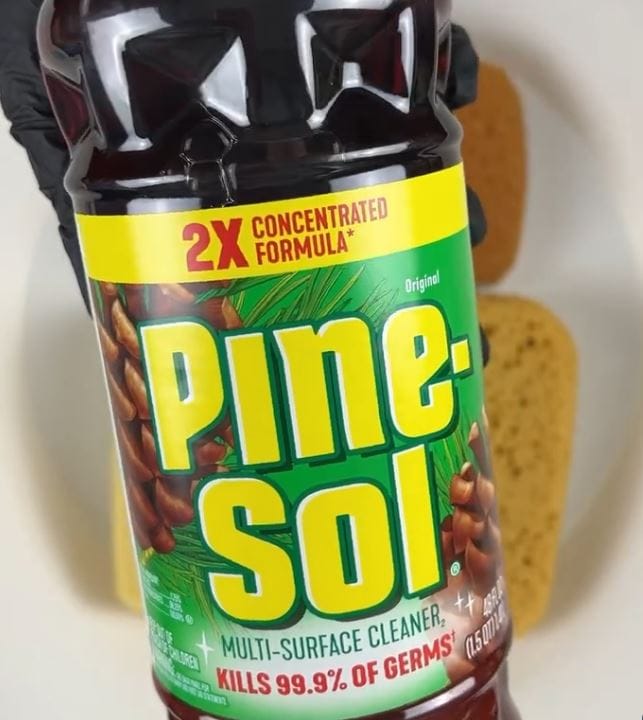
Pine-Sol is an acidic cleaner, purposefully formulated with glycolic acid to dissolve soap scum (alkaline) and hard water deposits. Vinegar is also an acid. Mixing two acids together does not create a toxic gas directly from those two components, but it radically alters the formulation’s surfactant balance. This causes phase separation, rendering the detergent molecules useless. You are effectively neutralizing the engineered cleaning power, leaving behind a streaky, ineffective liquid.
2. The Fatal Mistake: Chlorine Gas Generation
The gravest danger involves the common household pairing of Pine-Sol with chlorine bleach—but vinegar plays a critical co-factor. Many consumers do not realize that “splashless” or scented bleach products are chemically similar to industrial chlorine.
- The Scenario: You mop the floor with Pine-Sol, but the smell is weak. You add vinegar. The grease isn’t lifting, so you add a splash of bleach.
- The Reaction: Acid (Vinegar) + Sodium Hypochlorite (Bleach) = Chlorine Gas (Cl₂) + Water + Salt.
- The Result: Even if your Pine-Sol variant is bleach-free, the moment acetic acid from the vinegar touches residual bleach from a prior cleaning (or if the user adds bleach to the mix), chlorine gas is instantly liberated.
Health Impact of Mixing Acids with Household Cleaners
Exposure to the byproducts of this mix—whether chlorine gas or vaporized acidic esters—poses immediate risks.
| Exposure Level | Symptoms & Onset | Biological Mechanism |
|---|---|---|
| Low (Inhalation) | Burning eyes, runny nose, coughing, throat irritation. | Acidic vapor dissolves in mucosal membranes, forming hypochlorous acid. |
| Medium (Prolonged) | Severe chest tightness, wheezing, pulmonary edema, vomiting. | Chlorine gas reacts with lung epithelial lining fluid, damaging the blood-air barrier. |
| High (Confined Space) | Respiratory failure, chemical pneumonitis, corneal burns, death. | Systemic hypoxia due to flooded alveoli. |
Important Medical Note: If you have accidentally mixed Pine-Sol with vinegar and experience breathing difficulty, leave the area immediately. Do not induce vomiting. Call Poison Control (1-800-222-1222 in the U.S.) or emergency services. Fresh air is the immediate antidote.
Comparative Analysis: Pine-Sol vs. Vinegar as Cleaners
Mixing them is futile not only because of safety risks but because they are chemically designed to solve opposite problems. Using them sequentially (with a rinse in between) is smarter than combining them.
| Feature | Pine-Sol (Modern) | White Distilled Vinegar | Winner For: |
|---|---|---|---|
| pH Level | 3.5 – 4.0 (Acidic) | 2.4 – 2.6 (Stronger Acid) | Mineral Deposit Removal: Vinegar |
| Mechanism | Glycolic acid penetration + detergency | Acetic acid chelation (dissolves calcium/alkaline salts) | Grease Cutting: Pine-Sol |
| Disinfection | Registered EPA disinfectant (kills 99.9% of germs) | Limited disinfectant (reduces some bacteria like E. coli/Salmonella, not a broad-spectrum EPA-registered killer) | Sanitization: Pine-Sol |
| Residue Profile | Leaves a slight surfactant film (attracts dirt if not rinsed on certain floors) | Rinses “clean” with no surfactant residue | No-Rinse Floors: Vinegar (when diluted) |
| Material Safety | Safe for sealed wood, tile, linoleum. Can strip wax. | Damages natural stone (marble, granite), grout, and hardwood finishes over time. | Stone Safety: Pine-Sol (pH neutral when rinsed) |
The Safe, Professional Cleaning Protocol
If you desire the degreasing power of Pine-Sol and the descaling sharpness of vinegar, you must use a sequential two-step process, never a simultaneous mixture.
The Two-Step Safe Method (For Ceramic Tile & Sealed Floors Only)
- Step 1: Degrease (Pine-Sol)
- Dilute ¼ cup Pine-Sol per gallon of warm water.
- Mop the floor to lift oily soils and disinfect.
- Critical Rinse: Immediately mop again with plain, warm water. Do not let Pine-Sol dry and pool. This removes the glycolic acid surfactant layer.
- Step 2: Descale (Vinegar)
- Once the floor is dry and free of Pine-Sol residue, mix a solution of ½ cup distilled white vinegar per gallon of water.
- Lightly mop to remove alkaline hard water spots and restore shine.
- No rinse required (vinegar neutralizes its own odor upon drying).
The “Forbidden Combinations” Quick Reference Table
Never mix Pine-Sol (or any commercial scented cleaner) with the following:
| Product Mixed with Pine-Sol | Resultant Hazard | Severity |
|---|---|---|
| Chlorine Bleach | Chloramine & Chlorine Gas | CRITICAL |
| Vinegar | Inactivation of surfactants; Acid over-acidification risking damage to floor sealant; Risk of trace bleach activation if cross-contaminated. | HIGH |
| Ammonia | Chloramine Gas (if bleach variant used) or generally toxic fumes | CRITICAL |
| Rubbing Alcohol | Increases volatility of fragrance solvents; Respiratory irritant and flammability risk. | MEDIUM |
Conclusion: A Smarter Cleaning Chemistry
The urge to mix vinegar with Pine-Sol stems from a desire for a “one-and-done” cleaner that cuts grease and hard water simultaneously. Chemically, this unicorn product cannot exist in a stable bottle, as the extreme pH range required would destroy the bottle itself or the surfactant structure.
The final verdict: Mixing vinegar with Pine-Sol is a chemical contradiction that creates a hazardous irritant and an ineffective cleaner. Respect the chemistry of the individual products. By using them sequentially—Pine-Sol for disinfection and soil removal, followed by a rinse, then vinegar for shine—you achieve a professional-grade clean without compromising your respiratory safety. Always read the product label, and never enter the “cleaning cocktail” trap.