Best Eco-Friendly Pest Controls: 10 Solutions That Really Help
Ants on the counter, a mouse behind the fridge, moths in the closet: pests come in all shapes and sizes. Dealing with them doesn’t have to mean harsh chemicals either, since prevention, physical barriers, and low-risk treatments often do the job. Here are ten of the best eco friendly pest control solutions that really help for your home.
1. Diatomaceous Earth
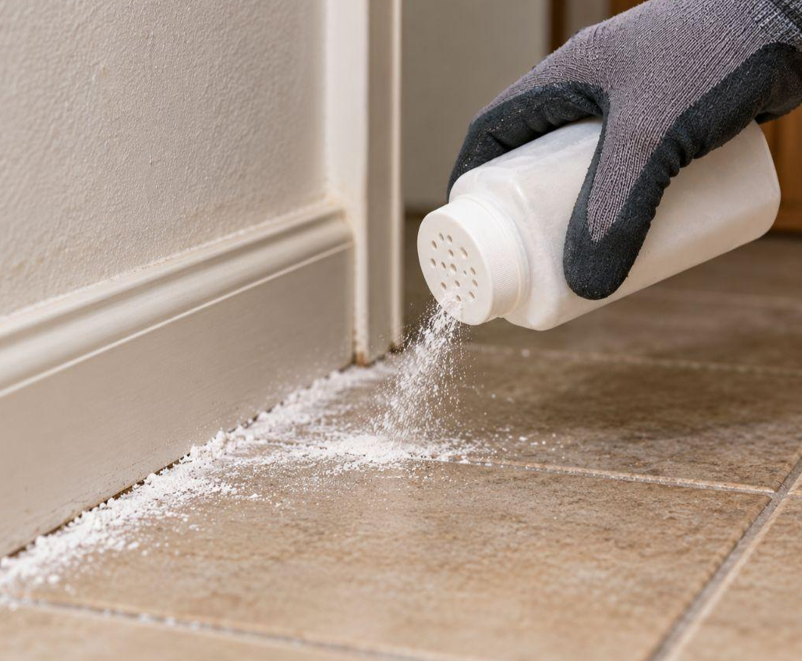
This fine mineral powder comes from the fossilized remains of tiny water organisms called diatoms. In certain pesticide forms, diatomaceous earth acts as a desiccant: it damages the protective outer shell of insects, causing them to dry out and lose moisture. That makes it effective against many crawling insects, including some ants, cockroaches, fleas, and other pests.
It works best when:
- Applied in dry areas such as cracks, crevices and other pest hiding places
- Spread as a thin layer rather than a thick pile, since insects can avoid large deposits
- Reapplied after cleaning or when the product becomes wet
One important point is that food-grade diatomaceous earth is not automatically the best choice for pest control. Different grades and formulations are intended for different uses, and fine particles can be harmful when inhaled. For pest control, choose a product specifically intended and labeled for the pest and application site, and avoid creating airborne dust during application.
2. Essential Oils

Certain plant oils contain compounds with insect-repellent properties, making essential oils a popular option for people looking for more natural pest-control methods. Oils such as peppermint, eucalyptus, lavender, lemongrass, cedar and rosemary have demonstrated repellent activity against certain insects. However, their effectiveness can vary considerably depending on the pest, concentration and method of application, and the protection they provide may be relatively short-lived.
The table below gives examples of oils commonly used or studied for repellent activity:
| Essential Oil | Commonly Studied For | How To Use |
| Peppermint | Certain insects | Use only in an appropriate diluted formulation |
| Eucalyptus | Mosquitoes and other insects | Use in a properly formulated repellent rather than assuming any eucalyptus oil will work |
| Lavender | Certain insects and moths | Use sachets or appropriately diluted products where suitable |
| Lemongrass | Mosquitoes and other insects | Use a formulated repellent or diffuser in appropriate outdoor settings |
| Rosemary | Certain insects | Use as part of a targeted repellent approach |
| Cedar | Certain insects and moths | Cedar blocks or appropriately formulated products can be used in storage areas |
Because essential-oil repellents often provide relatively short-lasting protection, they should not be treated as a guaranteed solution for an established infestation. Some concentrated essential oils can also irritate people or harm pets, so check whether the specific oil and application are appropriate before using them around animals or children.
3. Ultrasonic Pest Repellers
If you’d rather skip powders and sprays, ultrasonic pest repellers offer a hands-off option that’s widely sold for rodents and insects. Once plugged into an outlet, these devices give off high-frequency sound waves that are usually beyond what humans can hear. The ultrasonic waves simply encourage them to move away.
That said, ultrasonic devices aren’t guaranteed to clear out pests on their own. How well they work can depend on the pest, the room layout, the distance, and any obstacles in the way, and some rodents may get used to the sound over time. This is why they’re best seen as an extra measure rather than a full replacement for proven pest control methods.
For better results:
- Place the units in open areas where the sound can travel freely
- Don’t count on them to wipe out an established infestation by themselves
- Pair them with sealing, cleaning, monitoring, and other targeted methods
- Keep an eye on pest activity instead of assuming the device works just because it’s switched on
Used this way, ultrasonic devices can have a real place in an eco friendly pest control plan, as long as your expectations stay realistic. Once a pest problem has taken hold, prevention and targeted control remain the most dependable path.
4. Seal Up Entry Points
One of the most dependable forms of eco friendly pest control is to keep pests out from the start. Insects and rodents are opportunists that can slip through surprisingly small gaps around a building, especially where pipes, cables, vents, doors, and windows meet the walls. Sealing these openings is a key part of prevention and can save you from repeated treatments down the line.
Common weak spots to check include:
- Gaps around pipes, vents, and cable lines
- Worn weather stripping under doors
- Torn window screens
- Cracks around foundations, walls, and baseboards
- Openings around utility lines and other service points
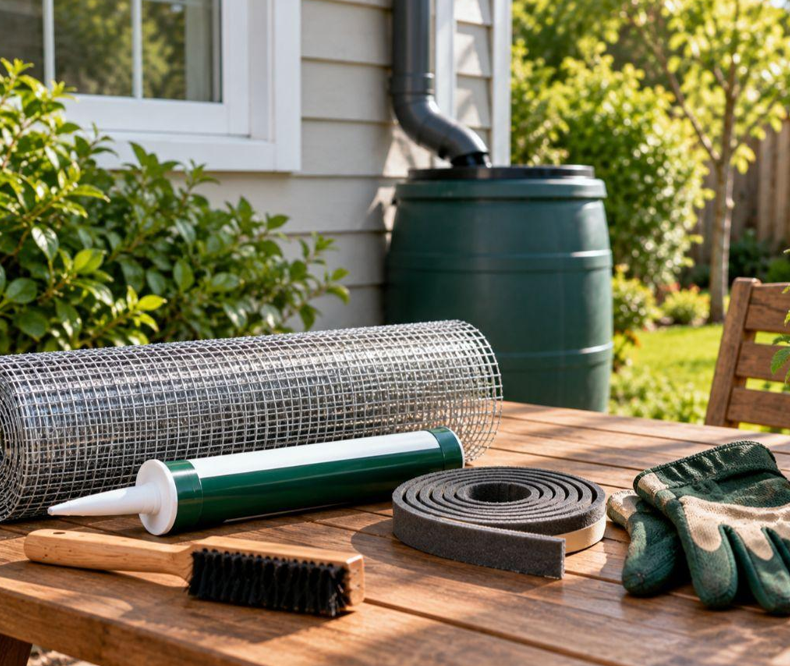
Caulk does the job on small cracks, while door sweeps, well-fitted screens, and the right mesh handle larger openings. For rodents, look closely at gaps around doors, foundations, utility lines, and anywhere the outside meets the inside.
Getting rid of a single mouse or insect won’t fix the real problem if new ones can keep wandering in. That’s why effective eco friendly pest control starts by closing off the way in, not just dealing with the pest you can see.
5. Homemade Sprays From the Pantry
A few common household ingredients can help in specific situations, but homemade DIY pest sprays shouldn’t be treated as a cure-all or assumed to be automatically safe. Take vinegar: it’s great for cleaning surfaces and wiping away the scent trails ants leave behind, but it works best as a cleaning and prevention measure, not as a proven way to wipe out a whole ant colony.
Dish soap can affect soft-bodied insects when it touches them directly. Still, dishwashing liquids are made for cleaning rather than pest control, and their formulas vary from one brand to the next. Strong mixes can even damage plant leaves, so a generic dish-soap recipe shouldn’t be sold as a one-size-fits-all treatment.
For a more targeted approach:
- Use vinegar and water mainly for cleaning surfaces and removing ant trails
- On plants, reach for a proper insecticidal soap instead of assuming any dish soap will do
- Test any homemade mix on a small area before treating a larger surface
- Avoid using homemade mixes on edible plants unless the ingredients and method are suitable
6. Pest-Repelling Plants and Herbs
Garden beds and windowsills can also play a part in a broader natural pest control strategy, since many aromatic plants contain compounds with insect-repellent properties. Still, setting a potted plant by the door isn’t quite enough to form a real barrier against pests.
Growing aromatic herbs is a good example. On their own, they don’t release enough concentrated essential oils to actually keep mosquitoes away. The strong effect you get from concentrated plant extracts simply doesn’t carry over to the living plant in your garden.
That said, several plants are still worth a spot in the garden:
- Basil, rosemary, and lavender, for their scent and their place in a diverse garden
- Flowering plants, which offer food and shelter to beneficial insects
- Mint in containers, since it spreads aggressively once it’s in open ground
- Chrysanthemums, which naturally contain pyrethrins, the compounds behind some insecticides
So while these plants make welcome additions, they shouldn’t be your only line of defense. When pest pressure gets heavy, physical barriers, sanitation, exclusion, and targeted treatments tend to hold up far better.
7. Beneficial Bugs and Nematodes
Fighting pests with other creatures might sound backwards, but biological pest control is actually a well-established part of eco-conscious gardening. The idea is simple: certain beneficial insects feed on garden pests, bringing their numbers down naturally, with no need for broad insecticide sprays.
Among your best allies are:
- Lady beetles and lacewing larvae, which feast on aphids and other small insects
- Parasitic wasps, which zero in on specific pest species
- Beneficial nematodes, which go after certain soil-dwelling insect larvae
- Natural predators that already call a healthy garden home
Those nematodes are microscopic roundworms, but they’re far from a catch-all solution. Since different species and strains target different pests and life stages, you’ll need to match the right one to the problem at hand, and even then, soil moisture and temperature will shape how well they perform.
More often than not, the smartest move is to support the natural enemies already in your garden rather than buying predatory insects by default. Cut back on unnecessary pesticides, keep your garden diverse, and you’ll give these helpers the room they need to settle in and drive long-term eco-friendly pest control.
8. Sticky Traps and Physical Barriers
Sometimes the most practical form of natural pest control is also the simplest. A physical barrier or trap that relies on little to no chemicals. Better still, these methods double as a way to monitor pest activity, showing you where pests are turning up and just how bad the problem has become.
Practical options include:
- Sticky monitoring traps for certain flies, fungus gnats, and crawling insects
- Mesh screens on windows, vents, and other openings
- Copper barriers around garden beds to keep slugs away
- Snap-style traps for mice and rats
- Interceptor traps for tracking crawling pests like bed bugs
Wherever you set them, position your traps around the pest’s habits and check them often. Well-placed snap traps, for example, are a proven way to keep rodents in check, while sticky traps call for a little more care outdoors, since they can catch harmless animals along with your intended targets.
Best of all, physical barriers offer one lasting advantage: they keep pests out from the start, sparing you the cycle of treating an infestation again and again once it’s already settled in.
9. Neem Oil
Pressed from the seeds of the neem tree, neem oil and its related compounds are plant-based pest-control options used mainly against certain garden insects. Compounds like azadirachtin work by disrupting the way insects feed, grow, and develop, which makes them effective against a wide range of plant-feeding pests.
Still, how well neem performs comes down to the product and the pest, so a few habits go a long way:
- Pick a product meant for the pest and plant you’re treating
- Follow the label for dilution and how often to apply
- Be ready to reapply more than once in some cases
- Hold back from treating everything in sight when beneficial insects are around
- Don’t assume every neem product works on every garden pest
All of this is why neem is best seen as a targeted option rather than a one-size-fits-all natural insecticide. And since even plant-based products can harm non-target creatures when they’re misused, a careful hand still makes all the difference.
10. Cut Off Food, Water and Clutter
The most effective eco-friendly pest control strategy might just cost you nothing at all. Pests show up and stay around homes for one reason: they find some mix of food, water, and shelter there. Take those away, and your home suddenly looks far less inviting, which is often enough to stop a minor pest problem before it grows into a real infestation.
Small habits that make a big difference include:
- Store food, pet food, and pantry staples in sealed containers
- Wipe up crumbs, spills, and food residue right away
- Fix leaking faucets, pipes, and any other sources of moisture
- Get rid of standing water where mosquitoes can breed
- Take out the trash often and keep your bins closed
- Cut down on clutter, cardboard, and other easy hiding spots
- Clear away fallen fruit and plant debris outdoors
This kind of prevention sits at the very heart of Integrated Pest Management (IPM). Instead of reaching straight for a treatment, the idea is to identify the pest, watch how it behaves, remove whatever is helping it thrive, and only then turn to a targeted method if you still need one. Handled this way, the approach keeps your reliance on pesticides low while holding pest numbers at a level you can manage.
FAQ
What is the best eco-friendly pest control for a home?
There is no single method that works best for every pest. The best eco-friendly pest control strategy usually starts with identifying the pest and removing the conditions that allow it to enter, feed and reproduce. Sealing entry points, storing food properly, correcting moisture problems, reducing clutter, and monitoring pest activity can often prevent or reduce problems before a treatment is necessary. When additional control is needed, physical barriers, traps, biological controls or targeted lower-risk products can be selected according to the pest involved. Combining several appropriate methods is generally more reliable than relying on one natural remedy alone.
Do natural pest control methods actually work?
Yes, but their effectiveness depends heavily on the pest and the method used. Physical exclusion, sanitation, traps and certain biological controls can be effective, while other popular approaches such as essential oils and ultrasonic devices have more limited or variable evidence. Natural pest control should therefore not be treated as one category in which every method works equally well. The most reliable approach is to identify the pest first and choose a control method that has been shown to work for that particular pest.
Are ultrasonic pest repellers effective?
Ultrasonic pest repellers can help make an area less appealing to certain pests, and many people find them a useful part of their setup. Because every pest, space, and device is a little different, results can vary, and the best outcomes usually come when the repeller is paired with other measures. The ultrasonic waves simply encourage pests to move along, without harming them in any way.
Are essential oils effective for pest control?
Many essential oils contain compounds that genuinely help repel insects, though how well they work depends on the oil, the pest, the concentration, and how you apply it. Since plant-based repellents tend to fade faster, they work best as one part of a wider plan rather than a solution on their own. Used this way, essential oils can have a real place in a natural pest control routine, especially as an extra layer of protection that pairs well with more established methods when an infestation sets in.
Is diatomaceous earth safe to use around the home?
Diatomaceous earth should be handled with care, because its fine particles can be harmful if inhaled. The type of product also matters, as food-grade, pool-grade, and pesticide versions are not interchangeable. For pest control, choose a product made specifically for that use, follow the label closely, and avoid raising dust into the air. When the instructions require it, keep treated areas out of reach of children and pets.
Is neem oil safe for bees and other beneficial insects?
Not entirely. Neem-based products can be effective against certain garden pests, but plant-based doesn’t mean completely harmless to bees and other beneficial insects. The impact depends on the product, how it’s applied, and how much exposure occurs. To limit the risk, avoid spraying beneficial insects directly, take extra care around flowering plants, and always follow the label.
What is the safest eco friendly pest control around children and pets?
Prevention and physical methods are usually the safest place to start, since they keep pesticide exposure to a minimum. Sealing entry points, removing food and water sources, cutting down on clutter, and setting traps all help ease pest pressure without relying on chemicals. When a product does become necessary, keep children and pets away from treated areas as directed and follow the label carefully.