Aphids on Cannabis Plants: A Comprehensive Guide to Identification, Prevention, and Control
Aphids represent one of the most persistent and potentially devastating pests encountered in cannabis cultivation. These diminutive insects possess a remarkable capacity for rapid population growth, capable of transforming a minor localized issue into a full-scale infestation within a matter of days. Effective management necessitates a thorough understanding of their biology, the ability to identify the specific species, and the implementation of an integrated pest management strategy tailored to the cultivation environment.
1. The Primary Threat: The Cannabis Aphid (Phorodon cannabis)
While various aphid species may infest cannabis, the primary and most concerning threat is the Cannabis Aphid (Phorodon cannabis) . Understanding its specific characteristics is fundamental to effective control.
1.1 Identification: A Detailed Guide
Correctly identifying the species is the first and most crucial step, as misidentification can lead to the selection of ineffective control measures, particularly when deploying biological control agents such as parasitoid wasps, which often specialize in specific prey species . Relying solely on color for identification is insufficient; color variations often reflect environmental factors and the life cycle stage of the aphid .
1.2 Biology and Life Cycle: The Source of Devastation
The biological characteristics of the cannabis aphid are what make it such a formidable pest.
- Mode of Reproduction: Cannabis aphids reproduce asexually via parthenogenesis, meaning females give birth to live, genetically identical offspring (nymphs) without mating. This single biological trait allows populations to explode exponentially .
- Reproductive Rate: A single adult female can produce 40-100 offspring in a 7-10 day period. These nymphs mature and begin reproducing in another 7-10 days. This rapid reproductive cycle can lead to over one million descendants from a single female within a month under optimal conditions .
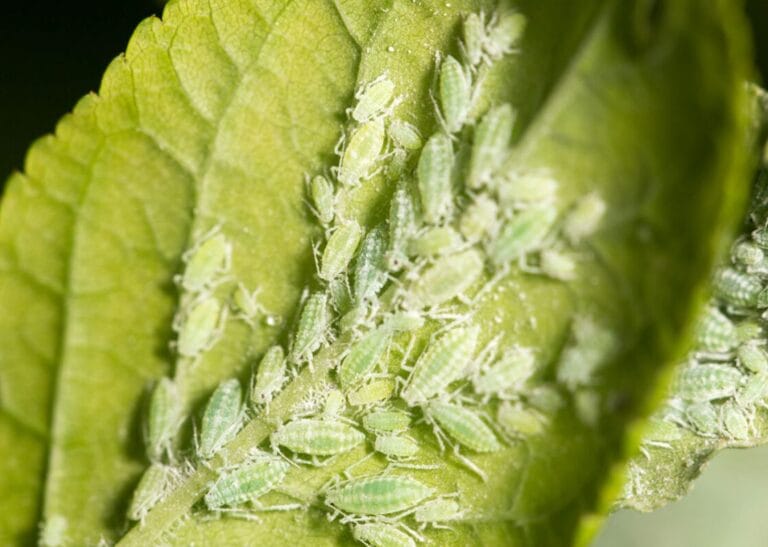
- Life Cycle: Aphids feed by using piercing-sucking mouthparts to extract phloem fluids from the plant. As they grow, they shed their exoskeletons, leaving behind white “cast skins” that collect around the colony . Environmental factors can trigger the production of winged (alate) forms to enable dispersal to new host plants.
2. Damage and Symptoms
The damage caused by aphids is multifaceted, impacting plant health and potentially compromising final product quality.
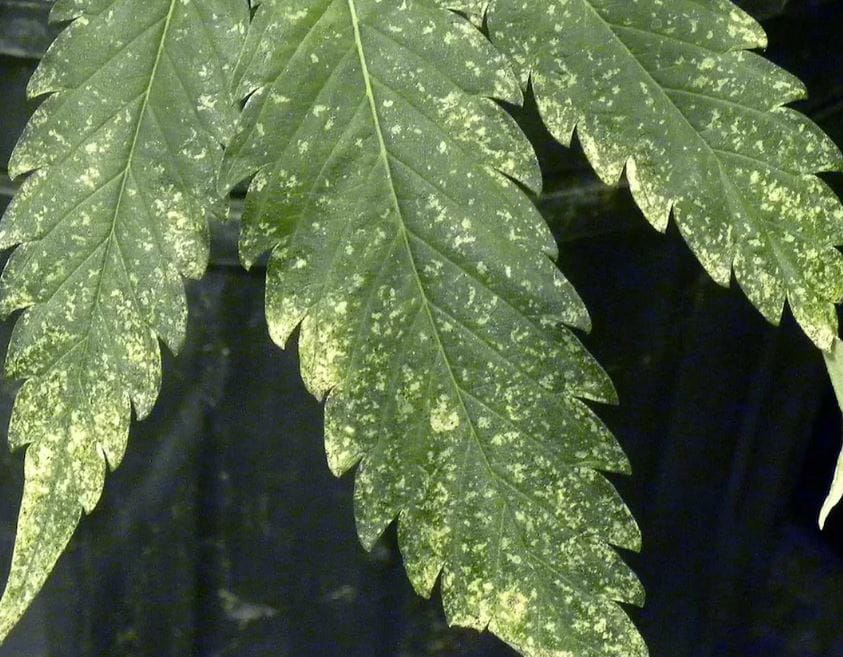
- Direct Feeding Damage: High populations of feeding aphids drain the plant of vital fluids and nutrients. This can cause a loss of plant vigor, resulting in slowed growth, leaf yellowing (chlorosis), leaf curling, and wilting .
- Honeydew and Sooty Mold: As they feed, aphids continuously excrete a sugary, sticky liquid known as honeydew . This substance coats leaves and stems below the infestation. It is an excellent diagnostic sign, often appearing as small, shiny droplets on lower leaves. The honeydew subsequently promotes the growth of black sooty mold fungi . This mold blocks sunlight and reduces photosynthesis, further debilitating the plant and making the buds unmarketable.
- Virus Transmission: Aphids are notorious vectors for plant viruses, which can be transmitted as they feed from plant to plant .
- Secondary Issues: The honeydew is highly attractive to ants, which form a mutualistic relationship with the aphids. Ants will “farm” the aphids, protecting them from predators and moving them to new plants in exchange for the honeydew . The presence of ants can therefore be an indicator of an aphid infestation.
3. Integrated Pest Management (IPM)
An effective control strategy integrates monitoring, prevention, and treatment methods. The goal is to manage pest populations at a level that does not cause economic damage while minimizing the risks of chemical controls.
3.1 Monitoring and Early Detection
Early detection is critical to prevent an infestation from becoming uncontrollable.
- Regular Inspections: Conduct thorough visual inspections at least once a week, or more frequently during periods of high risk .
- Focal Areas: Pay particular attention to the undersides of leaves, new growth tips, and stem junctions, as these are preferred feeding sites . During flowering, be vigilant for aphids establishing themselves deep within buds.
- Diagnostic Tools: Use a 10x hand lens or jeweler’s loupe to spot early colonies and identify the species accurately . Look for honeydew, cast skins, and the presence of ants.
3.2 Prevention Strategies
Preventative measures are the first line of defense in any IPM program and are far more effective and less risky than late-stage treatments.
- Environmental Controls: Aphids thrive in warm conditions. Maintaining grow room temperatures between 65-75°F and relative humidity at 45-55% can help make the environment less favorable . Ensuring good airflow with oscillating fans can also deter them .
- Quarantine Protocol: New plants, clones, and even soil should be isolated and inspected for a minimum of two weeks before being introduced to the main growing area .
- Sanitation: Maintain a clean grow space. Remove plant debris promptly, as this can harbor pests . Regularly clean tools and equipment .
- Companion Planting: For outdoor or greenhouse grows, companion planting can be a powerful tool .
- Repellent Plants: Garlic, chives, marigolds, and catnip are known to repel aphids .
- Trap Plants: Nasturtiums and zinnias can lure aphids away from cannabis .
- Attractant Plants for Beneficials: Dill, fennel, clover, and yarrow attract beneficial insects like ladybugs, lacewings, and parasitic wasps .
3.3 Treatment Options
When an infestation is detected, a tiered approach is recommended, starting with the least invasive and safest methods.
3.3.1 Physical and Mechanical Control
- Water Spray: For small infestations on robust plants, a strong jet of water can dislodge aphids, physically removing them from the plant .
- Pruning: Heavily infested leaves or branches should be carefully removed and disposed of to eliminate established colonies .
3.3.2 Biological Control: Beneficial Insects
Employing natural predators is a highly effective, chemical-free strategy. Due to the strict regulations on pesticide use for consumable crops, biocontrol is a favored approach in both indoor and commercial settings .
Key Consideration: Introduce beneficial insects at the first sign of aphids, not after a heavy infestation has already established. Biological control agents are most effective at suppressing populations, not eliminating a major outbreak .
3.3.3 Organic and Chemical Controls
If biological and physical controls are insufficient, organic insecticides offer a safer alternative, but they still require careful application, especially during the flowering phase.
Warning: The use of systemic chemical insecticides like Imidacloprid is strictly prohibited during the flowering stage due to residue persistence. These should only ever be considered, if at all, during the vegetative stage with an extensive washout period, and are not recommended for cannabis destined for human consumption .
4. Application Best Practices
The success of any spray treatment depends heavily on the application technique.
- Coverage is Essential: Spray must make direct contact with the aphids to be effective . This requires thoroughly wetting the undersides of leaves, stems, branch junctions, and growing tips.
- Timing: Apply sprays during the lights-off period to prevent phototoxicity (leaf burn from the oil or soap interacting with light) .
- Equipment: Use a fine-mist sprayer rather than a coarse jet. A 1-2 gallon pump sprayer is suitable for larger grows .
5. Conclusion
Managing aphids on cannabis plants is a challenge that demands vigilance, knowledge, and a proactive approach. By recognizing the specific characteristics of the Phorodon cannabis and understanding its rapid life cycle, growers can intervene promptly . A comprehensive IPM strategy—combining regular monitoring, environmental controls, and a targeted application of biological or organic controls—offers the most sustainable and effective route to protecting crop health and ensuring a high-quality, untainted harvest .