Can I Use Irish Spring Soap on My Tattoo? A Dermatologist-Informed Guide
Short answer: No, you should not use Irish Spring soap on a fresh or healing tattoo.
While Irish Spring is a popular and effective cleanser for intact skin, its formulation is fundamentally incompatible with the delicate, open-wound environment of a new tattoo. Using it can compromise the healing process, irritate the skin, and potentially damage the final appearance of your ink. This guide breaks down the scientific reasoning, compares Irish Spring to recommended alternatives, and provides a clear aftercare framework.
Why Irish Spring Is Unsuitable for Tattoo Aftercare
A new tattoo is not merely “sensitive skin”—it is a controlled wound. Tattoo needles puncture the epidermis thousands of times to deposit pigment into the dermis, creating microchannels that are vulnerable to bacteria, irritation, and disruption. The goal of aftercare is to keep the area clean without introducing irritants or stripping the skin of its protective barrier.
Irish Spring fails this objective on multiple fronts.
1. Fragrance and Artificial Dyes
Irish Spring is heavily fragranced and colored with dyes such as Green 8 and Green 3. Fragrances and dyes are among the most common triggers of allergic contact dermatitis. On intact skin, these additives are typically harmless. On a healing tattoo, however, they can penetrate the compromised barrier and cause redness, itching, burning, and allergic reactions that may mimic or exacerbate infection. Leading dermatology sources, including the Cleveland Clinic, explicitly recommend mild, fragrance-free soap for tattoo aftercare.
2. Harsh Surfactants and Alkaline pH
Irish Spring is a commercial detergent bar rather than a traditional cold-process soap. Its formulation relies on synthetic surfactants designed to aggressively strip oil and dirt. More critically, bar soaps like Irish Spring tend to have an alkaline pH, while healthy skin maintains a slightly acidic mantle (approximately pH 4.5–5.5). Washing a tattoo with an alkaline product disrupts this acid mantle, leaving the skin dry, tight, and prone to cracking. Cracking during healing can lead to ink loss and uneven scarring.
3. The Antibacterial Paradox
Some Irish Spring variants are marketed as “antibacterial,” which might seem appealing for wound care. However, the concentration and delivery system are designed for intact skin, not open wounds. The irritant potential of the fragrance and dye far outweighs any theoretical antibacterial benefit. Dermatologists consistently recommend gentle, fragrance-free cleansers—not harsh antibacterial bars—for tattoo care.
4. Hygiene Concerns with Bar Format
A bar of soap resting in a damp soap dish creates a moist microenvironment where bacteria can accumulate. Touching the bar with hands and then applying lather to a healing tattoo introduces a contamination risk that liquid cleansers largely avoid. While the “bar soap is unsanitary” claim is debated, the consensus for wound care favors liquid or foaming formats for practical hygiene.
Comparison: Irish Spring vs. Recommended Tattoo Cleansers
| Feature | Irish Spring Bar Soap | Recommended Tattoo Cleansers |
|---|---|---|
| Fragrance | Heavy synthetic fragrance | Fragrance-free (essential) |
| Dyes | Contains Green 8, Green 3 | No artificial dyes |
| pH | Alkaline (disrupts skin mantle) | pH-balanced or mildly acidic |
| Surfactants | Harsh, oil-stripping | Gentle, mild surfactants |
| Format | Bar (potential contamination) | Liquid or foaming (more hygienic) |
| Antibacterial | Some variants (not wound-appropriate) | Optional; gentleness prioritized |
| Dermatologist Recommended | No | Yes (e.g., Dove Sensitive, Cetaphil) |
What Happens If You Use Irish Spring on a New Tattoo
Using Irish Spring will not necessarily cause a catastrophic infection in every case, but it reliably compromises the healing environment. The most common outcomes include:
- Extreme dryness and tightness: The alkaline, surfactant-heavy formula strips natural oils, leading to painful tightness and cracking. Cracks can cause the tattoo to heal unevenly and lose pigment.
- Increased itching and redness: Fragrance and dye trigger an inflammatory response, making the already-itchy healing phase more miserable and increasing the likelihood that you will scratch and damage the line work.
- Cloudy or faded appearance: Chronic low-grade inflammation and poor barrier function can cause the finished tattoo to look dull, cloudy, or prematurely aged.
- Allergic reaction: A rash that resembles an infection may develop, requiring medical attention and potentially complicating the healing trajectory.
What You Should Use Instead
The gold standard for tattoo cleansing is a mild, fragrance-free, liquid cleanser. Dermatologists frequently recommend products such as Dove Sensitive Skin Bar (if bar format is preferred) or Cetaphil Gentle Cleanser. The Cleveland Clinic advises using a mild, fragrance-free antibacterial soap without perfumes or dyes, applied with clean hands and lukewarm—not hot—water.
Proper washing technique matters as much as the product:
- Wash your hands thoroughly before touching the tattoo.
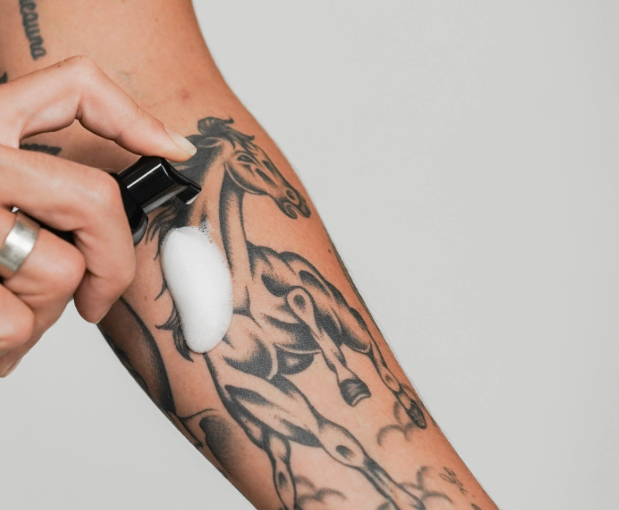
- Apply a small amount of cleanser to your fingertips and gently lather over the tattoo. Do not use washcloths, loofahs, or sponges.
- Rinse completely with lukewarm water.
- Pat dry with a clean paper towel. Do not rub.
- Moisturize with a thin layer of a fragrance-free ointment or lotion recommended by your artist or dermatologist.
When Can You Resume Using Irish Spring?
Once your tattoo is completely healed—typically four to six weeks after the procedure, when the top layer of skin is intact, scabbing and flaking have resolved, and there is no residual sensitivity—you can safely return to your regular body soap, including Irish Spring. The concern is specific to the open-wound and active-healing phases. If you are unsure whether your tattoo is fully healed, err on the side of caution and continue using gentle cleansers until a professional confirms otherwise.
Frequently Asked Questions (FAQ)
1. Can I use Irish Spring if my tattoo is already healed?
Yes. Once the tattoo is fully healed—meaning the skin surface is intact, scabbing and flaking have ceased, and there is no tenderness or sensitivity—Irish Spring is perfectly fine for normal cleansing. The prohibition applies only to the healing window, which typically lasts four to six weeks.
2. What about Irish Spring body wash instead of the bar? Is it gentler?
No. Irish Spring body wash contains similar fragrance and dye additives as the bar format. While the liquid format is more hygienic than a bar, the chemical irritants remain. It is still not recommended for a healing tattoo.
3. My artist told me to use antibacterial soap. Isn’t Irish Spring antibacterial?
Some Irish Spring variants are labeled antibacterial, but the fragrance and dye content make them unsuitable for wound care. If your artist recommends an antibacterial cleanser, choose a fragrance-free, dye-free liquid antibacterial soap specifically formulated for sensitive skin or wound care. The “antibacterial” label on a heavily fragranced bar does not make it safe for a tattoo.
4. What happens if I already used Irish Spring on my new tattoo?
Do not panic. A single exposure is unlikely to cause a serious infection. However, discontinue use immediately and switch to a gentle, fragrance-free cleanser. Monitor the tattoo for signs of irritation (increasing redness, itching, burning) or infection (spreading redness, warmth, yellow/green discharge, fever). If you notice any of these signs, contact a healthcare provider or your tattoo artist promptly.
5. How long do I need to avoid Irish Spring after getting a tattoo?
Avoid Irish Spring for the entire active healing period, which is generally four to six weeks for most tattoos. Smaller tattoos may heal faster, while larger or densely packed pieces may take longer. The key indicator is not a calendar date but the condition of the skin: wait until the tattoo is completely smooth, with no scabs, flaking, or sensitivity, before resuming your regular soap.