The Complete Guide to Removing Rust Stains from Trex Decking
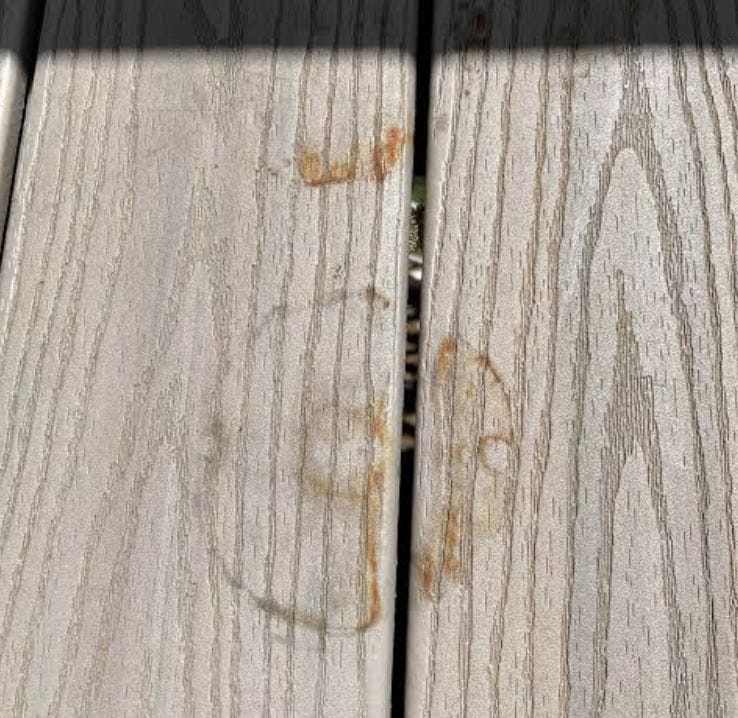
Trex composite decking is celebrated for its durability, low maintenance, and resistance to rot and insects. However, its reputation for being “stain-proof” often leads to a painful discovery for homeowners: the brownish-orange blemish of a rust stain. Unlike organic stains (leaves, dirt), rust is a metallic oxide that binds aggressively to the porous surface cap of composite boards. Because Trex is a non-porous material relative to wood, harsh abrasives or acids that would work on concrete can permanently damage the decking’s protective shell.
This guide provides a graduated, scientific approach to removing ferrous oxide (rust) without compromising the Trex Transcend, Select, or Enhance lines. We will move from the gentlest methods to targeted chemical treatments, concluding with critical prevention strategies.
Table of Contents
- The Chemistry of Rust on Composite Decking
- Critical Pre-Cleaning Rules (Do Not Ignore)
- The Graduated Removal Methodology
- Phase 1: The Mechanical Lift (Soft Approach)
- Phase 2: The Organic Acid Treatment (Oxalic & Citric)
- Phase 3: Composite-Safe Commercial Rust Removers
- Comparative Analysis of Cleaning Agents (Table)
- The Deep-Cleaning Rinse Protocol
- Preventing Recurrence: Furniture and Grill Pads
- Frequently Asked Questions (FAQ)
1. The Chemistry of Rust on Composite Decking
To remove rust, you must understand it. Trex decking is a wood-plastic composite (WPC) encased in a high-density polyethylene (HDPE) cap. Rust is iron oxide (Fe2O3Fe2O3) created when iron, oxygen, and moisture react. This typically comes from:
- Uncoated steel furniture legs.
- Iron-rich fertilizers or well water.
- Metal planter bases or grill stands.
The HDPE cap is slightly textured and has microscopic pores. Rust particles settle deep into these pores. The goal is not to “bleach” the stain (which won’t work on iron oxide) but to chemically dissolve the iron or physically lift it from the micro-crevices without abrading the plastic shell.
2. Critical Pre-Cleaning Rules
Before applying any substance, adhere to these non-negotiables to protect your warranty:
- No Bleach: Sodium hypochlorite lightens the lignin in wood, but on Trex, it simply discolors the plastic shell and does not dissolve rust. It can cause a chalky, white, permanent haze.
- No Wire Brushes: Steel wool or stiff wire brushes will gouge the polymer cap. The scratches trap future dirt worse than the original stain. You may also embed tiny steel fragments that will rust later.
- No Power Washing (Close Range): A pressure washer above 1,500 PSI or used closer than 12 inches will delaminate the protective shell from the composite core.
- Spot Test: Always test your chosen cleaner on a hidden scrap piece or an inconspicuous corner (like inside a closet threshold) to verify colorfastness.
3. The Graduated Removal Methodology
The best practice is a 3-phase escalation strategy. Never start with Phase 3.
Phase 1: The Mechanical Lift (For Superficial Flash Rust)
Best for: Orange dust transferred from a metal shovel left on the deck for a few days.
If the rust is just surface dust that hasn’t bonded, a “soft mechanical” lift is safe.
- Tools: Soft-bristle nylon deck brush, warm water, liquid dish soap (degreaser type).
- Process:
- Mix warm water with a few drops of grease-cutting dish soap.
- Soak the stained area for 5 minutes to loosen the bond.
- Scrub vigorously with the grain of the board using the nylon brush.
- Rinse thoroughly.
- Warning: Do not use “Magic Eraser” melamine sponges aggressively. They function like ultra-fine sandpaper and can polish the texture off the cap stock, leaving a shiny spot.
Phase 2: The Organic Acid Treatment (Oxalic Acid)
Best for: Moderate, set-in rust stains from furniture or fertilizer.
This is the gold standard for decking. Oxalic acid (C2H2O4C2H2O4) is a natural bleaching agent found in rhubarb and spinach. It converts insoluble iron oxide into a soluble, colorless iron salt that can be rinsed away. It is gentler than hydrochloric acid and generally safe for Trex cap stock when diluted properly.
- Products: “Deck Brightener” or “Wood Revitalizer” (check the label for oxalic or citric acid). Powdered oxalic acid crystals are also common in hardware stores.
- Process:
- Pre-wet the deck: The surrounding area must be completely saturated with water. Dry composite can absorb the acid, causing discoloration.
- Mix the solution: Dissolve oxalic acid crystals in hot water per the manufacturer’s instructions (typically a 1:12 ratio of acid to water).
- Apply: Using a sprayer or a nylon brush, apply the solution directly to the rust stain.
- Dwell Time: Let it sit for 10–15 minutes. Do not let it dry. Reapply if it starts to dry.
- Scrub: Lightly agitate with a nylon brush. You will see the orange pigment “bleed” and lighten.
- Rinse: Flood the area with copious amounts of clean water.
Phase 3: Composite-Safe Commercial Rust Removers
Best for: Severe, blackened, or deeply embedded rust that resists oxalic acid.
If organic acids fail, you need a proprietary synthetic rust remover designed for marine or composite applications. Look for gel formulations; they cling to the surface better.
- Key Active Ingredients: Ethylenediaminetetraacetic acid (EDTA) or phosphoric acid-based jellies. Avoid products containing hydrofluoric acid, as they etch plastics.
- Recommended Brands: Semco Rust Away, Starbrite Rust Stain Remover, or FSR (Fiberglass Stain Remover).
- Process:
- Apply the gel strictly to the stain using a sponge.
- Wait 2–5 minutes (these chelating agents work fast).
- Rub gently with a non-abrasive scrub pad (white Scotch-Brite, not green or maroon).
- Rinse immediately. These chemicals can leave a clean “halo” around the stain if they react with environmental iron in the air.
4. Comparative Analysis of Cleaning Agents
| Agent | Mechanism | Efficacy on Trex | Risk Profile | Cost (Approx.) |
|---|---|---|---|---|
| Dish Soap & Water | Emulsification/Lubrication | Low (Fresh dust only) | None | $0.10/oz |
| White Vinegar (Acetic Acid) | Mild Acid Dissolution | Very Low | Low (Needs long dwell time, ineffective on heavy rust) | $0.05/oz |
| Oxalic Acid (Deck Brightener) | Iron Chelation & Reduction | High | Low (Safe if rinsed immediately, non-toxic to plants when diluted) | $0.50/oz |
| CLR / Lime-Away | Sulfamic/Lactic Acid Mix | Medium | Medium (Can bleach color if left too long; always test) | $0.40/oz |
| Oxiclean (Sodium Percarbonate) | Oxidation | Zero | High (Powders scratch; peroxide lifts oxygen, not iron; can leave white residue) | $0.30/oz |
| Muriatic Acid (HCl) | Aggressive Etching | High (on stain) | EXTREME (Will melt polymer caps, ruin finish. Never recommended.) | $0.15/oz |
| Pressure Washer (Gas 3000+ PSI) | Physical Blasting | High (on stain) | EXTREME (Removes stain by removing the deck surface. Voids warranty.) | Equipment Cost |
Verdict: The risk/reward ratio heavily favors Oxalic Acid (Deck Brightener). It dissolves the metal without attacking the polymer host material.
5. The Deep-Cleaning Rinse Protocol
A common follow-up complaint after rust removal is a “ghost stain”—a lighter area where the rust was. This often occurs because the acid brightened the entire board, not just the stain.
The Fix: The Whole Board Wash
To prevent a patchy appearance, never just scrub the stain itself. Mix enough oxalic acid solution to scrub the entire affected board from end to end. This ensures the “cleaning halo” stretches to a natural seam break, making it invisible to the eye.
After the final rinse:
- Extract standing water with a squeegee or leaf blower.
- Let the deck dry for 48 hours.
- Evaluate the color uniformity. The board will look slightly lighter (like new) but consistent.
6. Preventing Recurrence: The Barrier Strategy
Removing rust is tedious. Prevention is a one-time setup cost.
- Furniture Pads: Do not use generic black rubber caps. Black rubber contains carbon black and plasticizers that react with the polyethylene in Trex, causing a permanent yellow “burn” mark.
- The Approved Solution: Install resin-based, felt-lined, or silicone feet rated for composite decking.
- Stainless Steel vs. Galvanized: Galvanized steel eventually rusts through its zinc coating. Pay the premium for 316 marine-grade stainless steel hardware and furniture.
- Grill Mats: Invest in a solid PVC or silicone grill mat specifically labeled “composite deck safe.” Do not use recycled rubber mats.
- Fertilizer Sweep: If you apply iron-rich granular fertilizer to nearby lawns, sweep all granules off the deck immediately. The first dew or sprinkler cycle will instantly create concentrated rust spots.
7. Frequently Asked Questions (FAQ)
Q1: Can I use WD-40 to remove rust from Trex?
A: No. WD-40 is a petroleum-based solvent. It will not dissolve rust, and it will leave an oily residue that sinks into the Trex cap, attracting dirt and creating a dark, greasy stain that is nearly impossible to remove.
Q2: Why did my Trex deck stain even though the furniture is “stainless steel”?
A: “Stainless” is a misnomer; it stains less. Low-grade 304 stainless steel contains iron and can develop surface rust in salty or humid environments. Additionally, the metal feet might be stainless, but the bolts or washers inside the leg are often cheap steel that rusts and drips onto the deck.
Q3: Will baking soda and vinegar remove the rust?
A: This classic DIY volcano is chemically useless for rust on composite. Baking soda (a base) and vinegar (a weak acid) neutralize each other into sodium acetate and water. You are essentially scrubbing with slightly gritty salt water. It won’t hurt the deck (gentle abrasive), but it won’t chelate the iron.
Q4: I used a rust remover and now have a blue/white haze on my dark Trex board. What happened?
A: The haze is likely a chemical burn from a product containing phosphoric acid or hydrogen peroxide left to dry on the board. To attempt recovery, scrub the hazed area with warm soapy water and a soft brush. If that fails, you may need to buff the surface with a composite deck revitalizer (heat-based rejuvenation tool), though this is a specialized, last-resort fix. Prevention (never letting chemicals dry on the deck) is key.
Q5: Does Trex warranty cover rust stains?
A: No. The Trex warranty is a product performance warranty covering splitting, delamination, and structural integrity. It explicitly excludes cosmetic issues like staining, fading, and surface damage caused by external chemicals (including rust from uncoated metal objects).
Disclaimer: This guide provides information based on material safety data sheets and composite care best practices. Always follow the specific cleaning guidelines provided by Trex for your specific product line (Transcend, Select, etc.) to maintain warranty compliance.