Professional Office Cleaning Is Playing a Larger Role in Workplace Culture
Workplace culture has evolved dramatically over the past decade. Companies are no longer focused only on productivity metrics, operational efficiency, or visual office design. Increasingly, businesses are recognizing that the physical environment employees work in every day directly affects morale, comfort, collaboration, and long-term wellbeing.
This broader shift has changed the way organizations think about office maintenance and cleanliness. What was once viewed primarily as a behind-the-scenes operational responsibility is now becoming a visible part of workplace culture itself. Professional office cleaning is increasingly connected to employee wellness, organizational standards, client perception, and overall workplace experience.
Modern employees often expect cleaner, healthier, and more organized work environments than previous generations. At the same time, businesses are becoming more aware of how environmental cleanliness influences everything from absenteeism and workplace satisfaction to brand reputation and employee retention.
As a result, professional office cleaning services are playing a far larger role in how modern workplaces function and present themselves.
Workplace Expectations Have Changed Significantly
The expectations surrounding office environments have evolved considerably in recent years. Employees today spend long hours in shared indoor spaces that include communal kitchens, meeting rooms, collaborative workstations, elevators, restrooms, and high-touch surfaces used by dozens or even hundreds of people daily.
This has increased awareness surrounding workplace hygiene and environmental maintenance. Many businesses now recognize that poorly maintained office spaces can negatively affect employee comfort, concentration, and overall perception of the workplace itself.
The rise of hybrid work models has also changed how organizations manage office spaces. Rather than maintaining static environments with predictable occupancy levels, many workplaces now experience fluctuating daily attendance patterns that require more adaptive cleaning strategies and ongoing maintenance.
At the same time, employees increasingly associate clean workplaces with professionalism and organizational care. Offices that feel neglected or unsanitary can quietly influence workplace morale and employee satisfaction, even when other aspects of company culture appear strong.
Professional cleaning has therefore become more closely tied to broader workplace standards rather than functioning solely as a maintenance necessity.
Health and Wellness Conversations Are Influencing Office Management
Health and wellness conversations now influence many aspects of workplace decision-making. Employers increasingly invest in ergonomic furniture, wellness programs, mental health resources, improved lighting, air quality systems, and flexible scheduling designed to support healthier work environments.
Office cleanliness has naturally become part of this larger conversation.
Shared surfaces, enclosed indoor environments, and high employee traffic all contribute to the importance of maintaining consistent sanitation standards throughout workplaces. Businesses are paying greater attention to high-contact areas including desks, reception counters, conference rooms, kitchens, restrooms, and shared equipment.
Organizations also increasingly understand that workplace hygiene affects more than physical health alone. Cleaner environments often contribute to stronger first impressions, improved employee confidence, and more comfortable day-to-day experiences for both staff and visitors.
The Centers for Disease Control and Prevention (CDC) continues providing guidance surrounding facility cleaning, surface disinfection, and environmental hygiene practices across shared indoor spaces.
These evolving standards have encouraged many companies to adopt more structured and professional cleaning programs than they maintained in previous years.
Professional Cleaning Services Are Becoming More Specialized
Commercial cleaning itself has also become far more sophisticated than traditional after-hours janitorial work. Many businesses now seek providers capable of delivering customized cleaning schedules, targeted sanitation strategies, specialized equipment use, and flexible maintenance programs designed around specific workplace needs.
Modern office environments often include a wide variety of materials, layouts, and technologies that require more careful maintenance. Glass partitions, collaborative workspaces, electronic equipment, upholstered furniture, and shared amenities all require different cleaning approaches and scheduling considerations.
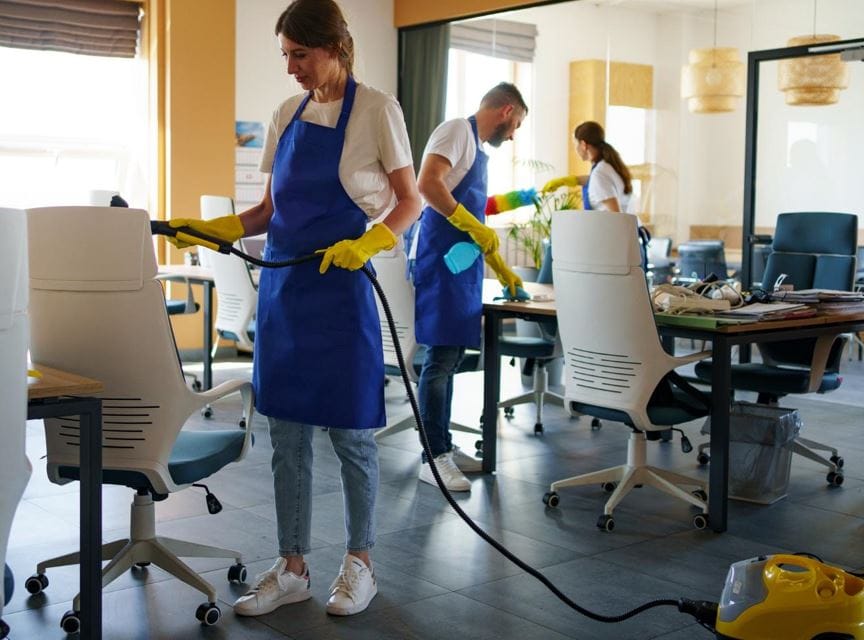
Businesses increasingly rely on professional providers offering specialized Etobicoke Office Cleaning Services tailored to commercial office environments, recurring sanitation programs, and workplace-specific maintenance planning. Many modern office cleaning companies now emphasize customized service plans, flexible scheduling, workspace walkthroughs, high-touch surface disinfection, and long-term maintenance strategies designed to support healthier and more organized professional environments.
This increased specialization reflects the growing complexity of workplace management itself. Office cleanliness is no longer viewed simply as routine upkeep. It increasingly functions as part of broader operational planning tied to employee experience and organizational presentation.
Client Perception Still Matters
Even as remote work and digital communication continue expanding, physical office environments remain highly important for many businesses. Client meetings, interviews, presentations, collaborative sessions, and visitor interactions still shape how organizations are perceived professionally.
Cleanliness plays a surprisingly large role in these impressions.
Reception areas, meeting rooms, restrooms, flooring, windows, and shared spaces all contribute to how visitors interpret a company’s professionalism and attention to detail. While employees may gradually adapt to inconsistent office maintenance over time, visitors often notice environmental quality immediately.
Businesses operating in industries involving healthcare, finance, law, consulting, technology, or professional services frequently prioritize environmental presentation because workplace appearance directly influences trust and credibility.
For this reason, professional cleaning increasingly supports both operational and branding objectives simultaneously.
Indoor Air Quality and Environmental Conditions Are Receiving More Attention
Another important factor influencing workplace cleaning standards is growing awareness surrounding indoor environmental quality. Modern offices are highly enclosed environments where employees may spend eight or more hours each day.
Dust accumulation, poor ventilation, allergens, bacteria buildup, and neglected shared surfaces can all affect overall workplace comfort. As organizations become more aware of indoor environmental factors, regular cleaning is increasingly viewed as part of maintaining healthier building conditions overall.
Research institutions including the Harvard T.H. Chan School of Public Health Healthy Buildings Program have explored how indoor environmental quality influences cognitive function, comfort, and workplace wellbeing.
This growing awareness has encouraged businesses to think more carefully about maintenance frequency, air circulation, sanitation protocols, and environmental cleanliness throughout office spaces.
Cleaning providers are increasingly expected to support these broader environmental goals through structured cleaning systems and consistent workplace upkeep.
Employees Increasingly Associate Cleanliness With Organizational Standards
Modern employees often evaluate workplaces through many small environmental signals. Lighting quality, office organization, breakroom cleanliness, restroom conditions, shared workspace maintenance, and overall environmental care can all influence how employees perceive company culture.
When workplaces appear consistently maintained, employees may interpret this as a reflection of broader organizational standards and professionalism. Conversely, poorly maintained spaces can sometimes create subtle perceptions of neglect or disorganization.
This relationship between environmental quality and workplace psychology is becoming increasingly important as companies compete for talent retention and employee satisfaction.
Many businesses now recognize that workplace culture is shaped not only by leadership communication or company values but also by the physical spaces employees interact with every day.
Professional Cleaning Will Likely Remain Central to Modern Workplace Management
As workplace expectations continue evolving, professional office cleaning will likely remain an increasingly important part of modern business operations.
Companies are becoming more conscious of how environmental quality affects employee wellness, productivity, morale, and public perception. At the same time, employees increasingly expect workplaces that feel safe, organized, clean, and professionally maintained.
Professional cleaning services now support much more than appearance alone. They contribute to workplace comfort, organizational standards, operational consistency, and the overall experience employees and visitors have within professional environments.
This broader role reflects how workplace culture itself continues evolving. Cleanliness is no longer treated as a purely operational concern hidden behind daily business activity. It has become part of the visible infrastructure supporting healthier, more functional, and more professional workplaces in modern business environments.