The Viability Window: Exactly How Long Can Seeds Stay in a Paper Towel?
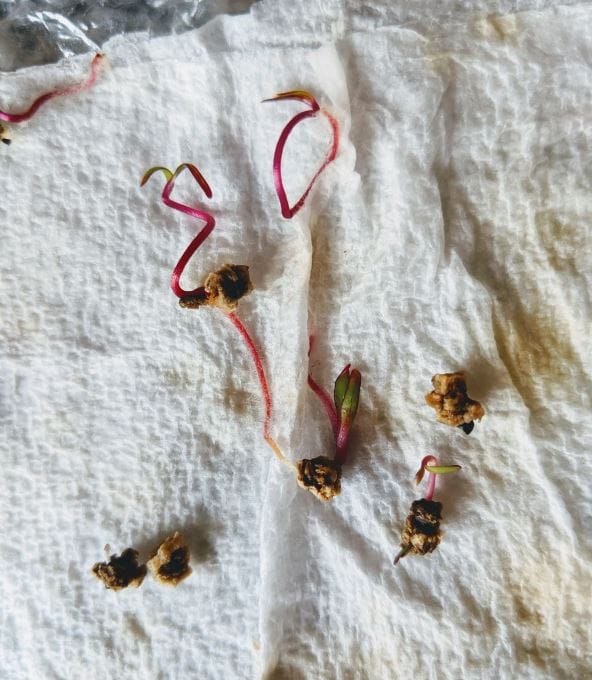
The paper towel method, a cornerstone of horticultural propagation, offers growers a transparent window into the miracle of germination. Unlike soil sowing, where we rely on faith, the damp paper towel allows for precise monitoring of the radical emergence. However, this method is a double-edged sword. While it accelerates hydration, it creates a high-risk environment where the line between a thriving seedling and a rotting embryo is razor-thin.
Understanding the temporal limits of this system is not just about marking a calendar; it’s about reading the biological signals of the seed and the physical degradation of the micro-environment. Here is the definitive guide on how long seeds can remain in a paper towel before physiological damage occurs.
1. The Biological Clock: Germination vs. Sustenance
To answer the question accurately, we must distinguish between two phases:
- The Germination Phase: The time required for the radicle (the embryonic root) to emerge.
- The Holding Phase: The maximum time a germinated seedling can remain in the towel before suffering irreversible damage or death.
Most growers fail not by missing germination, but by leaving the sprouted seed too long in the holding phase, where the root hairs grow into the paper towel fibers.
2. General Temporal Guidelines by Species
The longevity in a paper towel setup varies dramatically based on the seed’s evolutionary biology. A desert ephemeral behaves differently than a temperate hardwood.
| Plant Category | Typical Germination Time (Days) | Absolute Maximum Safe Stay (Days) | Critical Risk if Exceeded |
|---|---|---|---|
| Fast Annuals (Brassicas) | 1 – 3 | 5 – 7 | Rapid hypocotyl elongation; root hairs fuse permanently with cellulose fibers. |
| Solanaceae (Tomatoes, Peppers) | 3 – 10 | 10 – 14 | Damping-off pathogens (Pythium) proliferate in anaerobic pockets within the wet towel. |
| Cucurbits (Melons, Squash) | 2 – 5 | 4 – 6 | Extremely brittle radicles; snap during transplant if longer than 1/4 inch. |
| Herbs (Basil, Mint) | 3 – 7 | 7 – 10 | Seed mucilage creates a sticky, fermentable gel that smothers the embryo. |
| Hot Climate Perennials | 7 – 21 | 21 – 28 | Scarified seeds rot quickly; non-scarified seeds can stall and ferment. |
| Temperate Trees (Stratified) | 30 – 90+ | 90 – 120 | Requires cold-stratification within the towel; degradation of the paper itself becomes a vector for mold. |
Critical Distinction: Seeds that have undergone scarification or priming have a significantly shorter safe stay. They imbibe water violently and are metabolically hyperactive from hour one.
3. The Anatomy of Failure: Why Time Kills
The paper towel is not a hydroponic system; it is a germination trigger. Leaving a seed too long triggers four fatal physiological conditions.
A. Physical Entanglement (The Velcro Effect)
The primary danger is mechanical. Root hairs, microscopic epidermal extensions responsible for water uptake, secrete a natural adhesive. In soil, they grip porous particles loosely. In a paper towel, they knit with the cellulose fibers. Separation after this point inevitably shears off the root hairs, desiccating the seedling even after potting.
B. Hypoxia and Fermentation
A standard folded paper towel sealed in a plastic bag is an oxygen-depleted environment. Once the seed coat cracks, the embryo switches from anaerobic to aerobic respiration. If left too long without gas exchange, the root tip undergoes fermentation, producing ethanol that kills the tissue. A rotting seed smells like alcohol, not putrefaction.
C. Etiolation (Light Starvation)
If a seed germinates and is left in the dark, warm paper towel, the hypocotyl stretches wildly searching for light. This energy depletion results in a pale, weak seedling that lacks the vigor to push through soil media. Leggy seedlings in paper towels rarely survive.
D. Bacterial Bloom
The 70°F (21°C) environment of a germination mat combined with the carbon source of dissolving seed mucilage creates a perfect Petri dish. Erwinia and Fusarium species can collapse a seedling within hours.
4. Decision Matrix: When to Transplant
The “how long” question is answered not by days, but by morphology. Use this visual threshold guide to act at the precise moment.
| Observation | Action Required | Timer Reset? |
|---|---|---|
| Radicle emergence (1-2mm) | Immediate transplant. This is the “sweet spot.” The root tip senses gravity before touching fibers. | No. Transfer now. |
| Radicle 1/4” – 1/2” long | Urgent transplant (within 12 hours). Root hairs are activating. | High risk. Use tweezers on the seed coat, never the root. |
| Root hairs gripping paper | Surgical removal. Do not pull the seedling. Cut the paper around the root and plant the paper patch with the seedling. | The paper will wick moisture; remove excess paper edges to prevent mold. |
| Seedling stands 1”+ with open cotyledons | Triage. Start over unless the specimen is extremely rare. The energy reserves are likely spent. | Survival rate drops below 40%. |
5. Extending the Safe Window: Protocol Optimization
If you must delay transplanting (e.g., waiting for a weather window or a propagation shipment), the default “wet paper towel in a Ziploc” method is insufficient. You must transition to a sterile, structural medium.
The “Soil-Block” Rescue Protocol
If seeds have germinated but cannot be potted up for another week, carefully transfer the sprouted seeds (radicle down) onto a bed of sterile, damp vermiculite or a non-woven hemp germination pad. This provides hydration gradients and air porosity that a flat paper towel cannot.
Comparative Longevity: Paper Towel vs. Alternatives
Note: Data assumes optimal temperature and sterility.
| Medium | Safe Window for Germinated Seed | Primary Limiting Factor |
|---|---|---|
| Paper Towel | 24 – 48 hours post-germination | Physical entanglement of root hairs. |
| Coffee Filter | 48 – 72 hours | Better wet strength; resists tearing but still lacks 3D air porosity. |
| Synthetic Grow Mat | 5 – 7 days | Non-biodegradable; roots don’t grip, but hypoxia risk remains if saturated. |
| Agar Gel (Tissue Culture) | Indefinite (under sterile lab conditions) | Requires sucrose and MS media; not practical for home use. |
6. Frequently Asked Questions
Q: Can I store seeds in a wet paper towel for planting next week?
A: No. This is a common misinterpretation. The method is for initiating germination, not storage. If you hydrate a seed, you have committed to planting it immediately upon sprouting. If you store hydrated, sprouted seeds for a week, even in the fridge, you will likely induce chilling injury or fungal damping-off.
Q: What happens if I forget seeds in a paper towel for a month?
A: If kept moist and sealed, 99% of common vegetable seeds will have either completely decomposed into a slimy biofilm or, in rare cases with extremely vigorous species, have attempted to mature entirely within the plastic bag, turning into a translucent, rotten white string. Any paper towel left for a month will also begin to structurally decompose, creating a hypoxic sludge.
Q: Do harder seeds (like nasturtium) last longer?
A: They take longer to germinate, but paradoxically, once the water finally penetrates the hard coat, the available endosperm is massive. If left too long, the high nutrient content of the dissolving endosperm speeds up the bacterial colonization rate. They do not “last longer” once they wake up.
7. Final Verdict: The 48-Hour Rule
For the high-stakes home grower, the professional standard is unambiguous:
A seed should be removed from the paper towel within 24 to 48 hours of the radicle’s first appearance.
The purpose of the paper towel is to break dormancy, not to act as a nursery. The moment the white root tip curves downward, it is searching for mineral soil. Delay introduces stress, and stressed seedlings transmit that stunting into the final yield. Treat the paper towel as a transient observation deck—look, verify viability, and evacuate to soil immediately.