How to Get Urine Smell Out of a Toilet: A Complete Professional Guide

A persistent urine odor in the bathroom is one of the most frustrating cleaning challenges homeowners face. Unlike surface dirt, urine smell often lingers because the source is not merely the liquid itself—it is uric acid crystals that bond tightly to surfaces, grout, and even hidden crevices around the toilet .
This guide provides a professional, structured approach to eliminating urine odor permanently. It covers the science behind the smell, a comparison of effective methods, step-by-step protocols, and preventive maintenance.
Understanding Why Urine Smell Persists
Before choosing a cleaning method, it is essential to understand the chemistry involved. Urine contains urea and uric acid. When urine dries, the water evaporates, but the uric acid crystallizes. These crystals are insoluble in water and adhere aggressively to porcelain, plastic, grout, and even metal fixtures .
Standard household cleaners often fail because they only remove the liquid urine and surface bacteria, leaving the uric acid crystals intact. When humidity rises—after a shower, for example—these dormant crystals rehydrate and release the characteristic ammonia-like odor again .
Additionally, bacteria that feed on urine produce enzymes that break down urea into ammonia, intensifying the smell. Therefore, an effective strategy must accomplish three goals: dissolve the uric acid crystals, kill odor-causing bacteria, and neutralize residual ammonia.
Comparison of Urine Odor Removal Methods
The table below compares the most commonly recommended approaches, ranked by effectiveness for different severity levels.
Step-by-Step Protocol for Eliminating Urine Odor
Step 1: Diagnose the Source
Urine odor rarely originates only from inside the bowl. Urine splashes and drips accumulate in several hidden locations:
- Under the toilet seat hinges and the seat itself
- The rim underside where the bowl curves inward
- The base of the toilet where it meets the floor, including the caulk line and the gap underneath
- The floor around the toilet, especially grout lines and lino seams
- The toilet tank (if urine or splash-back has entered)
Inspect these areas with a flashlight and your nose. The strongest odor will indicate the primary source.
Step 2: Remove the Toilet Seat
This is non-negotiable for thorough odor elimination. Most toilet seats attach with two wing nuts at the back. Unscrew them by hand or with a wrench. Once removed, you will likely find urine residue and bacterial buildup on the porcelain beneath the hinges—areas that never get cleaned otherwise .
Wash the seat and hinges separately with hot water and an enzymatic cleaner or vinegar solution. Soak detachable parts in hot water where possible .
Step 3: Apply the Appropriate Treatment
For moderate odor (vinegar and baking soda method):
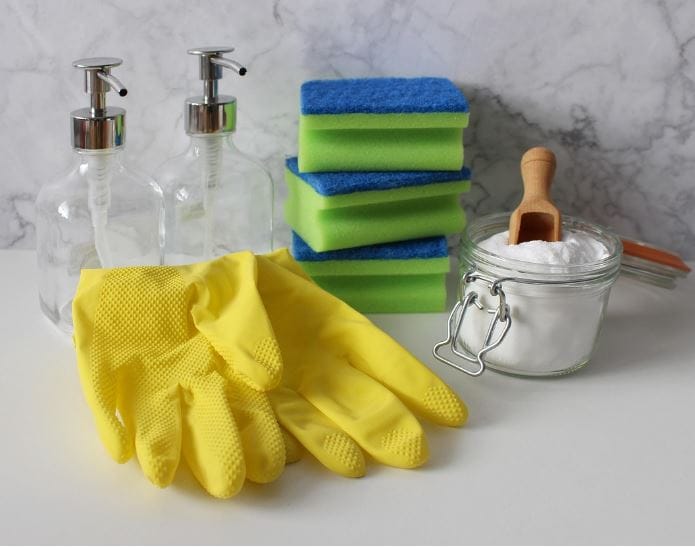
- Flush the toilet to wet the bowl. Sprinkle one full cup of baking soda around the bowl, focusing on under the rim and any visible ring .
- Let it sit for 10–15 minutes.
- Slowly pour one cup of white vinegar over the baking soda. A fizzing reaction occurs, which physically lifts mineral deposits and uric acid residue .
- Wait another 10 minutes, then scrub with a toilet brush, including under the rim.
- Flush twice to rinse .
For the exterior base and floor area, create a paste of baking soda and lemon juice (or water). Apply thickly around the toilet base, on the floor, and on any visible stains. Let it sit for 15 minutes, then spray with white vinegar and scrub with an old toothbrush for crevices .
For severe, persistent odor (enzymatic cleaner method):
Enzymatic cleaners are the professional-grade solution for odor that returns after conventional cleaning. These products contain live bacteria and enzymes that digest the uric acid crystals that cause the smell .
- Clean the area first to remove visible debris (enzymes work best on clean surfaces).
- Spray or pour the enzymatic cleaner liberally on all affected areas: inside the bowl, under the rim, around the base, on the floor, and in grout lines.
- Allow it to air dry naturally. Do not rinse or wipe away. The enzymes need contact time—often several hours or overnight—to break down the crystals .
- For best results, reapply after the first treatment dries and leave it again.
Important: Do not use bleach or ammonia-based cleaners before or after enzymatic treatment. These chemicals deactivate the enzymes and destroy the beneficial bacteria .
Step 4: Address Hidden and Porous Surfaces
Urine can soak into grout, caulk, and the subfloor around the toilet base. If the odor persists after surface cleaning:
- Grout: Apply an enzymatic cleaner or a paste of baking soda and hydrogen peroxide. Scrub with a grout brush. For deeply saturated grout, multiple applications over several days may be necessary .
- Caulk line: If the caulk around the toilet base is stained, discolored, or soft, it may have absorbed urine. In severe cases, removing and replacing the caulk is the only permanent solution.
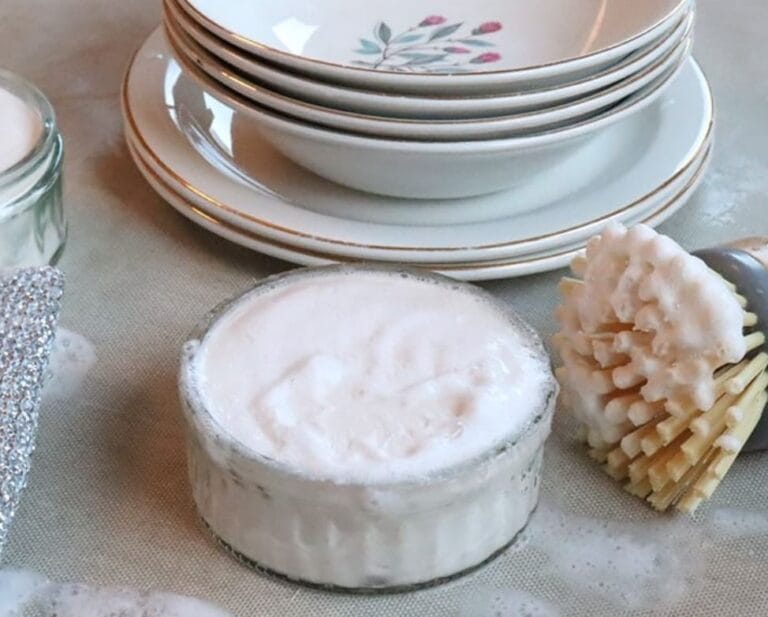
- Lino or tile flooring: Shaving foam is a surprisingly effective and inexpensive treatment for floors. Apply a generous layer of cheap foam shaving cream (not gel) over the affected area. Leave it for at least 30 minutes, or overnight for severe odors, then wipe away and rinse .
Step 5: Treat the Toilet Tank and Bowl System
Odors can also originate from the tank if splash-back or mineral buildup has occurred. Add 150 ml (about ⅔ cup) of white vinegar to the tank water. Let it sit for at least one hour, then flush. This helps break down mineral deposits and deodorizes the internal system .
For the bowl itself, particularly if a yellow or brown ring is present, use the vinegar-soaked paper towel method: Lower the water level by turning off the supply valve and flushing. Soak paper towels in white vinegar and press them onto the stain above the waterline. Leave for 30–60 minutes, then remove (do not flush the paper towels), scrub, and restore the water supply .
Preventive Maintenance Schedule
Eliminating urine odor is only half the battle. Preventing its return requires consistent maintenance.
When to Call a Professional
If odor persists after multiple enzymatic treatments and thorough cleaning of all visible surfaces, the source may be beneath the flooring or in the subfloor. Urine that has soaked through grout or around the wax ring can saturate the underlayment, requiring flooring removal and replacement . A plumber can also inspect for a failing wax ring or cracked toilet base, which can allow urine and moisture to seep into inaccessible areas.
Conclusion
Urine odor in a toilet is not a surface problem—it is a chemical one. The key to permanent elimination is targeting the uric acid crystals that standard cleaners leave behind. For mild odors, vinegar and baking soda provide an effective, low-cost solution. For persistent or severe odors, enzymatic cleaners are the most reliable professional-grade option because they digest the crystals at the source. Combining the right method with attention to hidden areas—under the seat, around the base, and in grout—will restore your bathroom to a fresh, odor-free state.