How to Create a Student-Friendly Study Space in a Small Apartment
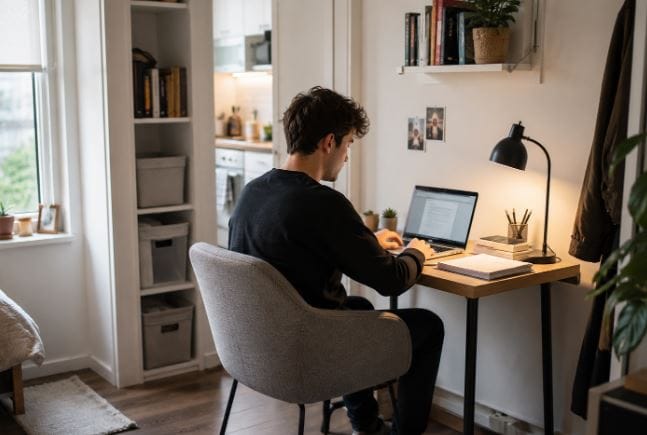
The best place for a study area usually isn’t the most obvious one. It’s the corner where someone can work without hearing every cupboard door, television advert or conversation in the apartment.
Start with noise. A desk beside the kitchen may look practical until a roommate decides to cook during an online lecture. The front door isn’t much better. Every delivery, visitor and hallway sound becomes part of the study session.
A window can help, especially in a small apartment where natural light makes the room feel less boxed in. Place the desk beside the window rather than directly in front of it. That way, the student gets daylight without spending half the afternoon fighting screen glare.
Quiet beats stylish. Always.
Buy a Smaller Desk Than You Think You Need
Large desks look impressive in showrooms. In a compact apartment, they often become expensive clutter collectors.
A desk around 36 to 48 inches wide is usually enough for a laptop, lamp, notebook and cup of coffee. That covers most study sessions. Extra surface area tends to attract unopened mail, snack wrappers and clothes that were apparently too tired to reach the closet.
Look for a narrow desk with drawers, a wall-mounted design or a fold-down surface that can disappear after use. A coordinated contemporary furniture package can make a furnished apartment look polished, but appearance shouldn’t come at the cost of usable floor space. A desk should fit the room, not challenge it to a wrestling match.
Leave enough clearance for the chair to move properly. It sounds obvious. It often isn’t.
Spend More Thought on the Chair
A cheap chair can ruin a perfectly good study setup.
Dining chairs are fine for a quick email. They’re much less charming after two hours of reading, note-taking and shifting around to find a position that doesn’t hurt. A supportive chair doesn’t need to look bulky or corporate, but it should have a firm back and a comfortable seat.
Height matters too. The student should be able to keep both feet flat on the floor while resting their arms comfortably on the desk. If the chair sits too high, a small footrest can help. If it sits too low, the desk will feel awkward no matter how tidy the room looks.
Comfort isn’t a luxury here. It affects whether the space gets used.
Fix the Lighting Before It Becomes Annoying
Bad lighting doesn’t always look bad. Sometimes it just causes headaches, tired eyes and a sudden urge to stop studying.
A ceiling light rarely provides enough focused brightness on its own. Add an adjustable desk lamp that points light directly onto books and notes. Place it opposite the writing hand to reduce shadows. Right-handed students should keep the lamp on the left. Left-handed students should do the reverse.
The bulb matters less than the direction of the light, though a bright neutral tone usually works better for studying than a dim, warm glow. Cozy lighting belongs near the sofa. A study desk needs to keep people awake.
In student apartments Brisbane residents occupy, strong Queensland sunlight can create extra glare and heat during the afternoon. Light-filtering blinds or curtains can soften the brightness without making the room feel dark and closed off.
Stop Cables From Spreading Everywhere
A handful of loose cables can make a small desk look chaotic.
Use reusable ties to bundle laptop, monitor and phone cords together. A cable tray under the desk keeps power strips off the floor and makes vacuuming much easier. Adhesive clips can also stop charging cords from sliding behind the desk every time they’re unplugged.
Create one charging point for smaller devices. Phones, headphones and tablets should all return to the same place. Without a system, chargers wander. Then nobody knows which cable belongs to what.
This is a minor detail until it isn’t. A tidy desk feels calmer, and that matters when assignments start piling up.
Use Vertical Space Without Overfilling It
Small apartments run out of floor space quickly. Walls are another story.
Install one or two floating shelves above the desk for textbooks, folders and storage boxes. Keep everyday supplies within easy reach, then place less-used items higher up. Closed boxes work well for loose stationery, spare cables and paperwork that doesn’t need to stay visible.
Don’t cover the entire wall. Too many shelves can make a tiny work area feel even tighter. Leave some empty space so the room can breathe.
A plant, framed photo or favorite book can make the setup feel personal. That’s enough. The desk should look lived in, not like someone raided the home decor aisle five minutes before a video call.
Create a Boundary Between Work and Rest
Studying and sleeping in the same room can blur together fast. A student sits on the bed with a laptop, opens a document and somehow ends up watching videos under a blanket.
A separate room isn’t necessary, but a visual boundary helps. Use a small rug beneath the desk, position a narrow shelf beside it or place the workspace behind the sofa. Even a change in lighting can make the study corner feel distinct.
At the end of the day, clear the desk. Close the laptop. Put notes back on the shelf.
Done.
That small routine signals that work has finished. It also prevents the study area from turning into permanent background stress.
Make It Easy to Clean
A study corner attracts dust surprisingly quickly. Laptop vents, books, cables and desk accessories create plenty of small gaps where dirt settles.
Keep the floor beneath the desk clear enough for a vacuum or mop. Avoid storing loose papers and bags against the wall. Once they land there, they tend to stay there.
Wipe the desk and keyboard regularly. Empty the trash before it develops its own ecosystem. Clean the lamp, shelves and monitor too, since dust shows up fast on dark surfaces.
A useful study space doesn’t need to be elaborate. It needs good light, a comfortable chair, enough room to think and a layout that doesn’t make cleaning a chore. In a small apartment, that’s the winning setup.