How to Clean Morganite: A Professional Guide to Safe, Effective Care
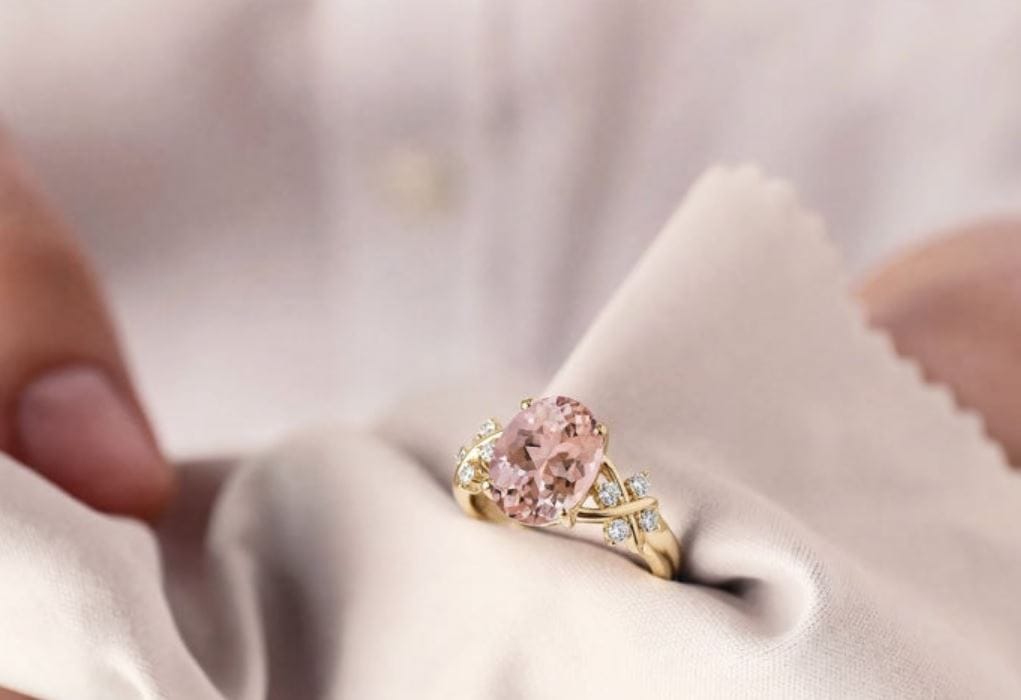
Morganite, the blush-pink to peach-orange variety of beryl (same family as emerald and aquamarine), has surged in popularity due to its delicate color and brilliance. However, its relative hardness (7.5–8 on the Mohs scale) belies a critical vulnerability: stress sensitivity. Unlike diamond or sapphire, morganite is prone to etching from harsh chemicals, scratching from abrasive materials, and surface crazing from thermal shock.
Proper cleaning is not merely aesthetic—it is essential for preserving the stone’s luster and structural integrity. This guide provides evidence-based, step-by-step methods, a comparison of cleaning techniques, and a list of absolute prohibitions.
1. Understanding Morganite’s Properties Before Cleaning
Before selecting a cleaning method, understand the gem’s physical and chemical profile.
| Property | Value | Implication for Cleaning |
|---|---|---|
| Mohs Hardness | 7.5–8 | Resists scratching from dust (quartz = 7), but softer than topaz or corundum. |
| Cleavage | Distinct (prismatic) | Can split if struck hard or subjected to ultrasonic vibration. |
| Chemical Formula | Be₃Al₂(SiO₃)₆ | Reacts with hydrofluoric acid (in some industrial cleaners) and strong bases. |
| Stability | Heat-sensitive | Sudden temperature changes cause internal fractures. |
| Porosity | Low (but surface flaws exist) | Can absorb oils, soaps, and lotions, dulling brilliance. |
Key takeaway: Morganite is durable enough for daily wear but chemically and thermally sensitive. Do not treat it like quartz or corundum.
2. Recommended Cleaning Methods (Ranked by Safety)
All methods below assume the morganite is securely set (if in jewelry) and that you have confirmed with a jeweler that no pre-existing fractures exist.
Method 1: Mild Soap and Warm Water (Best for Regular Cleaning)
Tools needed:
- Soft-bristled brush (baby toothbrush or makeup brush)
- Unscented, mild dish soap (e.g., Dawn Free & Clear)
- Two small bowls of lukewarm water (not hot)
- Lint-free microfiber cloth
Procedure:
- Fill Bowl A with lukewarm water and 2–3 drops of soap.
- Soak the morganite for 5–10 minutes to loosen surface oils.
- Dip the brush in the soapy water and gently scrub around the stone, focusing on the pavilion (bottom) and under bezel settings.
- Rinse thoroughly in Bowl B of clean, lukewarm water.
- Pat dry with microfiber cloth. Do not rub—rubbing can drag abrasive particles across the surface.
Method 2: Steamer (Professional Use Only)
Steam cleaning is effective for removing baked-on grime but carries thermal shock risk.
| Aspect | Detail |
|---|---|
| When to use | Only on flaw-free, unheated morganite (ask your gemologist). |
| Water temp | Distilled water, steam temp ~150°C (302°F). |
| Risk level | Moderate to high. One in twenty morganites fracture. |
| Alternative | Use compressed air duster (canned air) for loose debris instead of steam. |
Verdict: Avoid steam at home. Leave to professionals with thermal shock protocols.
Method 3: Ultrasonic Cleaner (Generally Not Recommended)
Ultrasonic cleaners use high-frequency sound waves to create cavitation bubbles. These vibrations can propagate along morganite’s cleavage planes.
| Condition | Recommendation |
|---|---|
| Natural, untreated morganite | Do not use – risk of cleavage-plane splitting. |
| Fracture-filled morganite | Never – will expel filler material. |
| Heated morganite (common for pink enhancement) | Avoid – heating can weaken internal structure. |
| Lab-created morganite (flux-grown) | Maybe – fewer inclusions, but check with manufacturer. |
Professional consensus (GIA & AGS): Do not clean morganite ultrasonically unless the piece is small (<1 ct), heavily included (damping vibrations), and you accept full liability.
3. Comparison Table: Cleaning Methods for Morganite
| Method | Safety Level | Effectiveness on Oil/Grime | Risk of Damage | Time Required | Cost |
|---|---|---|---|---|---|
| Soap + water + soft brush | High | Good | None (if gentle) | 10–15 min | $0 |
| Jewelry wipe (pre-moistened) | Moderate | Fair (surface only) | Low (abrasion if dirty) | 1 min | $5–10 |
| Steam cleaner (pro) | Low–Moderate | Excellent | Moderate (thermal shock) | 5 min | $20–50/service |
| Ultrasonic cleaner | Low | Excellent | High (cleavage fracture) | 3–5 min | $30–200 (device) |
| Toothpaste + hard brush | Unacceptable | Poor | Very high (abrasion) | N/A | N/A |
Winner for home use: Soap + water + soft brush.
4. What to Avoid at All Costs
- Acids and bases: Lemon juice, vinegar, bleach, ammonia, or bathroom tile cleaners. These etch beryl’s surface, creating a “frosted” appearance.
- Abrasive powders: Baking soda, toothpaste, or commercial silver polish. Morganite’s hardness is lower than many abrasives (e.g., pumice = 6, but silica in toothpaste = 7).
- Hot water: Sudden expansion can cause invisible cracks to propagate.
- Paper towels or tissues: Contain wood fibers (hardness ~5–6) that microscratch the surface over time.
- Wearing during cleaning: Household dust (quartz) acts as an abrasive. Remove morganite rings before washing dishes, applying lotion, or using hairspray.
5. Special Considerations for Set Morganite Jewelry
If your morganite is mounted in a ring, pendant, or earrings, the cleaning method must also consider the metal and accent stones.
| Setting Type | Precaution |
|---|---|
| Prong setting (gold/platinum) | Soap and brush is fine. Check prong tightness after cleaning. |
| Bezel setting | Easier to clean – no prongs. Ensure no soap residue remains under the bezel. |
| Pave diamonds alongside morganite | Avoid ultrasonic (diamonds are hard but can chip each other). Use soft brush only. |
| Silver setting | Silver tarnishes. Clean morganite first, then use a silver dip separately without immersing the gem. |
| Opal or pearl accents | Do not soak. Use damp cloth only on morganite and avoid contact with soft gems. |
6. How to Restore a Dull or Oily Morganite
Morganite is naturally pleochroic and can appear “dead” if coated with skin oils or silicone-based hand creams.
Step-by-step restoration (no chemicals):
- Pre-soak: In lukewarm soapy water for 15 minutes (double the normal time).
- Brush access: Use a pointed cosmetic cotton swab (not wood stick) to clean the culet and facet junctions.
- Rinse with distilled water – tap water leaves mineral spots.
- Air dry upside down on a microfiber cloth for 1 hour.
- Polish with a new, dry microfiber cloth using light pressure in circular motions.
If dullness persists, the issue may be subsurface. Take to a jeweler for repolishing (cost $30–80). Repolishing removes 0.05–0.2 mm of material, safe for most stones done once.
7. Storage & Preventative Care
Proper storage reduces cleaning frequency.
| Storage Item | Recommended? | Why |
|---|---|---|
| Fabric-lined jewelry box | Yes | Prevents dust settling. |
| Individual soft pouch | Best | Avoids contact with harder gems (sapphire, diamond). |
| Plastic bag | No | Traps moisture, promotes bacterial film. |
| With quartz or topaz | No | Those gems can scratch morganite. |
Pro tip: Place a silica gel packet in your jewelry box to reduce humidity, which can accelerate oil absorption into micro-fractures.
8. Summary: Quick Reference Cleaning Protocol
Daily: Wipe with microfiber cloth after wearing.
Weekly (if worn often): Soap, lukewarm water, soft brush, rinse, air dry.
Monthly: Inspect under 10x loupe for new fractures or loose settings.
Annually: Professional inspection + optional repolishing.
Never: Ultrasonic, steam, hot water, acids, abrasives, paper products.
Final Verdict from a Gemological Perspective
Morganite is a rewarding gemstone that responds beautifully to gentle, informed care. The widespread myth that “all gemstones can go in an ultrasonic cleaner” has destroyed countless morganites. Stick to the oldest, safest method—mild soap and water—and your morganite will retain its rose-pink radiance for generations.
References for further reading: GIA “Beryl Care Guide” (2021), AGS “Gemstone Durability Ratings” (2023), IGS “Morganite Cleaning Protocols.”