How Modern Geothermal Systems Are Changing Home Heating in the U.S.
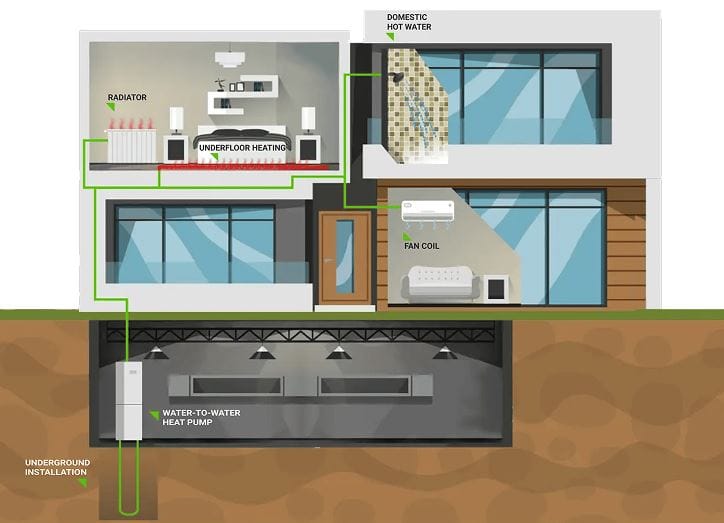
For decades, heating a home in the United States has largely meant relying on burning something—natural gas, heating oil, or propane. But a quiet revolution is taking place beneath our feet. Modern geothermal heating and cooling systems, also known as ground-source heat pumps, are moving from niche technology to a practical, mainstream solution for homeowners seeking efficiency, comfort, and lower environmental impact.
How Geothermal Heating Works
So how geothermal heating works – the core principle behind geothermal heating is deceptively simple. While air temperatures above ground fluctuate wildly with the seasons—from scorching summer heat to bitter winter cold—the temperature of the earth just a few feet below the surface remains remarkably stable. For most of the U.S., the ground at a depth of about 10 feet stays between 50°F and 60°F year-round .
A geothermal heat pump (GHP) takes advantage of this constant temperature by moving heat rather than generating it through combustion. The system consists of three main parts: the ground loop (a network of buried pipes), the heat pump unit inside the home, and the distribution system (ductwork or radiant flooring) .
During the winter, a water-based solution (or refrigerant) circulates through the underground pipes, absorbing the earth’s stored heat. This warmed fluid travels up to the heat pump, which uses a refrigeration cycle to concentrate the heat and release it into your home .
When summer arrives, the process reverses. The system pulls unwanted heat from your home and transfers it back into the cooler ground, providing efficient air conditioning . As one MIT guide explains, because the ground is warmer than the air in winter and cooler than the air in summer, the heat pump operates over a much shorter temperature “lift” than an air-source heat pump, which must work against extreme outdoor temperatures . This is the key to its exceptional efficiency.
The Benefits: Why Homeowners Are Making the Switch
Unmatched Efficiency and Lower Operating Costs
Geothermal heat pumps are widely recognized as one of the most energy-efficient heating and cooling technologies available. The U.S. Environmental Protection Agency has called them the most energy-efficient and cost-effective systems for heating and cooling buildings . They can be over 400% efficient, meaning for every unit of electricity they use, they produce four or more equivalent units of heating or cooling . By comparison, even the most efficient gas furnaces operate at 90-98% efficiency.
This efficiency translates directly into savings. Property owners who install GHPs can save up to 70% on heating costs and up to 50% on cooling costs, adding up to more than $1,000 in yearly savings for many households . Research from the Massachusetts Institute of Technology notes that GHPs use 25% to 50% less electricity than conventional heating or cooling systems . A 2025 study published in the journal Energy and Buildings also found that pairing ground-source heat pumps with geothermal collector systems could reduce CO2 emissions by 72% to 81% compared to conventional HVAC setups .
Superior Comfort and Quiet Operation
Beyond cost savings, geothermal systems offer a different kind of comfort. Because they deliver a steady stream of heat, you avoid the uncomfortable blasts of hot or cold air common with forced-air furnaces . They also excel at dehumidifying in summer, maintaining about 50% relative indoor humidity for a more comfortable environment .
Another often-overlooked advantage is noise. The heat pump unit is located indoors, and the underground loop is silent. This means no loud outdoor condenser unit disturbing your backyard peace, making it far quieter than an air-source heat pump or central air conditioner .
A New Frontier: Networked Geothermal
While individual home systems are impressive, a newer model called networked geothermal is starting to change the picture for entire communities. Instead of each home having its own boreholes, a shared network of underground pipes serves multiple buildings . A notable pilot project in Framingham, Massachusetts, connects three dozen homes and municipal buildings to a shared system through a partnership with the local utility . This approach can make the technology more accessible by sharing the high upfront infrastructure costs .
What to Consider Before Installing
Despite its many benefits, geothermal is not a simple drop-in replacement. Here are the key factors to consider before making the investment.
1. The Upfront Cost and Incentives
The largest barrier for many homeowners is the high initial installation cost, primarily due to the expense of drilling or trenching for the ground loop . However, several incentives can dramatically reduce this burden:
- Federal Tax Credits: The U.S. government offers a significant federal tax credit for residential geothermal heat pump installations (typically 30% of the total cost with no maximum limit).
- State and Utility Incentives: Many states and local utilities offer additional rebates or financing programs.
2. Your Property and Land
The type of ground loop you can install depends heavily on your property. There are four main system types :
- Horizontal Loops: These are installed in trenches about 5-10 feet deep. They are less expensive but require a large, open yard. They are common in rural settings .
- Vertical Loops: These use boreholes drilled 200 to 500 feet deep. They are more expensive but ideal for urban or suburban homes with limited land .
- Pond/Lake Loops: If you have a suitable body of water nearby, coils can be placed at the bottom to exchange heat, often at a lower cost than trenching or drilling .
- Open-Loop Systems: These use groundwater from a well, but they are less common due to stricter regulations and environmental considerations .
3. Installation and Longevity
Installing a geothermal system is a major project that requires a qualified, experienced contractor. They will need to conduct a thermal conductivity test of your soil or rock to properly size the loop . It’s also wise to consider retrofitting costs, which can be higher than installing a system during new construction.
On the positive side, the system is incredibly durable. The underground pipes often carry warranties of 25 to 50 years, and the indoor heat pump unit can last over 20 years with minimal maintenance .
4. Climate Considerations
While geothermal works in all 50 states, its efficiency can vary slightly by climate. For instance, systems can be less effective for cooling in hot climates where the cooling demand far exceeds heating needs, as they can struggle to reject heat into the already warm ground . In such cases, a hybrid system that pairs geothermal with a cooling tower might be recommended .
The Future of Home Heating
Geothermal heating and cooling offers a compelling path away from fossil fuels. It provides dependable comfort, significantly lower operating costs, and a remarkable reduction in energy consumption. As a 2025 report noted, widespread adoption of geothermal heat pumps could reduce national electricity demand by 13% over the next 25 years . For homeowners looking for a long-term, efficient, and environmentally responsible way to heat and cool their homes, the answer might very well be right beneath their feet.