Historical Transition From Logic Puzzles to RNG Mine Games
When I first encountered Minesweeper on a desktop in the early 1990s, I had no idea that the logic puzzle hailing from that humble grid would evolve into one of the most captivating real money games in the online casino universe two decades later. The journey from deterministic logic puzzles – where every move was deduced with logic – to RNG-based Mine games that combine risk, reward, and random outcome generators tells a deeper story about digital entertainment, player psychology, and casino economics.
My goal in this article is not merely to trace a timeline, but to explain how a genre born in computer labs and bedroom programmers became a mainstay of regulated gambling platforms worldwide. You’ll see how core design principles survived this transition – and why, if you want to play Mines today, you’re engaging with a unique fusion of classical puzzle mechanics and modern gambling randomness.
The Birth of Logic Grid Games and Minesweeper
Logic Games Before Minesweeper
Computer-based logic puzzles existed long before the mainstream hit that was Minesweeper. Early titles in the 1970s and 1980s explored grid logic, deduction, and pattern recognition – hallmarks of what would become the Minesweeper family. These weren’t gambling games; they were mental exercises that rewarded foresight and careful reasoning.
One key early ancestor is Mined-Out, a 1983 maze game for home computers like the ZX Spectrum. Players navigated invisible minefields using clues about neighboring squares – a direct conceptual precursor to later grid logic challenges.
Microsoft Minesweeper Goes Mainstream
The real turning point came when Microsoft bundled Minesweeper with its Windows line in the early 1990s. Designed as both a time-killer and a mouse-usage tutorial, the game featured a grid of hidden “mines” revealed by logical deduction. It captured public attention because it struck the rare balance between simplicity and deep strategic demand. Millions learned to play, memorizing patterns and techniques to avoid mines and clear boards efficiently.
This widespread exposure laid the groundwork for an entire genre of puzzle games that played with hidden information and logical deduction – mechanics that would, years later, be crucial for casino adaptations.
Casinos Discover Psychological Hooks
What Makes Minesweeper Mechanics Irresistible?
Casinos and game designers don’t chase trends blindly; they analyze player engagement. What made Minesweeper compelling to millions was a tension: the balance between risk (stepping one square closer to a mine) and reward (uncovering safe territory and advancing progress). That same tension exists in gambling.
Before RNG Mine games took hold, other formats like blackjack, slots, and roulette leveraged risk vs. reward in familiar ways. But range of tactics in Minesweeper – where patterns and probabilities matter – offered something different: it invited players to think, not just bet.
Early Betting Adaptations
It didn’t take long for developers to experiment with betting adaptations. Initial iterations were often straightforward conversions: place a wager and play a grid with the same rules as Minesweeper. But these lacked the dynamism modern players expect – no real multipliers, no risk customization, and minimal excitement beyond the base logic puzzle.
That era of experimentation paved the way for a more refined version: games that retained grid mechanics but introduced random number generation (RNG) and real money multipliers.
RNG Mine Games: Mechanics, Appeal, and Market Adoption
How RNG Changes Everything
Traditional Minesweeper presented known clues that players could use to logically deduce where mines might be. RNG Mine games, by contrast, hide all clues until after each selection. The underlying random number generator ensures that each tile’s outcome is unpredictable and fair within regulatory standards. This transforms Mines from a purely logical challenge into a risk-reward gambling system where probability and luck play central roles.
In these games:
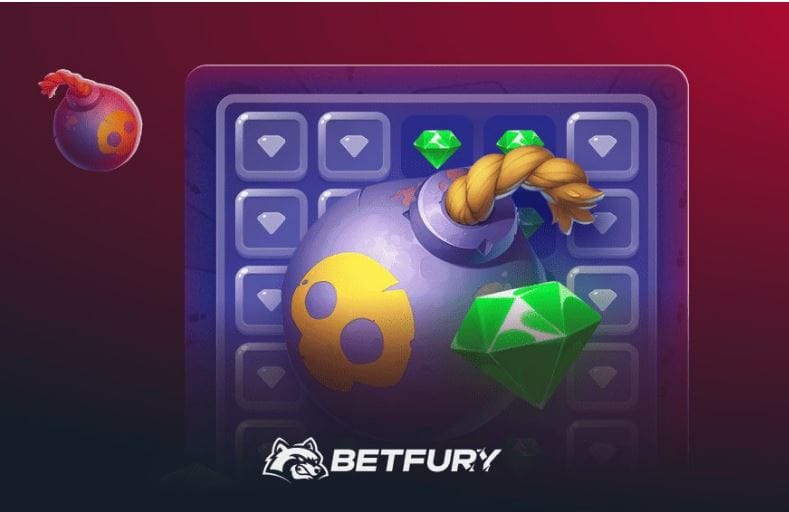
- A grid is prepared (often 5×5 or larger).
- A player chooses how many hidden mines to place.
- Each cleared tile multiplies the stake.
- Revealing a mine ends the round with a loss.
This seemingly simple formula creates a compelling dilemma: how far can you push your luck before cashing out?
Why Players Respond
RNG Mine games excel for three reasons:
- Instant Gratification: Rounds are short, results immediate.
- Tension and Control: Players decide how much to risk by choosing mine density.
- Multipliers and Cash-outs: Rewards escalate rapidly, giving players agency in pacing their risk and reward.
Talented designers tuned these elements so that the experience feels intuitive and deeply engaging – even for newcomers.
My Personal Observation from the Market
In regulated markets where RNG Mine games are offered, their popularity rivals many classic casino formats. I’ve interviewed designers who note that players enjoy the blend of tactical choice and randomness more than they expected – a testament to how robust the original puzzle mechanics were.
Comparing Classic Logic vs. Modern RNG Mines
To crystallize how the games differ across eras, here is a structured comparison:
| Feature | Classic Minesweeper | RNG Mine Casino Game |
| Core Objective | Deduce safe tiles using logic | Uncover tiles to build multipliers and avoid RNG mines |
| Outcome Determinism | Fully determined by visible clues | Determined by certified RNG |
| Player Agency | High – logic based | Moderate – probability + player choice |
| Monetary Stakes | None | Real money stakes and multipliers |
| Session Speed | Variable | Typically very fast |
| Skill vs. Luck | Majority skill | Mix of luck and tactical choice |
Regulatory & Economic Context
A crucial factor in the success of RNG Mine games is regulatory oversight. Licenses from reputable authorities require transparent RNG systems, audited payouts, and responsible gaming safeguards. Without these, players may not trust that outcomes are fair. Modern Mine games meet these standards, often with publicly verified RTP (Return to Player) figures and independent testing.
Moreover, operators benefit because Mine games are inexpensive to deploy compared to elaborate multi-line slots, yet keep players engaged for repeated play.
Future Trends
Looking ahead, I see several trends shaping this niche:
- Adaptive grids and dynamic RNG weighting that personalize risk profiles per player.
- Blockchain integration for provably fair RNG, appealing to crypto-savvy users.
- Hybrid systems that incorporate logic elements back into RNG frameworks – reintroducing skill components in new ways.
Yet, the core lesson holds: when a game mechanic resonates with fundamental cognitive behaviors (risk assessment, tension tolerance, pattern recognition), it can be reinvented across domains and decades.
A Puzzle’s Journey Into the Casino
When I reflect on Minesweeper and its legacy, I’m reminded of how simple ideas can evolve into something far larger than their origins. From early logic grids to RNG Mine games, the journey is one of adaptation to player psychology, market needs, and technological possibilities.
The appeal of these games is not rooted in randomness alone, nor in logic alone – but in the blend of both, where every choice feels consequential. That’s why, for so many players today, choosing to play Mines is more than a gamble; it’s a modern expression of a puzzle tradition that began decades ago.