Can You Use OxiClean in a Dishwasher? The Expert Guide to Safe and Effective Use

The question of whether OxiClean can be used in a dishwasher is a common one for those seeking a deeper clean or an alternative to traditional detergents. The short answer is yes, but with significant qualifications. Using OxiClean effectively and safely requires understanding which product to use, how much to add, and the potential risks involved.
This guide provides a comprehensive, professional analysis of using OxiClean in your dishwasher, covering its chemistry, applications, safety protocols, and a clear comparison of different methods.
Understanding OxiClean’s Chemistry
To understand its application in a dishwasher, it is essential to know what OxiClean is. The core active ingredient in most OxiClean powder products is sodium percarbonate . When sodium percarbonate dissolves in water, it releases hydrogen peroxide and soda ash (sodium carbonate) . This process creates an oxygen bleach, which is highly effective at breaking down organic stains, food residues, and odors through oxidation. This is gentler than chlorine bleach, making it suitable for a wider range of materials when used correctly.
While the OxiClean brand offers a specific OxiClean Dishwasher Detergent product line , this article primarily addresses the use of standard OxiClean Versatile Stain Remover powder, as that is the most common subject of inquiry. The brand also produces a Triple Action Dish Booster, a liquid rinse aid and dishwasher cleaner with a different formulation . The information below focuses on the standard powder.
Product Safety and Hazards
It is critical to note that OxiClean is not a harmless substance. The Safety Data Sheet (SDS) for OxiClean Dishwasher Detergent lists the following hazard classifications:
- Acute Toxicity (Oral) Category 4: Harmful if swallowed .
- Skin Irritation Category 2: Causes skin irritation .
- Eye Damage Category 1: Causes serious eye damage .
- Respiratory Sensitization Category 1: May cause allergy or asthma symptoms or breathing difficulties if inhaled.
These hazards underscore the importance of handling the product with care, keeping it away from children, and avoiding contact with eyes, skin, and inhalation of dust.
The Two Main Applications for OxiClean in a Dishwasher
OxiClean can be used in a dishwasher for two distinct purposes: as a regular cleaning aid and as a maintenance cleaner for the machine itself .
1. As a Dishwasher Booster (for Dishes)
Using OxiClean as a booster can enhance the cleaning power of your regular detergent, particularly for tackling tough, baked-on stains, hard water spots, and cloudy film on glassware . It is not recommended to use OxiClean as a complete substitute for regular dishwasher detergent on a daily basis, as it lacks the specific surfactants and rinse agents formulated for comprehensive dish cleaning .
- How it Works: The oxygen bleach releases hydrogen peroxide, which helps lift and break down stubborn organic residues . It also helps prevent the redeposition of soil onto dishes .
- User Feedback: Reviews of OxiClean products for dishwashers are generally positive, with users reporting excellent cleaning results, especially in hard water conditions. Some users have noted that “it does exactly what it says – keeps dishes spot free while keeping the dishwasher sparkling” and that it is “excellent for hard water” .
2. As a Dishwasher Maintenance Cleaner (for the Appliance)
This is perhaps the safest and most recommended use. OxiClean is effective at removing mineral buildup, grease, and grime that accumulate inside a dishwasher over time. Its oxygen-based action is gentle on internal components like seals and spray arms while being effective at eliminating residues and odors .
- How it Works: Running a hot, empty cycle with OxiClean allows the oxygen bleach to circulate and break down scale and biofilm in areas that are hard to reach.
- User Feedback: Users have praised OxiClean as a maintenance product, calling it the “greatest dishwasher rinse aide” and noting it also “keeps dishwasher clean” .
How to Safely Use OxiClean in Your Dishwasher
The key to safe use lies in following specific guidelines for dosage, placement, and material compatibility. Always adhere to the “less is more” principle to avoid residue or damage.
Detailed Comparison of Application Methods
The following table provides a clear comparison of the different ways to use OxiClean powder in a dishwasher.
How OxiClean Compares to Standard Dishwasher Detergent
OxiClean and standard dishwasher detergents have different strengths and weaknesses. Here is a comparison based on key performance and safety factors.
Step-by-Step Guide for Safe Use
- Choose the Right Product: For the dishwasher, use a powder-based OxiClean product. The OxiClean Versatile Stain Remover is the most common, but OxiClean Free is an option for those with sensitivities to dyes and perfumes . There are also specifically formulated OxiClean Dishwasher Detergent products available .
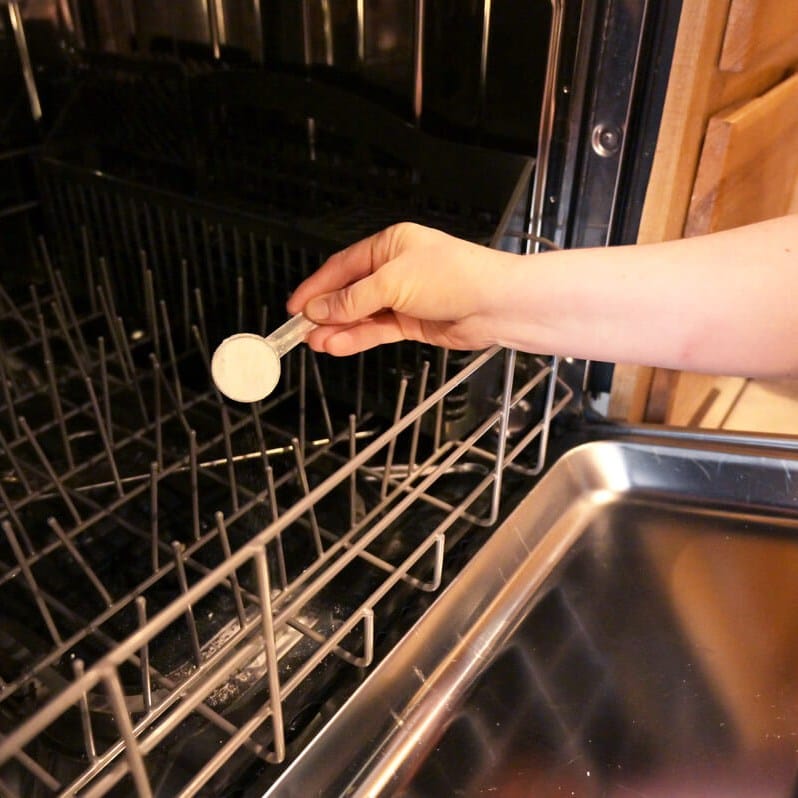
- Measure Carefully: Use the scoop provided or a standard measuring spoon. Do not overfill. A general guide is 1 scoop (1/4 cup) for a regular load boost and 2 scoops for a deep clean or appliance maintenance .
- Place Correctly: For boosting a regular load, place the powder in the main detergent dispenser . For appliance maintenance, place it in the dispenser or directly into the tub of the empty machine .
- Run a Hot Cycle: Activate the oxygen bleach by running the dishwasher on a hot or intensive wash cycle . The heat is essential for maximum effectiveness.
- Rinse and Inspect: Ensure the cycle completes fully. For routine use, inspect dishes for any residue and reduce the dosage if necessary.
What to Avoid: Risks and Incompatibilities
Using OxiClean incorrectly can lead to damage. Here are the critical safety rules to follow:
- DO NOT mix OxiClean with vinegar. This combination creates peracetic acid, a highly corrosive substance that can damage your dishwasher and dishes and is harmful to skin .
- DO NOT use on aluminum or cast iron. OxiClean will cause pitting, discoloration, and rust on these metals .
- DO NOT use on delicate china or silver. The oxidizing action can fade patterns, tarnish precious metals, or damage delicate finishes .
- DO NOT mix with chlorine bleach. This can create dangerous toxic fumes .
- DO NOT overuse. Adding too much OxiClean can leave a white, powdery residue on dishes and the dishwasher interior. It can also potentially degrade rubber seals over time .
- DO NOT use standard OxiClean powder in the rinse aid dispenser. It is not formulated for that purpose and can clog the mechanism. There is a dedicated OxiClean Triple Action Booster for this use .
Conclusion: A Powerful Tool, Used Wisely
Yes, OxiClean can be used in a dishwasher, but it is not a simple one-to-one replacement for your regular detergent. Its primary value lies in its ability to boost cleaning performance on tough stains and to act as a powerful maintenance cleaner for the machine itself.
For the best and safest results:
- Use it sparingly and as a supplement, not a substitute, for everyday washing.
- Always run a hot water cycle to activate its cleaning power.
- Avoid using it on incompatible materials like aluminum and delicate dishware.
- Never mix it with vinegar or chlorine bleach.
- Consider using the dedicated OxiClean Dishwasher Detergent or Triple Action Booster products for optimal, hassle-free performance.
By adhering to these guidelines, OxiClean can be a safe and effective addition to your dishwashing arsenal, delivering spotless dishes and a clean, odor-free appliance.