Do Quartz Countertops Scratch? The Definitive Guide to Engineered Stone Durability
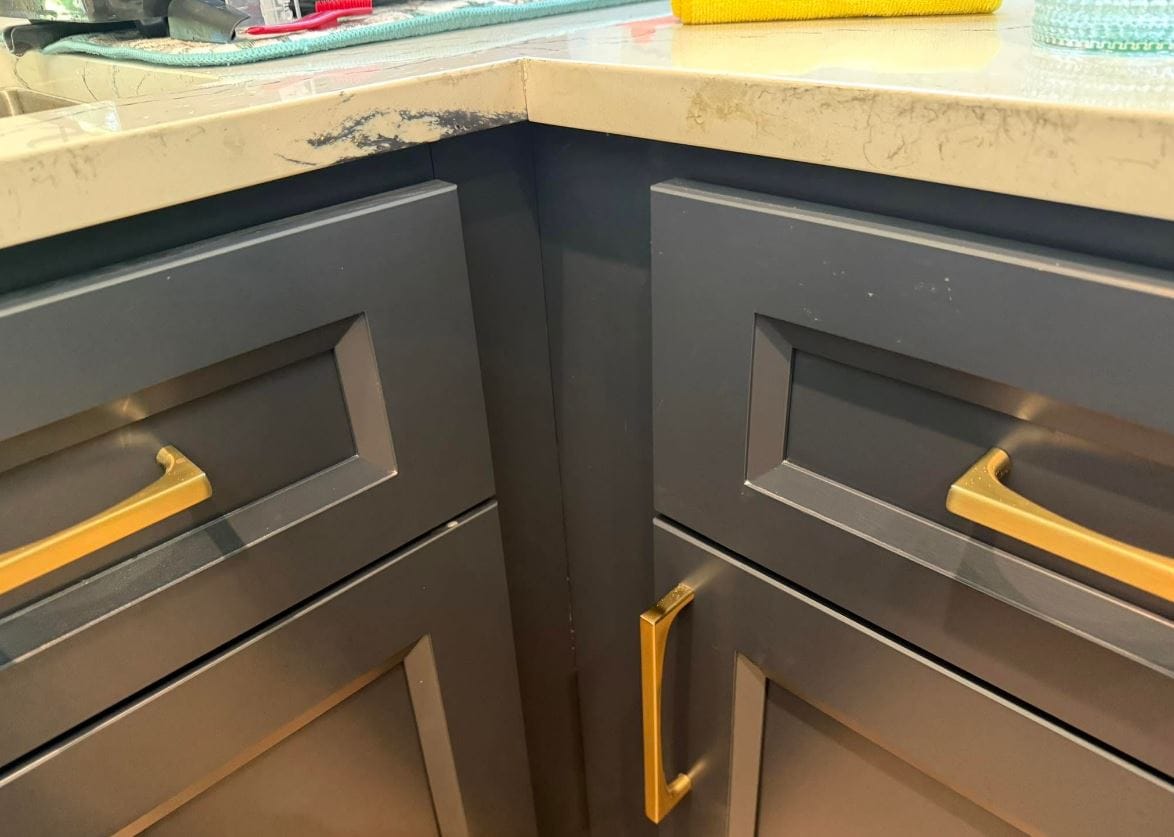
Quartz countertops dominate modern kitchen and bathroom design, celebrated for their seamless look and low-maintenance reputation. However, a persistent question lingers for homeowners considering this investment: Do quartz countertops scratch?
The short answer is: Yes, quartz countertops can scratch, but they are highly scratch-resistant. They are not scratch-proof. Understanding the distinction between resistance and proof is critical to preserving the flawless, factory-polished finish of your engineered stone for decades. This article provides a deep, technical analysis of quartz surface hardness, compares it to competing materials, identifies common culprits of damage, and delivers professional protocols for prevention and repair.
The Material Science of Quartz: Hardness vs. Toughness
To accurately answer the scratch question, we must first dismantle the “stone” illusion. Quartz countertops are engineered composites, typically composed of approximately 90-93% crushed natural quartzite crystals bound together by 7-10% polymer resins and pigments.
The Mohs Scale of Mineral Hardness
Scratch resistance in the stone industry is quantified using the Mohs Hardness Scale, a 1-to-10 ranking where talc is 1 and diamond is 10. A material can only be scratched by a substance with an equal or higher hardness rating.
- Natural Quartz Crystal: Registers a hardness of 7 out of 10 on the Mohs scale. This is harder than steel (a kitchen knife blade is typically 5.5–6).
- The Resin Achilles’ Heel: While the quartz crystals are hard, the binding polymer resin is a plastic. Resins register a hardness of approximately 2 to 3 on the Mohs scale. This creates a duality: you are not usually scratching the stone crystals themselves, but rather cutting through, gouging, or dulling the resin matrix that holds them, causing the crystals to dislodge or creating a visible “white” micro-fracture in the binder.
Professional Insight: When you see a “scratch” on a quartz countertop, you are almost always looking at damage to the resin, not a groove cut into the quartz mineral. This is why the scratch often appears white or light gray—it’s stressed polymer.
Scratch Resistance Comparison: Quartz vs. The Market
When ranking countertop materials, the term “scratch-proof” is a myth for all surfaces except diamond. The following table provides a comparative analysis based on industry hardness data and practical performance.
Countertop Hardness & Durability Comparison
| Material | Mohs Hardness (Approx.) | Scratch Resistance Profile | Metallurgical Interaction |
|---|---|---|---|
| Quartz (Engineered) | 7 (Aggregate) | High. Crystals resist steel. Resin is vulnerable to extreme lateral force, ceramics, and abrasive grit. Cannot withstand hot pans (thermal shock damages resin). | Steel knives will not typically scratch the quartz crystals but may leave metallic marks (see below). |
| Granite | 6 – 7 | High (Variable). Depends on mineral composition. Biotite-rich granites are softer. Quartz-rich granites rival engineered stone. | Generally impervious to knives, but unglazed porcelain tile bottoms can scratch polished surfaces. |
| Quartzite (Natural) | 7 – 8 | Extreme. Harder and more dense than engineered quartz. Resists scratches, etching, and heat far better. | Requires diamond tooling to scratch. True quartzite is incredibly unforgiving to blades. |
| Marble | 3 – 4 | Low. Scratches from a butter knife. The primary vulnerability is acid etching (chemical dulling), but physical abrasion is easy. | Metal tools and cutlery will immediately score the surface. |
| Soapstone | 2.5 – 4 | Very Low. Scratches with a fingernail pressure on unfinished edges. Scratches are part of the intended patina. | Easily scraped by utensils. Scratches can be sanded out or oiled over. |
| Solid Surface (Corian) | ~3 | Low to Moderate. Scratches easily because it is homogeneous acrylic/polyester. The saving grace is it can be buffed out completely with an orbital sander. | Cutlery and unglazed ceramics leave deep marks. |
| Laminate | < 3 | Negligible. The wear layer is thin plastic. Once breached, the paper core becomes exposed and swells. | Extremely vulnerable to abrasive scouring pads and knives. |
The Verdict: Engineered quartz sits in the premium tier of scratch resistance, outperforming marble and solid surfaces significantly but falling short of the diamond-like resilience of natural quartzite.
The 5 Hidden Enemies of Quartz Finishes (And How to Defeat Them)
If steel knives don’t generally scratch quartz, what does? The damage often comes from unexpected sources. Here is the forensic breakdown of quartz scratching culprits.
1. The Ceramic Kitchenware Paradox
Your coffee mug is your countertop’s worst enemy. Ceramic materials, especially unglazed ceramic rings on the bottom of dishware, are fired at extremely high temperatures and possess a hardness comparable to or exceeding 7 on the Mohs scale.
- The “Ring of Death”: Sliding a heavy ceramic crock pot or a stoneware plate across the surface traps microscopic quartz dust between the object and the resin. This acts as a lapping compound, creating a hazy, dull “wear pattern.”
- Prevention: Do not slide ceramic objects. Lift and place.
2. Metallic Marks (False Positives)
This is the most common service call for “scratches” that are not actually structural damage. When a softer metal (aluminum, silver, or stainless steel) is dragged against a harder quartz crystal, the quartz acts like a file and shears off a microscopic layer of the metal.
- The Diagnosis: It looks like a gray or black scratch. If you run your fingernail over it and you cannot feel a groove, it is a metal mark, not a scratch.
- The Fix: A simple application of a non-abrasive cream cleanser (like Bar Keepers Friend) and a damp microfiber cloth will dissolve the metal deposit.
3. The Abrasive 3D Pad
Cleaning with melamine foam sponges (Magic Erasers) technically does not “scratch” in the grooved sense, but these are fine sanding blocks. Over-repeated use, they can microscopically abrade the resin polish, leaving a permanent dull stain-magnet area where the gloss level differs.
4. Diamonds and Corundum
Jewelry containing diamonds (hardness 10) or sapphires/rubies (corundum, hardness 9) will definitively cut into a quartz surface. A diamond ring scraping against the edge while wiping is a classic cause of a permanent, deep groove.
5. Construction Dust and Grit
Post-installation or renovation dust often contains silica sand (quartz) and concrete particles. Walking these particles across the floor and then dragging boxes across the counter effectively sandblasts the polish.
Preventive Maintenance: The Quartz Preservation Protocol
Quartz is unforgiving to repair but easy to protect. Adhere to these strict protocols to maintain the factory gloss level.
| Risk Action | Recommended Protocol | Technical Rationale |
|---|---|---|
| Food Preparation | Always use a cutting board. Never chop directly on the surface. | Confines the “tool-to-surface” interface to a sacrificial barrier. It is not about dulling knives; it is about isolating lateral grit. |
| Cleaning Spills | Use pH-neutral stone cleaner or soapy water with a microfiber cloth. | Microfiber traps particles without dragging them across the surface, preventing rotational scratches. |
| Appliance Movement | Install stick-on felt pads on the bottom of all countertop appliances (coffee makers, stand mixers). | Ceramic or rough plastic feet act as constant grinding points during vibration and routine sliding. |
| Utensil Storage | Use countertop utensil crocks with soft liners or silicone mats. | Prevents the “drop and drag” impact of stainless steel tools on the edge profile. |
| Heat Protection | Mandatory use of trivets. | Although we are discussing scratches, thermal shock causes resin cracks that feel like scratches and compromise structural integrity. |
Restoration Science: Can You Buff Out a Scratch?
Repairability depends entirely on the finish type:
- Polished (Glossy) Finish: Professional repair is strongly recommended. The glossy surface is achieved at the factory using massive, multi-head diamond grit polishers under extreme pressure. A DIY patch job using a random orbital sander will almost always create a “dish-out” effect—a wavy, uneven depression that ruins the mirror-like reflection. Professionals use specific diamond grit sequences up to 3000 grit and often seal the area with a color-matched resin hardener.
- Honed (Matte) Finish: DIY-friendly. The matte texture is more forgiving. A gentle scouring with a green Scotch-Brite pad can often blend out a light scratch by uniformly scattering light reflection. For deeper scratches, a hand-block with 220-grit diamond sandpaper, followed by a higher grit, usually restores the suede-like feel seamlessly.
For Deep, Pitted Scratches:
A qualified stone fabricator can perform a “chip fill.” This involves:
- Cleaning the groove with acetone.
- Applying a color-matched, two-part acrylic or epoxy resin.
- Allowing it to cure under heat.
- Shaving the excess with a razor blade (not sanding, to preserve the adjacent polish).
FAQ: Debunking Quartz Scratch Myths
Q: Is quartz harder than granite regarding scratches?
A: They are technically in the same hardness class (Mohs 6-7). However, engineered quartz offers a more uniform scratch resistance. Granite is porous and contains fissures and soft biotite mica spots that can be unpredictably weak; quartz’s engineered uniformity eliminates these weak spots, though its resin remains chemically softer than granite’s calcite veins.
Q: Can a razor blade scratch quartz?
A: No. A standard utility blade steel is too soft to scratch the quartz crystal. However, dragging a razor blade loaded with dried glue or paint can pick up silica dust particles that will scratch the resin. Use plastic scrapers where possible.
Q: Are lighter quartz colors more susceptible to showing scratches?
A: No, the susceptibility is identical. However, dark colors (black, navy) show light-colored resin damage and metallic marks much more visibly due to contrast. White marble-look quartz hides micro-scratches remarkably well.
The Final Verdict
Investing in quartz is a decision to balance luxury aesthetics with practical longevity. The material possesses a military-grade defense against standard kitchen steel, rendering it functionally scratch-safe for daily slicing and food prep mistakes that would ruin marble instantly.
However, it is a polymer-matrix composite. It demands respect for abrasive ceramics, sharp grit, and thermal boundaries. By understanding that you are caring for a hybrid of stone and plastic, and by enforcing a strict regimen of cutting boards and protection pads, your quartz surface will remain optically flawless and heirloom-grade for the lifespan of your home.