Will Touch Up Paint Prevent Rust? The Definitive Technical Guide
The short answer is yes, touch-up paint can effectively prevent rust—but only when applied correctly and under the right conditions. This article provides a comprehensive, technically-grounded analysis of when and how touch-up paint protects against corrosion, its limitations, and how it compares to professional repairs.
The Corrosion Mechanism: Why Touch-Up Paint Matters
Understanding why touch-up paint works begins with the corrosion process itself. Modern automotive paint systems consist of multiple layers: an electrodeposition primer for adhesion and corrosion resistance, a base coat providing color, and a clear coat for UV protection and gloss .
When a rock chip penetrates these layers to expose bare steel, the protective barrier is compromised. Moisture, oxygen, and road salts initiate electrochemical corrosion. Left untreated, even a small chip can develop into “rust creep”—corrosion spreading beneath adjacent paint layers, transforming a minor cosmetic issue into a significant structural repair costing hundreds or thousands of dollars .
Touch-up paint serves as a moisture barrier, sealing exposed metal from environmental contaminants .
When Touch-Up Paint Prevents Rust: The Decision Framework
Not every scratch requires touch-up. Use this technical assessment guide:
Cost-Benefit Analysis
The economic case for touch-up paint is compelling for appropriate damage:
Correct Application Procedure for Rust Prevention
Following proper technique is essential. Incorrect application can trap moisture and accelerate corrosion .
Step 1: Paint Code Identification
Obtain the vehicle’s exact paint code from the driver’s door jamb sticker or VIN lookup. “Eyeballing” color match inevitably fails .
Step 2: Surface Preparation
- Thoroughly wash and dry the area
- Clean with isopropyl alcohol using a Q-tip for precision
- If rust is present (orange/brown discoloration), it must be removed with 800-grit sandpaper before any paint application
Step 3: Primer Application (Critical for Rust Prevention)
Never apply color paint directly to bare metal. Use a dedicated primer surfacer first . Primer provides adhesion and an additional corrosion barrier. Allow to cure per manufacturer specifications.
Step 4: Color Application
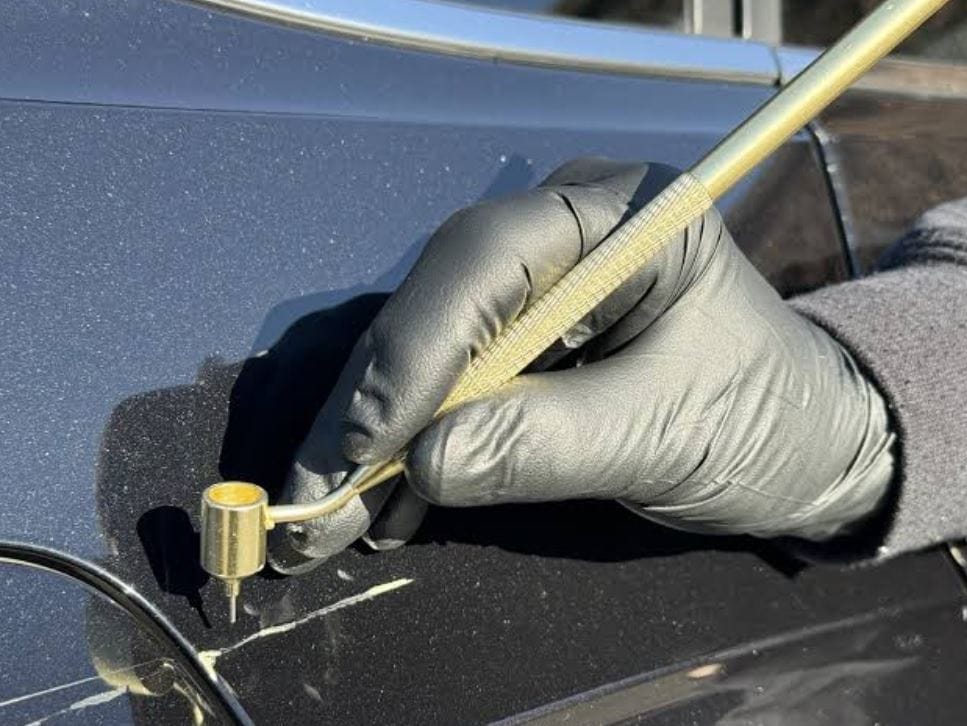
Apply thin, layered coats using a fine brush or specialized touch-up needle rather than the pen tip for better control . Blot rather than brush for precision . Allow each layer to dry before applying the next.
Step 5: Clear Coat
Apply a clear topcoat to seal the repair and provide UV protection .
Product Selection: What to Look For
Select products specifically formulated for rust prevention:
Caution: Paint pens or kits lacking clear coat may offer only temporary protection, as UV exposure will degrade the repair over time .
Limitations and Warnings
Touch-up paint is not a universal solution. Be aware of these critical limitations:
- Existing Rust: Touch-up paint applied over active rust will not stop corrosion . Rust must be mechanically removed first.
- Cosmetic Expectations: Touch-up paint cannot replicate factory-sprayed, baked-on finishes. “Touch-up paint protects but does not beautify” . It will remain visible upon close inspection.
- Lease Vehicles: DIY touch-up on leased vehicles can result in “poor-quality repair” penalties at inspection. Consult your lease agreement first .
- Metallic and Pearl Finishes: These are exceptionally difficult to match with touch-up due to metallic flake orientation differences .
- Professional Repair Implications: Thick, sloppy touch-up adds labor costs when professional repainting is eventually required, as it must be sanded out .
Frequently Asked Questions
Q: Will touch-up paint stop existing rust from spreading?
No. Touch-up paint applied over active rust will trap moisture and accelerate corrosion. All rust must be removed mechanically before any paint application .
Q: How long does it take for rust to develop on an exposed chip?
Bare metal can begin corroding within weeks in humid or salt-exposed environments. Prompt treatment is recommended .
Q: Can I skip primer on bare metal?
No. Primer provides essential corrosion resistance and adhesion. Skipping primer significantly increases the risk of future rust development .
Q: How can I make touch-up paint look better?
Use thin layers, allow proper curing time, apply clear coat, and consider wet sanding and polishing after complete cure (typically one week) .
Q: Will touch-up paint match my factory paint exactly?
Rarely. Original paint fades over time due to UV exposure. Even the correct paint code will appear slightly different .
Q: Is professional touch-up ever better than DIY?
Yes. Mobile SMART repair services ($150–$500) offer better color matching, proper feathering, and clear coat application—results superior to DIY while costing less than full panel repainting .
Q: What size damage warrants professional repair?
Generally, damage larger than a quarter in size, clustered multiple chips (“road rash”), or damage to metallic/pearl finishes justifies professional attention .
Q: Do I need clear coat over touch-up paint?
Yes. Clear coat provides UV protection and seals the repair. Touch-up without clear coat will fade and degrade more rapidly .
Q: Can I use any paint on my car’s metal surface?
No. Use only automotive-grade touch-up paint matched to your vehicle’s paint code. Generic paints lack corrosion inhibitors and proper adhesion properties .
Summary
Touch-up paint is an effective rust prevention method for small, isolated chips and scratches that have penetrated to bare metal—provided proper application techniques are followed including rust removal (if present), primer application, and clear coat sealing. It serves as a protective measure first and a cosmetic improvement second. For larger damage, existing rust, or complex finishes, professional intervention is recommended to prevent accelerated corrosion and ensure long-term protection.