The Comprehensive Guide to Honeysuckle Aphids (Hyadaphis tataricae)
Introduction
The honeysuckle aphid (Hyadaphis tataricae) is a significant invasive pest that poses a serious threat to the aesthetic and overall health of honeysuckle shrubs and vines across North America. First detected in Quebec in 1976 and subsequently in Illinois in 1981, this European species has since spread rapidly, becoming a primary concern for horticulturists, landscapers, and home gardeners alike . Unlike many other aphid species that primarily cause cosmetic damage, the honeysuckle aphid introduces a toxin during feeding that fundamentally alters the plant’s growth patterns, leading to distinctive and unsightly deformities .
Understanding the biology, life cycle, and management strategies for this pest is crucial for effective control and the preservation of ornamental and native honeysuckle plantings. This comprehensive guide serves as a definitive resource for identifying, managing, and preventing honeysuckle aphid infestations.
Identification and Biology
Physical Description
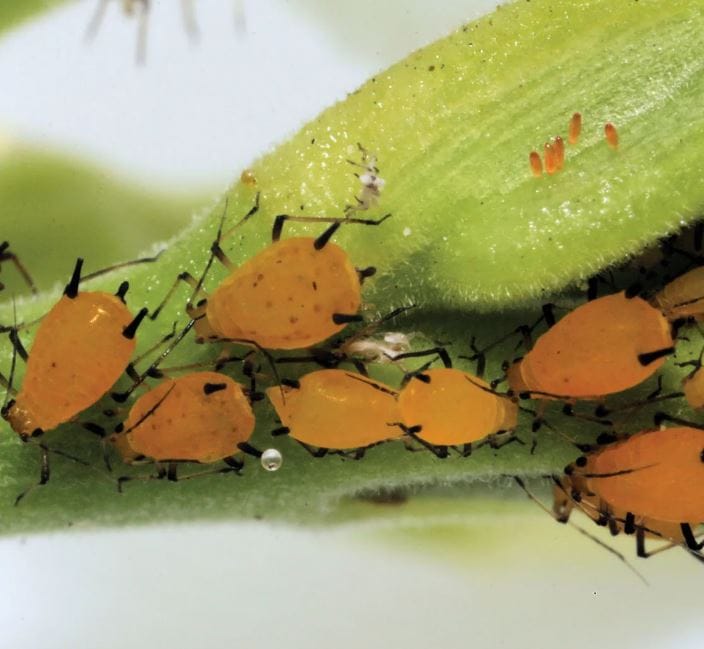
The honeysuckle aphid is a diminutive insect, typically measuring less than 2 millimeters in length, making it easy to miss during routine plant inspections. Its small size and pale coloration allow it to blend in with the plant tissues it infests, requiring close observation for detection.
Life Cycle and Reproductive Strategy
The honeysuckle aphid exhibits a complex life cycle characterized by both asexual and sexual reproduction, ensuring rapid population growth and overwintering survival .
- Overwintering: The cycle begins with eggs laid in the fall on the branches and buds of previously infested honeysuckle. Up to 90% of these eggs are deposited on the deformed tissue of witches’ brooms .
- Spring Hatching: As new leaves emerge in early spring, these eggs hatch into “stem mothers” . A critical point is that all aphids emerging from these eggs are wingless females capable of asexual reproduction—they give birth to live young without mating .
- Asexual Reproduction: Throughout the spring and summer, several generations of these wingless females are produced, each capable of producing more live offspring in a process known as telescoping generations . This leads to an explosive increase in the aphid population.
- Sexual Reproduction: As day lengths shorten and temperatures cool in late summer and early fall, sexual forms are produced: winged males and wingless females . These individuals mate, and the females then deposit the overwintering eggs on the host plant, completing the cycle.
Damage and Symptoms
The “Witches’ Broom” Effect
The most characteristic and damaging symptom of a honeysuckle aphid infestation is the formation of “witches’ brooms.” This is not merely a result of sap-feeding. When the aphid feeds, it injects a toxin or a plant growth regulator into the plant tissues via its saliva .
This salivary secretion causes a series of malformations:
- Stunted and Curled Leaves: Feeding on new leaves causes them to fold upward along the midvein, creating a protective pocket or pouch for the aphids, making them difficult to treat with contact insecticides .
- Shortened Shoot Tips: The toxins stunt the elongation of branch tips .
- Proliferation of Dormant Buds: The hormonal disruption forces dormant buds to grow, creating a dense, unsightly cluster of many small, weakened branches from a single point . This is the classic “witch’s broom” (Figure 1).
Secondary Damage
While the witches’ brooms are aesthetically unappealing, the damage extends beyond appearances:
- Reduced Vigor: The repeated formation of these abnormal growths siphons energy from the plant, reducing its overall vigor and vitality .
- Frost Injury: The dense, unnatural growth produced in witches’ brooms is often less hardy and susceptible to early frost damage, which can cause premature dieback .
- Premature Leaf Drop: Leaves on affected branches often turn brown and die in autumn before the rest of the shrub’s foliage changes color .
- Honeydew and Sooty Mold: Like other aphids, the honeysuckle aphid excretes honeydew, a sticky, sugary substance. This can coat leaves and attract other insects and can lead to the growth of unsightly black sooty mold, further diminishing the plant’s appearance and its ability to photosynthesize .
Host Plants
The primary host plants for Hyadaphis tataricae are various species of honeysuckle. The pest shows a preference for certain species over others.
Integrated Pest Management (IPM) Strategies
Effective management of the honeysuckle aphid requires a multi-pronged approach that combines cultural, biological, and chemical controls, known as Integrated Pest Management (IPM).
Cultural Control
Cultural controls are the first line of defense and focus on preventing infestations and reducing pest populations through horticultural practices.
1. Pruning:
This is the single most effective non-chemical method for managing honeysuckle aphids.
- Timing: Prune during the dormant season (late winter to early spring, before bud break) . This removes the overwintering eggs.
- Method: Cut out all witches’ brooms and visibly infested branches, cutting at least 6 inches below the deformity to ensure all damaged tissue and eggs are removed .
- Disposal: Destroy the pruned material by sealing it in a plastic bag and disposing of it with trash. Do not add it to a compost pile, as the eggs may survive .
2. Plant Selection and Resistant Varieties:
The most sustainable strategy is prevention. Select honeysuckle varieties known to be resistant to the aphid. Some recommended resistant cultivars include:
3. Water and Fertilizer Management:
Aphids are attracted to succulent, new growth. Avoid practices that encourage this type of growth, which can be a magnet for infestations .
- Avoid Over-fertilization: Do not over-fertilize with nitrogen-heavy fertilizers, as these stimulate rapid, tender shoot development that is highly susceptible to aphid damage .
- Proper Watering: Maintain proper watering practices; avoid overwatering, which can also contribute to excessive new growth .
Biological Control
Natural predators and parasitoids play a role in suppressing aphid populations, though they are often not sufficient to prevent the aesthetic damage caused by honeysuckle aphids, especially once witches’ brooms have formed and protect the aphids . Encouraging beneficial insects can be a valuable component of a broader IPM strategy.
- Natural Predators:
Chemical Control
Chemical interventions should be considered a last resort or part of a targeted management strategy, particularly for severe infestations or valuable specimens. The choice of insecticide and its application method are critical for efficacy and environmental safety.
Application Methods:
- Foliar Sprays: Apply in the spring when new leaves are first emerging, before the aphids have begun feeding and causing leaves to curl . Once leaves are folded, they protect the aphids, making foliar sprays ineffective.
- Systemic Insecticides (Soil Drenches/Injection): This is often the most effective chemical approach, especially for late-season infestations. The insecticide is absorbed by the roots and translocated throughout the plant, killing aphids within the protective curled leaves .
- A 2025 study highlighted the efficacy of a single early-season root drench with thiamethoxam or imidacloprid, which provided control efficacy of 71.77% to 100% from 7 to 28 days after application .
- The same study also noted that careful attention must be paid to harvest intervals and Maximum Residue Limits (MRLs) for honeysuckle grown for medicinal or culinary purposes to ensure food safety .
Comparison of Common Chemical Treatments
Important Application Note for Pollinator Safety: If using any insecticide, always apply after the honeysuckle has finished blooming to protect visiting pollinators . Apply systemic drenches at times of day when pollinators are less active.
Resistance Management
To prevent the development of insecticide-resistant aphid populations, integrate the following practices:
- Rotate Insecticides: Do not use the same active ingredient (e.g., always using imidacloprid) for consecutive generations or years. Rotate between different modes of action.
- Combine Strategies: Use cultural and biological controls alongside chemical ones. Pruning to remove overwintering eggs reduces the initial population that will need to be controlled .