A Cleaner Home, A Clearer Mind: How Structure and Smart Decisions Improve Daily Life

A clean home is often associated with comfort and appearance, but its impact runs much deeper. The way a space is maintained influences how people think, focus, and make decisions. In many cases, the difference between feeling overwhelmed and feeling in control begins with the environment itself.
More people are starting to recognize that cleanliness is not just about tidiness, it is about structure. And structure, when applied consistently, has the ability to shape not only daily routines but also broader patterns of behavior, including how decisions are made.
The Connection Between Environment and Focus
Clutter introduces friction. It slows down movement, distracts attention, and creates a subtle sense of disorder that can be difficult to ignore. Even when it is not consciously acknowledged, it affects how efficiently tasks are completed.
A clean and organized space removes that friction. It creates clarity, both physically and mentally. Tasks become easier to start and complete, and attention can be directed more effectively.
This is why maintaining a consistent cleaning routine is not just a matter of discipline, it is a tool for improving overall productivity. When the environment supports focus, decision-making becomes more deliberate rather than reactive.
The Psychological Benefits of Order
The impact of a clean space extends beyond physical convenience. It directly influences mental well-being.
According to the National Institutes of Health, organized environments are associated with reduced stress levels and improved cognitive function. When surroundings are orderly, the brain processes information more efficiently, leading to clearer thinking and better decision-making.
This is particularly relevant in environments where multiple responsibilities need to be managed simultaneously. A structured space reduces background noise, making it easier to focus on what matters.
From Physical Structure to Mental Clarity
There is a natural progression from external order to internal clarity. When daily routines are supported by a well-maintained environment, individuals are more likely to approach tasks with intention rather than urgency.
This shift has a noticeable effect on how decisions are made. Instead of reacting to immediate pressures, there is more space to evaluate options, consider outcomes, and act with purpose.
Over time, this creates a pattern. Small, structured actions reinforce each other, leading to a more stable and predictable routine.
Applying Structure Beyond the Home
The same principles that make a home more efficient can be applied to other areas of life. Decision-making, in particular, benefits from structure.
In complex environments, whether personal or professional, unstructured decisions often lead to inconsistency. Without a clear framework, it becomes difficult to evaluate options objectively.
This is why many individuals turn to tools that provide a structured approach to analysis. Platforms like Vector Vest are designed to support this process, offering insights that help users compare different strategies and understand how approaches like swing trading and day trading differ in terms of timing, risk, and engagement.
While the context may be financial, the underlying principle is the same: better structure leads to better decisions.
Building Systems That Save Time
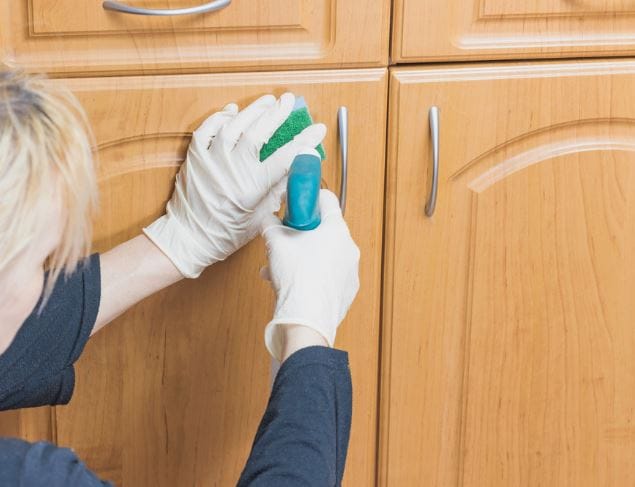
Cleaning is often viewed as a repetitive chore, but it becomes significantly more manageable when approached as a system rather than a series of isolated tasks.
Instead of waiting for a mess to accumulate, structured routines distribute effort over time. This reduces the intensity of any single cleaning session and makes maintenance more sustainable.
Practical tools also play an important role in this process. Solutions like SweepScrub are designed to streamline cleaning tasks, allowing individuals to maintain consistency without excessive time investment. When the process becomes more efficient, it is easier to keep spaces in a state that supports daily activity.
The Role of Consistency
Consistency is what connects all of these elements. A clean home is not the result of occasional effort, but of repeated, manageable actions. Similarly, effective decision-making is not based on isolated moments of clarity, but on the consistent application of a structured approach.
This does not require perfection. It requires reliability. Small, consistent actions create a foundation that supports larger outcomes.
Reducing Friction in Daily Life
Image by myasiavision on Freepik
One of the most valuable benefits of structure is the reduction of friction. When systems are in place, whether for cleaning, organizing, or decision-making, less energy is spent on figuring out what to do next.
This creates a sense of flow. Tasks move forward more smoothly, decisions are made with greater confidence, and time is used more effectively.
In a world where demands are constantly competing for attention, reducing friction becomes a meaningful advantage.
A More Intentional Way of Living
Ultimately, the goal is not just to maintain a clean space or make better decisions in isolation. It is to create a lifestyle where different elements support one another.
A well-maintained home supports focus. Clear thinking supports better decisions. Better decisions contribute to more efficient routines. Over time, these connections reinforce each other, creating a system that feels both stable and adaptable.
The relationship between environment and decision-making is often underestimated. Yet, it is one of the most consistent patterns observed in daily life. When surroundings are structured, actions tend to follow that structure.
By approaching cleaning as a system, investing in tools that support efficiency, and applying the same principles of structure to decision-making, it becomes possible to create a more balanced and effective routine.
A cleaner home does more than improve appearance. It creates the conditions for clarity, focus, and better choices. And in the long run, those choices are what shape the quality of everyday life.