How to Deep Clean Your Home Before Moving Out: Room-by-Room Checklist
Moving out of a home — whether it’s a rental apartment or a house you’ve owned for years — comes with one universal chore: cleaning. Not the quick weekend tidy-up, but the deep, behind-the-fridge, inside-the-oven, baseboards-and-all kind of clean that makes the place look like nobody ever lived there.
For renters, this cleaning directly affects your security deposit. Most landlords in Maryland, Virginia, and other states deduct cleaning fees if the unit isn’t returned in move-in condition. For homeowners selling a property, a clean home photographs better, shows better, and sells faster.
The trick is doing it in the right order — and starting before the movers arrive, not after.
Start With the Rooms You’ve Already Packed
Once a bedroom or office is boxed up and empty, clean it immediately. Waiting until the entire house is packed means you’re rushing through every room on the last day. An empty room takes 30–45 minutes to deep clean. A room full of boxes and furniture? Three times as long, and you’ll miss spots.
Work from the back of the house to the front. Clean the farthest bedroom first, then move forward toward the kitchen and entryway — the last areas you’ll use before walking out.
Kitchen Cleaning Checklist
The kitchen takes the longest and matters the most — landlords inspect it closely.
Oven and Stovetop
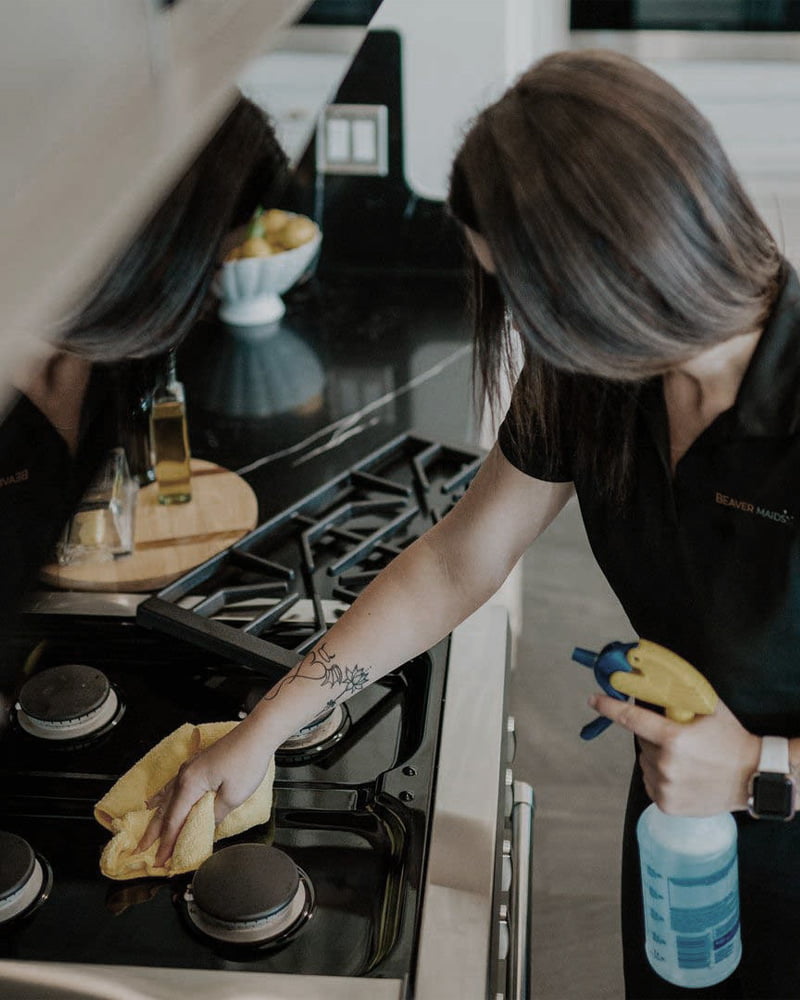
Remove racks, soak in hot soapy water. Spray the oven interior with a baking soda paste, let it sit for 2 hours, then wipe clean. Clean burner grates and drip pans. Wipe the exterior and control panel.
Refrigerator
Empty completely. Remove shelves and drawers, wash in warm soapy water. Wipe interior walls with a baking soda solution. Pull the fridge away from the wall and vacuum the coils and floor underneath — this is where landlords find the worst surprises.
Dishwasher
Run an empty cycle with a cup of white vinegar on the top rack. Wipe the door edges and rubber gasket where grime collects.
Cabinets and Drawers
Empty all cabinets and drawers. Wipe interior surfaces. Pay attention to shelf liner — replace it or remove it cleanly. Check the tops of upper cabinets — grease and dust accumulate there for years.
Sink and Countertops
Scrub the sink basin and faucet. Clean the garbage disposal by running ice cubes and lemon peels. Wipe all countertop surfaces including the backsplash.
Bathroom Deep Clean
Bathrooms are the second most inspected area during move-out.
Toilet: Clean inside the bowl with a brush and cleaner. Wipe the exterior, base, and behind the tank. Many people forget behind the toilet — landlords don’t.
Shower and tub: Scrub tile grout with a baking soda paste and old toothbrush. Remove any caulk mildew with a bleach solution. Clean the showerhead by soaking it in vinegar for 30 minutes. Wipe glass doors with a squeegee and glass cleaner.
Vanity and mirror: Clean the mirror streak-free. Wipe the vanity surface, faucet, and inside the cabinets. Check under the sink for any forgotten items or water damage.
Exhaust fan: Remove the cover and wash it. Vacuum dust from the fan blades. This is an overlooked detail that signals thorough cleaning.
Living Areas and Bedrooms
Walls: Wipe scuff marks with a damp Magic Eraser. Fill small nail holes with spackle and touch up paint if you have the matching color. Remove all hooks, nails, and adhesive strips.
Baseboards: Wipe every baseboard in every room. Dust settles here and it’s one of the first things an inspector notices.
Windows: Clean inside glass and window sills. Wipe window tracks — a cotton swab works for the narrow channels. If you have blinds, wipe each slat or dust with a microfiber cloth.
Closets: Vacuum or sweep the floor. Wipe the shelf and rod. Remove any hangers you’re not taking.
Floors: Vacuum all carpeted areas. For hardwood or tile, sweep then mop with the appropriate cleaner. Move slowly — a quick mop leaves streaks and misses corners.
Timing Your Clean Around the Move
The ideal sequence: pack a room, clean it, close the door. By moving day, most rooms are already done. After the movers leave with the last load, you only need to clean the kitchen, the final bathroom, and do a quick sweep of the entryway.
If you’re hiring professional movers — and most families in the DC, Maryland, and Virginia area do — coordinate the cleaning schedule with their arrival time. For example, families moving out of communities in Montgomery County often work with local teams like Pro100Movers in Germantown, MD who can have the house emptied by noon, leaving the afternoon free for final cleaning.
Commonly Missed Spots
Even thorough cleaners miss these areas consistently:
Light fixtures and ceiling fan blades. Dust accumulates on top of blades and inside glass fixtures. Remove globes, wash them, and wipe blades with a damp cloth.
Inside the garage. Sweep the floor, wipe shelves, remove oil stains with cat litter or a degreaser. Most landlords include the garage in their inspection.
The laundry area. Pull the washer and dryer away from the wall. Clean behind and underneath — lint buildup is a fire hazard and an inspection fail point.
Air vents and return registers. Unscrew the covers, wash them in the sink, and vacuum inside the duct opening. Yellow or gray buildup around vents is immediately visible.
The front porch or balcony. Sweep, wipe railings, remove any personal items. First impressions matter — even on the way out.
Mailbox interior. Open it, wipe it, remove any old mail. Small detail, but it shows attention.
Final Walkthrough
Before handing over the keys, do your own walkthrough. Open every door, every cabinet, every closet. Check every light switch and outlet cover for scuffs. Flush every toilet. Run every faucet. Look at the home from the landlord’s perspective — what would you notice?
Take photos of every room after cleaning. If there’s ever a dispute about the condition, timestamped photos are your proof. This takes five minutes and can save you hundreds in deposit disputes.
A clean move-out isn’t just about getting your money back. It’s about leaving well — the kind of exit that earns you a good reference and lets you close that chapter without looking back.