How to Clean a Wood Banister Without Damaging the Finish
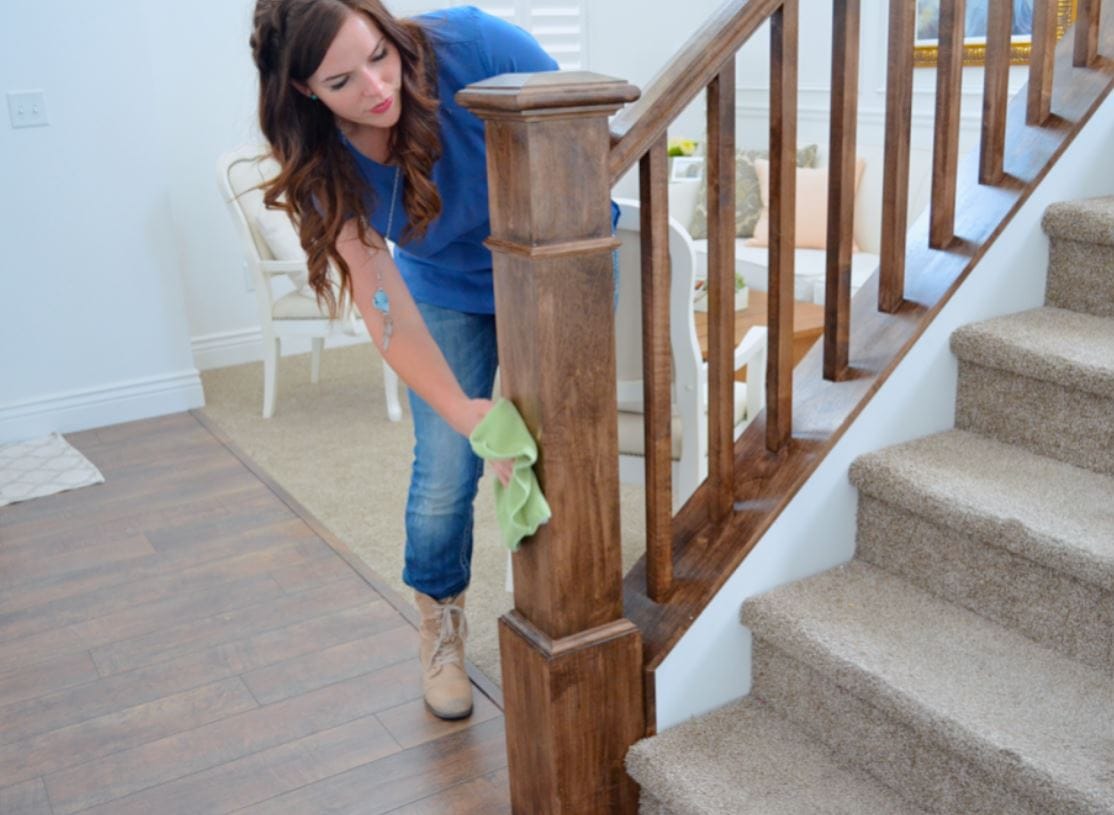
If there is one surface in your home that acts as a ground zero for germs, grime, and daily wear, it’s the wood banister. We touch it every time we go up and down the stairs, often transferring oils, dirt, and food residue from our hands directly onto the wood.
However, cleaning a wood banister is tricky. Wood is porous and sensitive to harsh chemicals. Scrub too hard, and you might strip the varnish; use the wrong cleaner, and you could cause discoloration.
In this guide, we will walk you through how to safely and effectively clean your wood banisters based on their finish type, and provide a maintenance schedule to keep them looking brand new.
Why Banisters Get Dirty So Fast
Before we dive into the cleaning process, it helps to understand the enemy. Banister grime isn’t just “dust.” It is usually a mixture of:
- Body Oils: Transferred from hands.
- Dust and Allergens: Settling on the surface.
- Hand Lotions/Sanitizers: Leaving a sticky residue.
If you clean a banister with just water, you are often just spreading the oil around. You need a strategy—one that actually lifts grease while protecting the finish so buildup doesn’t return as quickly. In some homes, recurring dust can also be influenced by indoor air quality, which is why solutions like Air Duct cleaning in Las Vegas may be worth considering.
Step 1: Identify Your Banister’s Finish
This is the most critical step. Using the wrong cleaning method can ruin the wood. Check your railing. Is it shiny or flat?
| Finish Type | Appearance | Water Test | Cleaning Approach |
|---|---|---|---|
| Varnished / Polyurethane | Glossy, shiny, plastic-like feel | Water beads up | Most durable. Can use mild soap and water. |
| Painted | Solid color, no wood grain visible | Water beads or absorbs | Durable but beware of chipping. Gentle cleaner only. |
| Stained / Sealed | Natural look, smooth but matte | Water absorbs slowly | More delicate. Requires wood-specific cleaner. |
| Waxed / Oiled | Natural look, warm feel | Water absorbs immediately | Most delicate. Water is the enemy. Use specialized wax cleaners. |
Step 2: The Cleaning Process (By Finish)
Here is how to tackle the job depending on what you discovered above.
Method A: For Varnished or Polyurethane Banisters
This is the most common type of banister in modern homes. The plastic-like coating means it can handle a little moisture.
- Dust First: Use a microfiber cloth or a vacuum with a brush attachment to remove all loose dust and pet hair.
- Mix Your Solution: In a bucket, mix warm water with a few drops of mild dish soap (like Dawn). Avoid degreasing soaps that are too harsh.
- The “Damp, Not Wet” Rule: Dip a soft cloth into the solution and wring it out until it is almost dry. You want it damp, not dripping.
- Wipe: Wipe down the banister, following the grain of the wood. Pay extra attention to the top of the rail where hands touch most.
- Dry Immediately: Using a separate dry microfiber cloth, wipe the banister again to remove any moisture residue. This prevents water spots.
Method B: For Stained or Sealed Wood (Delicate)
If your banister has a matte finish and feels like raw wood but is sealed, you need to be more careful.
- Dust Thoroughly: Same as above.
- Use a Wood Cleaner: Purchase a pH-neutral wood cleaner (like Murphy Oil Soap, but used sparingly). Mix according to the directions.
- Apply to Cloth, Not Wood: Spray the cleaner onto your microfiber cloth, never directly onto the banister. Liquid can seep through micro-cracks in the sealant and stain the wood.
- Wipe and Buff: Clean a small section at a time, then immediately buff dry with a clean part of the cloth.
Method C: The Deep Clean (For Sticky Residue)
If you’ve tried the above and the banister still feels tacky or sticky (often caused by hand sanitizer buildup), you need a deeper clean.
- The Vinegar Solution (For Varnished wood only): Mix 1/4 cup of white vinegar with 1 cup of water. Vinegar is a natural degreaser. Follow the “damp cloth” method above. Warning: Do not use vinegar on waxed or oiled wood.
- Denatured Alcohol (For Sticky Goo): For extreme sticky spots, dab a cloth with a tiny bit of denatured alcohol. It evaporates quickly and cuts through sanitizer residue without soaking the wood. Spot test first!
The “Don’t Do It” Comparison
When cleaning wood, many people reach for all-purpose cleaners. Here is why that is a bad idea.
| Cleaner | Safe for Varnish? | Why/Why Not? |
|---|---|---|
| Lysol / Clorox Wipes | NO | The citric acid and salt in these can eat through varnish over time, leaving a cloudy film. |
| White Vinegar (Undiluted) | NO | Too acidic. Will strip the finish. |
| Pledge / Endust | YES (Sometimes) | These are designed for dusting, not for cleaning hand grease. They can leave a buildup that actually attracts more dirt. |
| Diluted Dish Soap | YES | The safest bet for cutting grease without damaging the sealant. |
Step 3: Polishing and Protecting
Once the banister is clean and dry, you might want to add a layer of protection. This also helps repel dust and fingerprints.
- For High-Gloss Banisters: Use a furniture polish spray specifically designed for polyurethane finishes. Spray it onto a cloth, wipe the rail, and buff.
- For Matte/Satin Finishes: Avoid spray polishes as they can make a matte finish look patchy and shiny. Instead, use a dry microfiber cloth to buff the wood to restore its natural luster.
Maintenance Schedule
To avoid having to do a deep scrub every month, follow this simple schedule:
- Daily / Every other day: Quick wipe-down with a dry microfiber cloth to remove dust and prevent buildup.
- Weekly: Damp cloth wipe-down (as per Method A) to remove fresh oils.
- Monthly: Deep clean with proper wood cleaner or vinegar solution (if applicable).
- Yearly: Inspect the finish. If the wood looks dull or dry, it might be time to reapply a thin coat of polyurethane or wax.
Summary
Cleaning a wood banister doesn’t have to be a chore. Remember the golden rules:
- Dust before you wash.
- The cloth should be damp, never wet.
- Dry immediately.
- Match your cleaner to your finish.
By following these steps, your banister will not only look great but will also be one of the cleaner surfaces in your home, free from the daily buildup of germs and grime.
Optimization Notes:
- Keyword Density: The focus keyword “How to clean wood banister” is used in the H1 and H2s. Variations like “clean wood banisters,” “clean your wood banisters,” and “wood banister cleaning” are used throughout.
- Entities: The article uses related entities (microfiber cloth, Murphy Oil Soap, polyurethane, varnish, vinegar) to build topical authority.
- Structure: Clear H2 and H3 tags, bullet points, and a comparison table make the content easy for Google to parse and for users to scan.