Can Brass Screws Rust? The Definitive Guide to Corrosion and Brass Fasteners
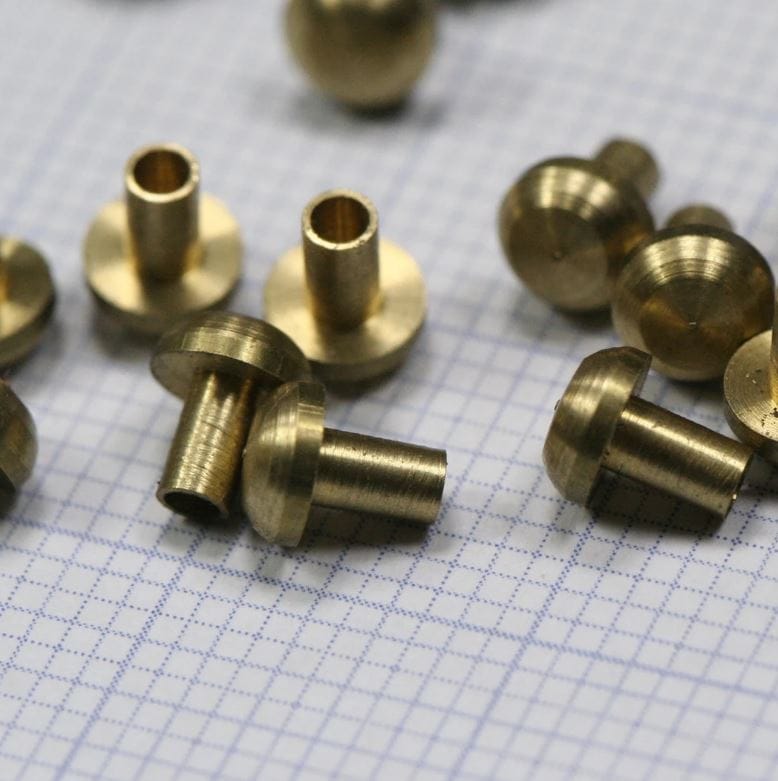
When selecting fasteners for marine carpentry, architectural restoration, or outdoor furniture, a common question arises: Can brass screws rust? The short, chemically accurate answer is no—technically, brass does not rust. However, the practical reality is far more nuanced. A brass screw can absolutely fail due to a destructive process that looks identical to rust, known as dezincification, and it can also play a dangerous role in galvanic corrosion.
This guide dissects the metallurgical properties of brass, the difference between rust and tarnish, and the specific conditions that cause brass fasteners to deteriorate.
1. The Critical Distinction: Rust vs. Corrosion
To understand why brass cannot rust, you must first understand the definition of rust. In engineering terms, the word “rust” is exclusive to iron and its alloys (like steel). Rust is the hydrated iron oxide (Fe2O3⋅nH2OFe2O3⋅nH2O) formed by the electrochemical reaction of iron with oxygen and water.
Brass is an alloy of copper and zinc, containing zero iron. With no iron present, the chemical reaction required to produce iron oxide is impossible.
Metal Corrosion Terminology Comparison
| Property | Rust (Ferrous Oxidation) | Brass Corrosion (Dezincification) |
|---|---|---|
| Base Metal | Iron (Fe) | Copper (Cu) and Zinc (Zn) |
| Chemical Product | Iron Oxide (Flaky, red/brown) | Zinc Oxide/Copper Carbonate (White/green) |
| Structural Effect | Expansive; flakes and pits the surface | Porous, weakened sponge structure |
| Color Change | Reddish-brown | Dull brown to green (Verdigris) |
| Magnetic Signature | Often magnetic | Non-magnetic |
Conclusion: If you see a reddish-brown, flaky substance on a “brass” fastener, you are looking at a poorly plated steel screw, not solid brass.
2. How Brass Degrades: The Dezincification Phenomenon
While solid brass doesn’t rust, it is highly susceptible to dezincification. This is a type of selective leaching where zinc is stripped from the alloy, leaving behind a weak, porous matrix of pure copper.
The Chemistry of Failure
In the presence of slightly acidic or alkaline water (especially seawater or chlorinated tap water), the zinc component of brass dissolves preferentially. The screw retains its original shape but loses all mechanical integrity. It can crumble under load, a failure mode often mistaken for “rusting.”
Visual Identification Guide
| Observation | Likely Cause | The Metal is… |
|---|---|---|
| Shiny, gold-like appearance | Fresh brass | Healthy |
| Dark brown/black patina | Atmospheric oxidation | Protected (Stable Tarnish) |
| Green/blue powdery crust (Verdigris) | Long-term moisture/copper corrosion | Surface damage (usually cosmetic) |
| Dull, copper-red/pink discoloration | Dezincification | Structurally compromised |
| White, powdery residue on surface | Zinc oxide leaching from the alloy | Corroding |
3. The “Rust Stain” Paradox: Why Brass Leaves Red Marks
A common complaint is that brass screws leave “rust stains” on oak, cedar, or teak. This is a chemical reaction, not a ferrous one. Wood species with high tannic acid content (like Oak) react with moisture to create a weak acidic solution. This acid reacts with the copper in the brass, forming dark brown or black stains. In extreme cases, the moisture allows brass particles to migrate into the wood, oxidizing into a red-brown stain indistinguishable from rust to the naked eye.
4. Galvanic Corrosion: When Brass Plays the Villain
This is the most dangerous scenario for brass fasteners. When a brass screw is used to fasten a less noble metal (like aluminum) in the presence of an electrolyte (saltwater), a battery is created.
The Galvanic Series (Seawater)
Simplified scale: Anodic (Active/Corrodes Easily) to Cathodic (Noble/Protected)
| Metal/Material | Electrode Potential (Approx. Volts vs. SCE) | Reaction with Brass |
|---|---|---|
| Zinc | -1.03 V (Anodic) | Brass is protected; Zinc sacrifices itself. |
| Aluminum | -0.76 V | ALUMINUM WILL CORRODE RAPIDLY. |
| Steel (Mild) | -0.61 V | Steel acts as anode; it rusts aggressively. |
| Brass (Naval) | -0.30 V (Cathodic) | Reference Point |
| Stainless Steel (304, Passive) | -0.05 V | Brass becomes the anode; brass corrodes. |
| Monel / Titanium | -0.08 to +0.06 V | Brass corrodes to protect these metals. |
The Rule: Never use a brass screw to attach an aluminum mast fitting or trim on a boat. The aluminum will turn to white powder within weeks.
5. Brass Alloy Selection: Not All “Brass” is Equal
The screw’s resistance to “rusting” (dezincification) depends heavily on its metallurgical makeup. Standard hardware store “yellow brass” is the most vulnerable.
Fastener Alloy Composition and Resistance
| Alloy Type | Common Name | Copper (%) | Zinc (%) | Additives | Dezincification Resistance | Best Use Case |
|---|---|---|---|---|---|---|
| CZ121 / C360 | Free-Cutting Brass | 61.5 | 35.5 | Lead (3%) | Very Low | Indoor decorative, low-stress fittings. |
| CZ108 / C270 | Common Yellow Brass | 65 | 35 | None | Low | Interior joinery; non-wet environments. |
| CZ112 / C464 | Naval Brass | 60 | 39.25 | Tin (0.75%) | High | Marine hardware, boat shafts, outdoor screws. |
| C693 | ECO Brass (Low-Lead) | 73 | 3-4 | Silicon, Phosphorus | Excellent | Potable water systems; modern plumbing. |
| C230 | Red Brass | 85 | 15 | None | Moderate | Architectural; excellent corrosion resistance but softer. |
Recommendation: For any outdoor, marine, or structural application, insist on Naval Brass (C464) or Silicon Bronze (which is technically not brass but often lumped in the same category and is superior).
6. Practical Guide: Magnetic Testing and Application
Since manufacturers sometimes plate steel to look like brass, a magnet is the fastest quality control tool. Brass is non-magnetic. If a magnet clings strongly to your “brass” screw, it is a steel impostor that will rust instantly outdoors.
Application Suitability Matrix
| Environment | Solid Yellow Brass | Naval Brass (C464) | “Brass-Plated” Steel |
|---|---|---|---|
| Indoor Furniture | Recommended | Overkill (Cost-inefficient) | Acceptable (Low humidity only) |
| Bathroom/Kitchen (Wet) | High Risk of Dezincification | Recommended | FAIL (Will rust) |
| Exterior Construction | Moderate Risk (Will turn green/pink) | Recommended | FAIL |
| Marine (Below Waterline) | DANGER (Rapid failure) | Recommended (But Bronze is better) | FAIL |
| Contact with Oak/Cedar | Requires Stainless Steel | Requires Stainless Steel (Brass stains wood) | FAIL |
7. Conclusion: Can Brass Screws Rust?
No, brass screws cannot rust because they lack iron. However, they can:
- Corrode via Dezincification: Turning porous and weak in aggressive water conditions.
- Stain Surrounding Materials: Leaving red-brown marks on acidic woods.
- Cause Galvanic Rust: Aggressively corroding the adjacent metal they are fastened to.
For applications where the reddish-brown flaking of steel is a concern, solid brass is an excellent upgrade—provided you select the correct alloy. Never use standard free-cutting brass outdoors. Instead, opt for Naval Brass (C464) . If the screw attracts a magnet, do not use it anywhere near moisture, as it is merely an imitation waiting to decompose.