Why Does It Stink Under My Kitchen Sink? A Comprehensive Diagnostic Guide
The unpleasant odor emanating from beneath your kitchen sink is a common household problem, but it is by no means a mystery. In most cases, the stench is a clear signal from your plumbing system indicating a breach in the barrier that keeps sewer gases out or a buildup of decomposing organic matter. The source of the smell is not always what it seems, and misdiagnosing it can lead to ineffective DIY attempts or, worse, damage to your plumbing.
This article provides a professional, systematic guide to identifying the exact cause of the odor, implementing targeted solutions, and preventing the problem from recurring.
The Primary Culprits: A Diagnostic Breakdown
The smell under your sink will typically originate from one of four distinct sources. To effectively resolve the issue, it is crucial to match the odor profile to the correct cause.
Detailed Analysis of Common Causes
1. Bacterial Biofilm and Food Decomposition (The Most Common Cause)
The most frequent culprit behind a stinky kitchen sink is the biological layer known as biofilm. This slimy substance coats the interior of your drainpipes and is a thriving ecosystem of bacteria that feed on trapped food particles, grease, and soap scum .
When you pour grease down the drain, it cools and solidifies, creating a sticky surface that catches food scraps. The bacteria break down this organic matter, releasing foul-smelling gases like hydrogen sulfide, which has the characteristic “rotten egg” odor . This problem is often centered around the garbage disposal, where food residue can accumulate on the grinding chamber and underneath the rubber splash guard .
2. The P-Trap: A Failed Defense Mechanism
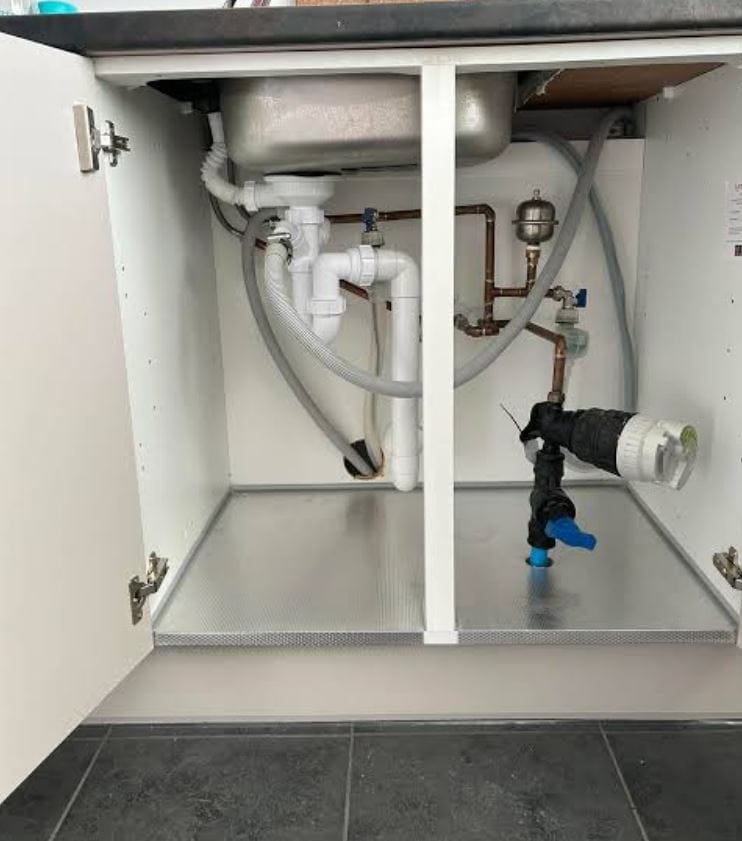
The U-shaped pipe under your sink, known as the P-trap, is designed to hold a small amount of water. This water “plug” creates a seal that prevents sewer gases from migrating back up through the drain and into your home . A P-trap failure occurs in two primary ways:
- Evaporation: If a sink isn’t used for weeks or months, the water in the trap can evaporate, breaking the seal. This is common in guest bathrooms or vacation homes .
- Leaks or Siphoning: Loose slip nuts or a cracked pipe can cause the P-trap to leak water, breaking the seal. A blocked plumbing vent can also siphon water from the trap .
3. Hidden Mold and Mildew Growth
A musty odor that is noticeable specifically when you open the cabinet suggests a moisture problem. If the garbage isn’t the source, inspect the area thoroughly . Leaks can occur from loose slip nuts, which are often accidentally knocked loose by items stored under the sink . A slow, unseen leak can create the perfect damp, dark environment for mold and mildew, which produce strong, earthy odors .
Professional Remediation Strategies
A systematic approach is essential for a permanent fix. Here is a step-by-step guide that moves from the simplest solution to the most complex.
Preventive Maintenance Protocols
Preventing sink odors is significantly easier than eliminating them. Integrating a few simple habits into your routine will ensure your kitchen remains odor-free.
1. The 15-Second Rule for Disposals
Always run cold water while operating the garbage disposal and continue to run it for at least 15 seconds after you turn it off to ensure all food particles are flushed out of the chamber . Using cold water keeps fats solid so they are ground up and washed away rather than melting and sticking to the blades.
2. Weekly Drain Flush
Pour a full pot of hot (not boiling) water down the drain once a week. This simple act helps to melt away new grease and soap buildup before it can solidify and form a biofilm .
3. Monthly Deep Clean
Repeat the baking soda and vinegar treatment monthly to keep your pipes fresh and prevent biofilm from taking hold . The reaction is effective and safe for your plumbing.
4. Prohibited Items
Never pour cooking grease, coffee grounds, eggshells, or expandable foods like rice and pasta down the sink. These are prime contributors to clogs and food for odor-causing bacteria .
By systematically addressing the cause of the odor—beginning with simple hygiene and maintenance—you can avoid costly plumbing bills and ensure a fresh, clean-smelling kitchen. The most common culprit is usually bacterial biofilm fueled by organic waste, making regular cleaning your most effective tool.