The Definitive Guide to Preventing Flash Rust: Chemistry, Methods, and Best Practices
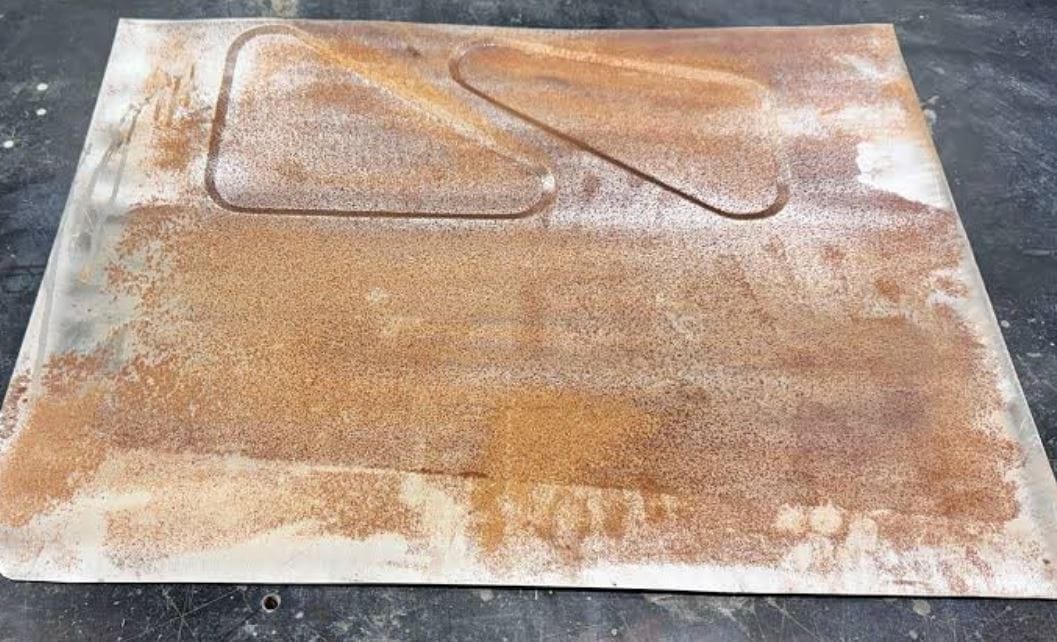
Flash rust is the bane of industrial painters, metal fabricators, and restoration specialists. It occurs when freshly cleaned metal is exposed to oxygen and moisture, resulting in a thin layer of red-brown iron oxide forming in a matter of minutes or hours. Unlike heavy, scaling rust that develops over years, flash rust is instantaneous and interferes directly with coating adhesion.
This guide provides a deep, technical breakdown of flash rust prevention, comparing methodologies and offering actionable protocols.
1. The Electrochemical Mechanism: Why Speed Matters
To prevent flash rust, one must understand the conditions that create it. When a steel surface is abrasive blast-cleaned to a “Near White” (SSPC-SP 10/NACE No. 2) or “White Metal” (SSPC-SP 5/NACE No. 1) finish, the native oxide layer is removed. The bare, highly energetic steel surface instantly seeks thermodynamic equilibrium.
- The Cathodic Reaction: Oxygen dissolves in the thin film of humidity on the metal surface.
- The Anodic Reaction: Iron dissolves, releasing electrons.
- The Accelerator: Chlorides, sulfates (often residual from blasting media or coastal air), and low pH dramatically increase the conductivity of the moisture layer, speeding up the corrosion cell.
Prevention strategies focus on breaking this circuit by controlling time, humidity, contamination, or chemical passivation.
2. Environmental Control: The First Line of Defense
If the surface can be kept below the critical humidity threshold, flash rust cannot nucleate. This is strictly governed by the Psychrometric relationship.
A. The Dew Point Rule
According to SSPC-PA Guide 3 and ISO 8502-4, the steel temperature must remain a minimum of 5°F (3°C) above the dew point during preparation and coating. If the steel temperature drops within this margin, moisture condenses invisibly, triggering instant oxidation.
B. Dehumidification and Containment
For critical industrial applications (tank linings, bridges), environmental enclosures with desiccant dehumidifiers are mandatory.
| Control Method | Mechanism | Risk Level for Flash Rust | Application Context |
|---|---|---|---|
| Desiccant Dehumidification | Removes moisture via adsorption (silica gel rotors). Can drop dew point to below 0°F. | Very Low | Critical tank linings, nuclear facilities. |
| Refrigerated Dehumidification | Cools air below dew point to condense water. Limited to ~60°F dew point. | Medium | General warehouse blasting; less effective in cold climates. |
| Ventilation Only | Air exchange without latent heat removal. | High | Risk of drawing humid external air over a cold steel substrate. |
| Heating the Substrate | Raises steel temp 15–20°F above ambient dew point. | Low-Medium | Effective temporary solution, but does not remove dissolved salts. |
3. The Critical Parameter: Substrate Cleanliness (Soluble Salts)
You cannot fully prevent flash rust, even with dehumidification, if the surface is contaminated with hygroscopic salts. These salts pull moisture from the air at relative humidity levels as low as 40%, far below the standard dew point.
The Bresle Test Protocol (ISO 8502-6/9)
The industry standard requires measuring surface ion concentration.
- Threshold: Coatings manufacturers strictly limit soluble salts to < 3 µg/cm² (typically expressed as sodium chloride equivalent).
- High-Risk Scenario: Marine environments or blast media contaminated with sulfates. If levels exceed 5 µg/cm², the corrosion cell is aggressive enough to push through many chemical inhibitors.
Prevention Strategy: If salt contamination is high, dry abrasive blasting alone is insufficient. The surface must be high-pressure water washed (UHP) or blasted with a vapor abrasive system to dissolve and flush the salts, immediately followed by forced drying to prevent the water rinse from causing the flash rust.
4. Chemical Inhibition: Flash Rust Additives (FRAs)
When environmental controls alone cannot stop oxidation (e.g., field maintenance, water-based coatings), Flash Rust Additives (FRAs) chemically passivate the steel during the drying phase.
Comparison of Inhibitor Chemistries
The selection of an FRA depends on the pH of the coating and the required durability.
| Inhibitor Type | Mechanism of Action | Optimal pH Range | Loading Level | Drawbacks |
|---|---|---|---|---|
| Sodium Nitrite | Anodic inhibitor. Oxidizes the steel surface to form a thin, invisible passivation layer (gamma-Fe₂O₃). | 8.0 – 9.5 | 0.3% – 1.0% | Highly effective; risk of intercoat delamination if overdosed; lowers water resistance if leached. |
| Organic Amine Carboxylates | Mixed cathodic/anodic. Adsorb onto the metal surface to block reactive sites. | 7.0 – 9.0 | 0.5% – 2.0% | Better long-term adhesion than nitrite; can cause yellowing in light-colored paints. |
| Phosphonate / Tannic Acid Derivatives | Convert iron oxide to iron tannate/phosphonate (blue-black complex). | < 5.0 (Acidic) | 1.0% – 3.0% | “Rust converters.” Not true inhibitors for bare steel; better for tightly bonded rust. Can fail under UV. |
| Zinc-Free Synergistic Blends | Chelating agents that deactivate metal ions catalyzing corrosion. | 7.5 – 9.0 | 0.1% – 0.5% | Modern, low-load, low-risk; higher cost. Often used in direct-to-metal (DTM) acrylics. |
Critical Note: Sodium nitrite, while cost-effective, reacts with acidic binders. If used in a vinyl acrylic latex (pH 4.5), it off-gasses toxic NOx fumes and fails to inhibit rust. Always consult the coating manufacturer’s technical data sheet for FRA compatibility.
5. Process Optimization: Wet Methods and Dry-Off
Ironically, water-based cleaning methods (Hydroblasting/UHP) cause the most severe flash rust, but they also provide the cleanest surface profile. The prevention strategy here is immediate dry-off.
The “Flash Rush” Protocol
- Time Window: “White rust” (zinc corrosion) or “flash rust” (iron corrosion) can appear within 7–15 minutes in a coastal environment after wet blasting.
- Solution: Use of compressed air “air knives” immediately trailing the blast nozzle. Alternatively, incorporating vapor corrosion inhibitors (VpCIs) directly into the blast water tank prevents rust nucleation in the saturate air surrounding the blast operator.
6. Material Selection: Alloying and Conversion Coatings
Sometimes the best way to prevent flash rust on carbon steel is to eliminate the carbon steel surface.
- Weathering Steel (Corten): Relies on a tightly adherent oxide patina. Flash rust is the intended aesthetic barrier. However, in marine environments, this patina is non-protective.
- Zinc-Rich Primers: When a shop-applied inorganic zinc primer is applied to the steel before transport, sacrificial galvanic protection prevents flash rust on scratches. However, zinc-rich primers themselves are prone to “white rust” (zinc salts) if exposed to standing water before the topcoat.
- Temporary Rinseable Inhibitors: For inter-stage storage (12–48 hours), high-boiling point water-displacing oils or VpCI poly films can be draped over the metal.
7. Field Assessment: Acceptable vs. Unacceptable Flash Rust
If flash rust has occurred, the decision to coat over it or re-blast is governed by SSPC-VIS 1 and the specific coating specification.
| Flash Rust Grade | Description (Visual) | Typical Allowance | Action Required |
|---|---|---|---|
| Light (L) | Very thin yellow-brown discoloration. Visible in patches. Does not wipe off onto a cloth. | Acceptable for most solvent-borne epoxy primers. | None, but must be dry and salt-free. |
| Medium (M) | Uniform brown layer. Slight powdering when rubbed with a clean glove. | Marginal for high-build epoxies; unacceptable for direct-to-metal water-based acrylics. | Light solvent wipe (SSPC-SP 1) or abrasive pad scuffing. |
| Heavy (H) | Thick, dark red/brown layer. Cloth wipes easily stain with rust powder. Visible pitting. | Unacceptable under any coating system. | Re-blast to base metal to prevent osmotic blistering. |
The Tape Test Rule: Never coat over flash rust that stains transparent tape. This indicates loose oxide that will delaminate.
8. The Ultimate Prevention Flowchart (Decision Logic)
To synthesize these methods, follow this rigorous hierarchy when preparing a specification:
- Measure: Bresle test for salts. Calibrated relative humidity and dew point meter.
- Clean: If salts > 3 µg/cm², wash with clean water (below 250 µS/cm conductivity).
- Environment: Maintain steel temp > 10°F above dew point. If impossible, build a dehumidified enclosure.
- Passivate (If Water-Based): Add compatible organic inhibitor to the first coat primer, never to the rinse water unless followed by immediate forced air drying.
- Time: Close the window between final preparation and primer application to under 4 hours, regardless of visible oxidation.
Summary: The Professional’s Verdict
Flash rust is not a mystery; it is a predictable physicochemical reaction. The most sophisticated inhibitor cocktail cannot save a substrate washed with high-salt water and left in a fog. Conversely, a perfectly dehumidified enclosure is wasted if the blasting media is contaminated. The synergy of soluble salt removal, dew point control, and compatible chemical passivation is the only universally reliable prevention strategy.
By shifting the focus from merely “inhibiting rust” to “managing the environment and ionic load on the surface,” contractors and engineers can guarantee zero-defect coating adhesion.