How to Clean a Fish Tank After a Fish Dies: A Complete Step-by-Step Guide
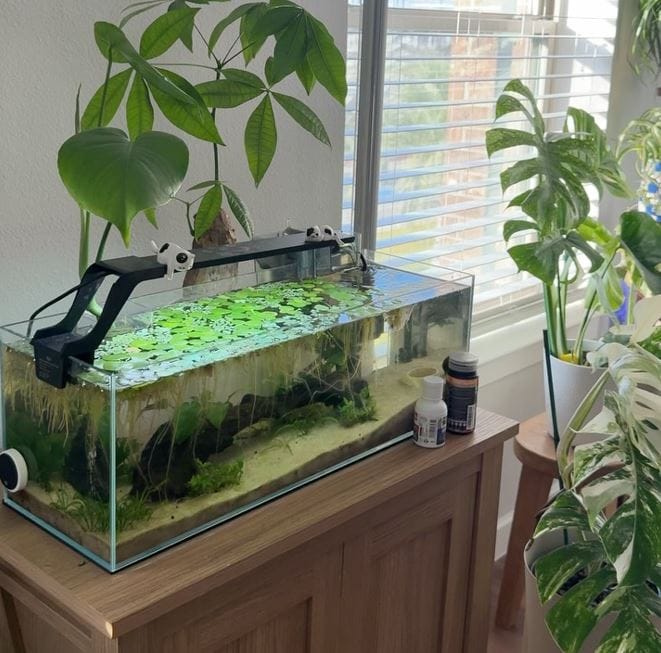
Discovering a dead fish in your aquarium is never pleasant. Beyond the emotional aspect, a decaying carcass rapidly releases ammonia, nitrites, and harmful bacteria into the water. If not addressed immediately, this biological crisis can kill your remaining fish within hours.
This guide provides a professional, science-based protocol for safely cleaning your tank after a fish death, preventing secondary infections, and restoring a healthy aquatic environment.
Immediate Risks: Why Speed Matters
When a fish dies, its body begins to decompose instantly. The table below outlines the cascade of toxins released and their effects.
| Toxin Released | Source | Effect on Remaining Fish |
|---|---|---|
| Ammonia (NH₃) | Protein breakdown in muscle/gut | Gill damage, internal burns, suffocation |
| Nitrites (NO₂⁻) | Bacterial oxidation of ammonia | Blood oxygen deprivation (brown blood disease) |
| Pathogenic Bacteria | Decomposing tissues | Fin rot, popeye, dropsy, columnaris |
| Fungal Spores | Organic decay | Cotton-like growths on eggs or injured fish |
Critical Window: You have 60 minutes to act after discovery to prevent a full tank crash.
Step 1: Immediate Triage (First 10 Minutes)
Do not simply scoop out the dead fish and do nothing. Follow this exact sequence:
- Remove the corpse using a clean net. Do not use bare hands (bacteria transfer risk).
- Inspect the body for visible signs of disease (red streaks, bloating, white spots). Photograph for diagnosis.
- Do not flush dead fish (introduces pathogens to local waterways). Wrap and dispose in household waste.
- Observe survivors for rapid breathing, clamped fins, or erratic swimming.
Step 2: Testing and Assessment
Before any cleaning, test your water parameters using a liquid test kit (not strips—they are inaccurate for crisis levels).
| Parameter | Safe Range | Action If Exceeded |
|---|---|---|
| Ammonia (NH₃) | 0.0 ppm | Immediate water change (50%) |
| Nitrite (NO₂⁻) | 0.0 ppm | Add aquarium salt (1 tbsp/10 gal) + water change |
| Nitrate (NO₃⁻) | < 20 ppm | Standard water change (25-30%) |
Step 3: Deep Cleaning Protocol (By Tank Type)
Do not empty the entire tank. That destroys beneficial bacteria and resets your nitrogen cycle. Use this table to match your cleaning intensity to the situation.
| Situation | Water Change Volume | Substrate Cleaning | Filter Action | Disinfection Needed? |
|---|---|---|---|---|
| Fish died < 2 hrs, no visible disease | 25-30% | Light gravel vacuum | Check for debris, keep media wet | No |
| Fish died overnight, bloated | 50-60% | Deep vacuum (entire substrate) | Rinse sponge in removed tank water | No |
| Fish died with visible lesions/sores | 70% | Vacuum + remove decor | Replace chemical media (carbon) | Yes (see below) |
| Multiple fish died suddenly | 80-90% | Full substrate wash | Deep clean impeller + housing | Yes (bleach protocol) |
Disinfection Protocol (When Disease is Confirmed)
- Remove all fish to a quarantine tub with aerated, dechlorinated water.
- Drain tank. Remove hardscape and decor.
- Wipe glass with 3% hydrogen peroxide (not vinegar or soap).
- Soak decor in 10% bleach solution (1 part bleach:9 parts water) for 15 minutes.
- Rinse decor thoroughly, then soak in water with 5x dechlorinator for 30 minutes.
- Refill tank, add beneficial bacteria supplement (e.g., Seachem Stability), and cycle for 24h before reintroducing fish.
Step 4: Post-Cleaning Recovery & Prevention
After cleaning, your biological filter is compromised. You must rebuild the nitrogen cycle.
7-Day Recovery Schedule
| Day | Action | Water Test Focus |
|---|---|---|
| 1 | 50% water change + bacteria booster | Ammonia (every 12 hours) |
| 2 | No feeding | Ammonia & Nitrite |
| 3 | Feed 50% normal amount | Nitrite spike expected |
| 4 | 25% water change | Nitrite should fall |
| 5 | Resume normal feeding | Nitrate rising |
| 7 | Full parameter test | All near zero except nitrate |
Prevention Checklist (Stop Future Deaths)
- Quarantine all new fish for 4 weeks in a separate tank.
- Do not overfeed – uneaten food decays like a corpse.
- Maintain a log of pH, ammonia, and temperature daily.
- Install a backup air pump – low oxygen accelerates decomposition toxicity.
When to Avoid Cleaning and Restart Completely
In severe cases, cleaning is not enough. Restart the tank from scratch if:
- The water smells like rotten eggs (hydrogen sulfide from anaerobic decay).
- You cannot remove the dead fish (e.g., wedged under deep decor).
- All fish have died despite intervention.
In this scenario, discard the substrate, sterilize the tank with 10% bleach, replace filter media, and fully cycle the tank again (4–6 weeks).
Final Professional Recommendation
Cleaning after a fish death is biological triage, not routine maintenance. Always wear gloves, never use household soaps or detergents (they leave residues that kill fish), and prioritize testing over guessing. When in doubt, perform a larger water change and add activated carbon to absorb dissolved organic compounds from decomposition.