How to Clean a Travertine Shower: The Ultimate Guide (No Damage)
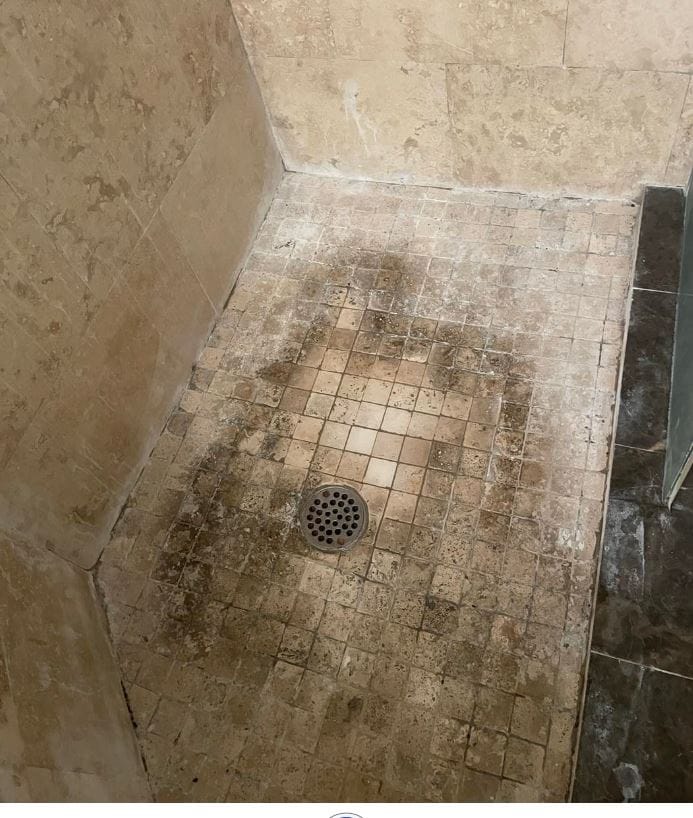
Travertine is a stunning natural stone that adds luxury and warmth to any bathroom. However, its porous, pitted surface makes it a magnet for soap scum, hard water stains, and mildew. Unlike ceramic tile, you cannot use vinegar or bleach on travertine.
If you clean it wrong, you will etch (dull) the surface or clog the pores permanently.
This guide provides a step-by-step method to clean your travertine shower without destroying the seal or finish.
Why Travertine is Different (Critical Warning)
Before you clean, understand this: Travertine is a calcium-based (limestone) stone. Acidic cleaners (vinegar, lemon, Windex, CLR) will chemically react with the calcium, causing etch marks (dull spots that look like water stains).
| Cleaner Type | Safe for Travertine? | Consequence |
|---|---|---|
| pH-Neutral Cleaner | ✅ Yes | Perfectly safe. Cleans without reaction. |
| Vinegar / Lemon Juice | ❌ No | Chemical etching (permanent dull spots). |
| Bleach / Ammonia | ❌ No | Discolors grout and breaks down sealant. |
| Abrasive Powders (Ajax, Comet) | ❌ No | Scratches the polished surface. |
| CLR / Lime Away | ❌ No | Immediate, severe etching. |
Tools & Supplies You Will Need
- Squeegee (to use after every shower)
- Soft microfiber cloths (no scrub sponges)
- Soft-bristle nylon brush (old toothbrush for grout)
- pH-neutral stone cleaner (e.g., MB-11, StoneTech, Granite Gold)
- Distilled water (prevents new hard water spots)
- Travertine sealer (impregnating penetrating sealer)
- Baking soda & hydrogen peroxide (for tough soap scum only)
Step-by-Step: How to Clean a Travertine Shower
Step 1: Daily Prevention (The #1 Hack)
After every shower, use a squeegee on the walls. This removes mineral-laden water before it evaporates and leaves deposits. This single habit reduces scrubbing by 90%.
Step 2: The Routine Clean (Weekly)
| Step | Action | Time |
|---|---|---|
| 1 | Rinse walls with distilled water to remove loose dirt. | 30 sec |
| 2 | Dilute pH-neutral stone cleaner per bottle instructions (usually 1:4 with water). | 1 min |
| 3 | Spray solution onto one wall section at a time. | 30 sec |
| 4 | Wipe with a soft microfiber cloth (not a sponge). Do not scrub hard. | 2 min |
| 5 | Rinse thoroughly with distilled water. | 1 min |
| 6 | Dry completely with a clean microfiber cloth (no air drying). | 2 min |
Step 3: Removing Tough Soap Scum & Hard Water Stains
If you have white, crusty buildup, do not use commercial descalers. Use this stone-safe paste:
- Make a paste: 3 parts baking soda + 1 part hydrogen peroxide.
- Apply paste to the stain.
- Let sit for 10-15 minutes (no longer).
- Gently wipe away with a damp microfiber cloth.
- Rinse immediately and dry.
Note: This paste is slightly alkaline and safe for travertine, unlike acids.
Step 4: Cleaning Travertine Grout Lines
Travertine showers often have sanded grout, which traps mold.
| Solution | How to Apply | Safe? |
|---|---|---|
| Oxygen bleach (OxiClean) + water | Make a thin paste. Apply with toothbrush. Rinse well. | ✅ Yes |
| Chlorine bleach | Dilute 1:10 with water. Use sparingly. | ⚠️ Only if sealed, may discolor. |
| Vinegar | Never use on grout adjacent to travertine. | ❌ No (runoff will etch stone) |
Best method: Mix oxygen bleach with warm water. Scrub grout with a soft nylon brush. Rinse instantly.
Sealing: The Secret to an Easy-Clean Shower
You must seal travertine in a wet area. Unsealed travertine acts like a paper towel—it absorbs dirty water.
How to test if your stone needs sealing:
Sprinkle a few drops of water on the wall. If the water darkens the stone within 10 minutes, it is unsealed.
Sealing frequency comparison:
| Shower Usage | Sealant Type | Re-seal every |
|---|---|---|
| Light (guest bath) | Impregnating sealer | 12-18 months |
| Medium (2 people daily) | Impregnating sealer | 8-12 months |
| Heavy (family of 4) | High-grade penetrating sealer | 6 months |
How to seal:
- Clean shower and let dry for 24 hours.
- Apply sealer with a foam brush or lint-free cloth.
- Wait 10 minutes, then wipe off excess.
- Let cure for 12 hours before using shower.
The 3-Step Monthly Maintenance Table
For a deep clean that keeps Google-worthy results, follow this monthly schedule:
| Time | Task | Product to Use |
|---|---|---|
| After every use | Squeegee walls + floor | Squeegee tool |
| Weekly | Wipe down with cleaner | pH-neutral stone spray |
| Monthly | Deep clean + water stain removal | Baking soda paste + reseal test |
| Every 6-12 months | Re-seal entire shower | Impregnating penetrating sealer |
Common Mistakes to Avoid
- ❌ Using a shower spray cleaner (Tilex, Scrubbing Bubbles). These are alkaline or acidic and destroy sealer.
- ❌ Steam cleaning. High heat forces water and soap into the pores, causing deep mildew.
- ❌ Using a magic eraser. It is micro-abrasive and will remove the polished finish.
- ❌ Letting shampoo bottles sit on the floor. The leaked soap eats through sealer. Use a corner caddy.
When to Call a Professional
If you have already used vinegar or CLR and see white, chalky rings (etch marks), you cannot scrub them away. You need a professional stone refinisher to re-hone and re-polish the surface. This costs $3–$7 per square foot.
Final Verdict
To clean a travertine shower safely:
- Never use acid (vinegar, lemon, CLR).
- Squeegee after every shower.
- Clean weekly with pH-neutral stone soap.
- Seal twice a year.
Do this, and your travertine shower will look brand new for decades.