How to Clean a Weighted Stuffed Animal?
Weighted stuffed animals are more than just toys; they are sensory tools, comfort objects, and sometimes, quite hefty investments. Unlike their lightweight counterparts, these plush companions contain glass beads, plastic pellets, or steel shot, which require a completely different approach to cleaning . Throwing them in the washing machine without preparation can lead to clumping, mold growth inside the lining, or a broken washing machine drum.
This comprehensive guide will teach you exactly how to clean a weighted stuffed animal safely. We will move beyond the basics to explore the “why” behind each step, compare cleaning methods, and provide professional insights to ensure your cuddly companion remains hygienic and structurally sound for years to come.
The Anatomy of a Weighted Stuffed Animal
Before diving into the cleaning process, it is crucial to understand what you are dealing with. Weighted stuffed animals typically utilize a two-wall system:
- The Outer Shell: The soft, plush fabric (often polyester, minky, or fleece) that you touch.
- The Inner Liner: A tightly woven, “down-proof” fabric pouch that contains the weighting media. This liner is often segmented (quilted) to prevent the beads from shifting into one corner .
The media inside can vary, and knowing which one your stuffie uses will influence how you handle moisture.
Table: Comparison of Weighted Stuffing Materials
Understanding this construction leads to the golden rule of weighted stuffed animal care: Clean the shell, protect the core.
Step 1: Pre-Cleaning Assessment
Resist the urge to immediately submerge your stuffie. Preparation prevents permanent damage.
1. Locate and Read the Care Label
This seems obvious, but with weighted animals, the label is your bible. Some manufacturers specifically state “surface wash only” because the inner liner may not be designed for submersion. Others might indicate that the entire outer shell is removable (if there is a hidden zipper).
2. Perform the “Liner Check”
Gently squeeze the animal. Can you feel the beads moving freely inside a separate casing, or does it feel like the beads are mixed directly with the stuffing? If you cannot distinctly feel a separate liner bag, the beads are likely integrated into the fiberfill. In this case, do not submerge the toy. Water will get trapped in the fiberfill and between the beads, creating a perfect environment for mold .
3. Surface Cleaning First
Before a deep wash, remove surface debris. Use a vacuum cleaner with a brush attachment to go over the entire surface. This removes dust, dander, and dried dirt that would otherwise turn into mud during washing .
Step 2: The Extraction Method (Safest Technique)
The absolute safest way to clean a weighted stuffed animal—especially if you are unsure about the liner’s integrity or if the animal is very large—is to remove the weighting material before washing the shell .
Tools You Will Need:
- Seam ripper or small, sharp scissors
- Mild detergent (like Woolite or baby shampoo)
- A small funnel
- Polyester fiberfill (optional, for fluffiness)
The Process:
- Open the Seam: Using a seam ripper, carefully open a small section of a seam on the animal’s torso (usually the back or belly seam is factory-sewn and easier to replicate). Be careful not to cut the inner liner.
- Extract the Weight: Gently pull out the inner bag of beads. If the beads are loose in the stuffing, carefully scoop the beads out into a bowl. This is messy, so lay down a towel.
- Wash the Shell: Once the weights are removed, you can wash the empty plush skin. It can now be treated like a regular stuffed animal. You can hand wash it, or place it in a pillowcase and machine wash on a delicate cycle with cold water .
- Dry the Shell Thoroughly: Air dry the shell completely. You can use a fan to speed up the process, but avoid high heat .
- Return the Weights: Once the shell is 100% dry, use a small funnel to carefully pour the beads back inside (if loose) or reinsert the inner liner bag.
- Close the Seam: Use a ladder stitch (invisible stitch) to sew the opening closed.
Step 3: Hand Washing (Without Extraction)
If you prefer not to open the seams, hand washing the whole unit is the next best option, provided you are extremely careful about drying.
The “Partial Immersion” Method
Do not toss the animal into a bathtub full of water. Instead, focus on the fabric:
- Fill a Basin: Use cool or lukewarm water. Hot water can cause plastic pellets to degrade or release chemicals and may fade dyes .
- Detergent: Use a teaspoon of gentle, sensitive-skin detergent.
- The Technique: Dip a soft cloth or sponge into the soapy water. Gently scrub the exterior fabric. Do not submerge the whole animal . The goal is to get the exterior wet while keeping the inner liner as dry as possible.
- Rinsing: Dampen a fresh cloth with clean, cool water and “rinse” the soap off by wiping. You may need to do this several times to remove all detergent residue, which can attract dirt later if left behind .
Step 4: The Drying Imperative
Drying a weighted stuffed animal is the most critical and difficult step. If you can still smell moisture or feel dampness, you are inviting mold.
Table: Drying Methods Compared
The “Bead Squeeze” Test
To check if the inside is dry, press on the beads through the fabric.
- If they move freely and feel separate, you are likely dry.
- If they feel gritty, sticky, or clumped together, moisture is still present. Continue drying.
Maintenance and Prevention
The best way to clean a weighted stuffed animal is to not have to deep clean it very often. Regular maintenance extends the time between risky washes.
- Weekly Refresh: Sprinkle baking soda on the surface, let it sit for an hour, and vacuum it off with a brush attachment to neutralize odors .
- Spot Cleaning: For small stains, use a mixture of white vinegar and water (1:2 ratio). Dip a cloth, wring it out until just damp, and dab the stain. Vinegar is excellent for breaking down organic matter and odors without toxic chemicals .
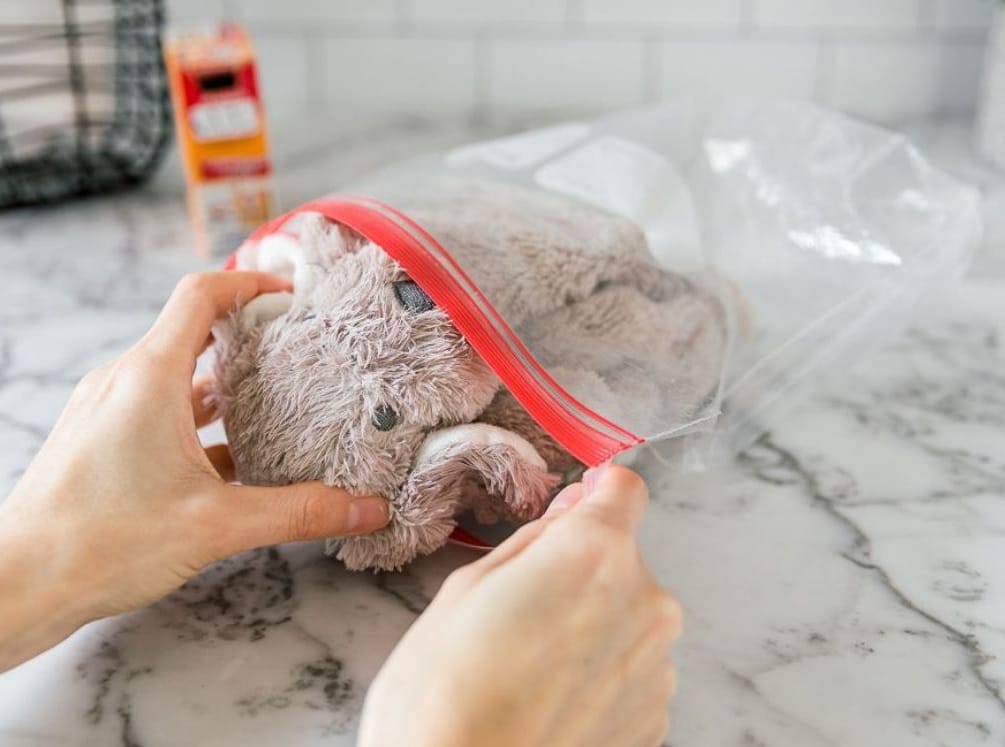
- The “Sleepover” Trick: If the animal isn’t dirty but just smells musty, place it in a large plastic bag with a cup of baking soda. Shake it up and let it sit overnight. The baking soda absorbs odors without moisture .
- Storage: Store weighted animals on a shelf or in a breathable cotton bag, not in plastic bins, where moisture can accumulate .
When to Call a Professional
If your weighted stuffed animal has significant sentimental value, is antique, or is heavily soiled, consider professional cleaning. Look for services that specialize in plush toys or upholstery cleaning. They have industrial-sized drying rooms and commercial extractors that can ensure the piece dries completely without you having to risk seam-ripping it yourself .
Conclusion
Cleaning a weighted stuffed animal requires a balance between hygiene and preservation. By understanding the internal construction—specifically the difference between the outer shell and the weighted liner—you can make informed decisions.
The golden rule remains: prioritize drying over washing. It is better to have a slightly stained but dry stuffie than a superficially clean one rotting from the inside out with mold. Whether you choose to extract the beads for a thorough wash or opt for a gentle surface cleaning, the time and patience you invest will ensure your weighted companion continues to provide comfort for years to come.